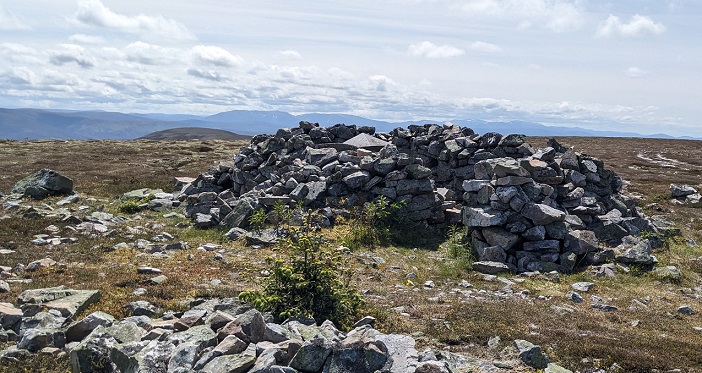
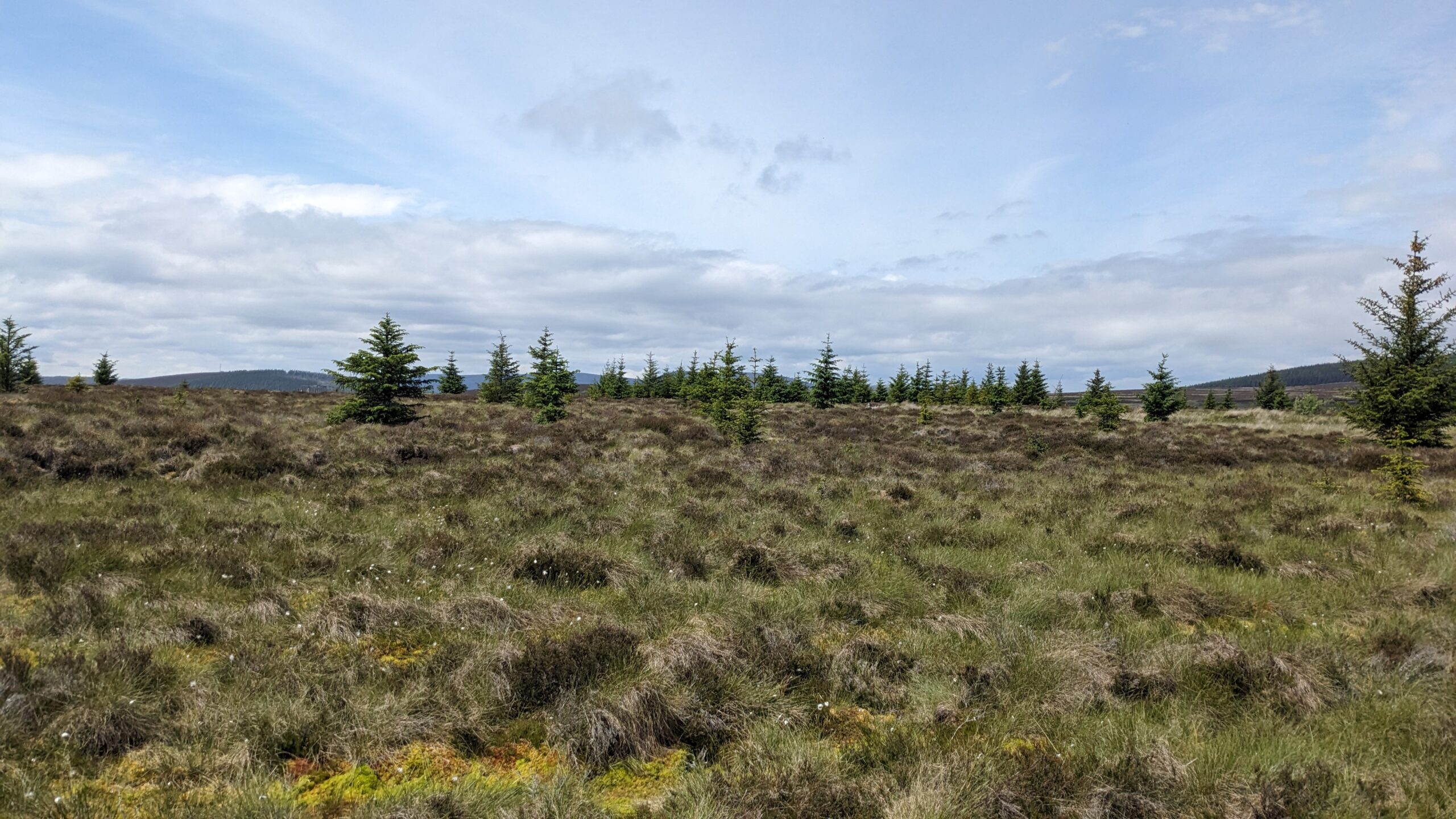
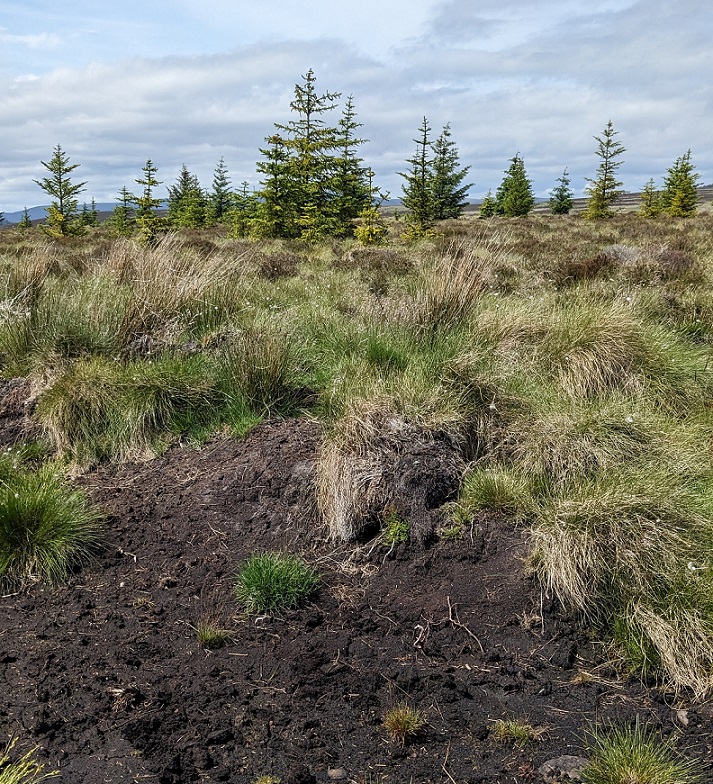
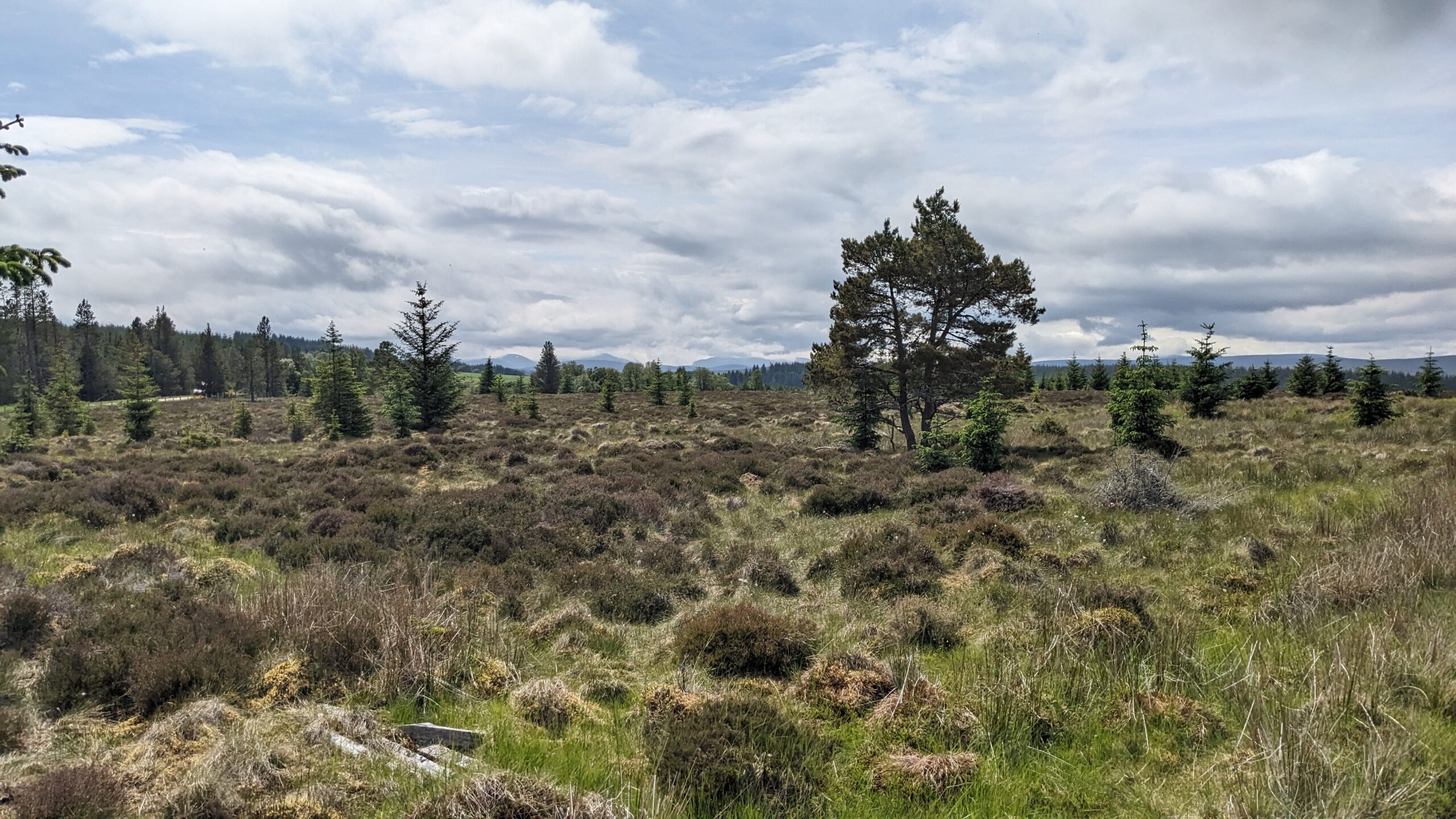
Two years ago I briefly considered the implications of invasive Sitka for native woodland on Ladylea Hill, in the north east corner of the Cairngorms National Park (see here). This week I spent three days hill walking in and around Glen Livet, in the central part of the northern Cairngorms. I had not spent time in the area for over a decade and was struck both by changes in land-use had how self-seeding Sitka has been spreading on both sides of the Cairngorms National Park boundary.
On returning home I checked and the Cairngorms National Park Authority (CNPA) has almost no policy on Sitka despite its steady spread into and across the National Park.
Sitka does get one mention in the CNPA’s Forest Strategy, adopted in 2018 and intended to ‘set the direction for forest management and woodland restoration in the National Park for the next two decades’ (see here):
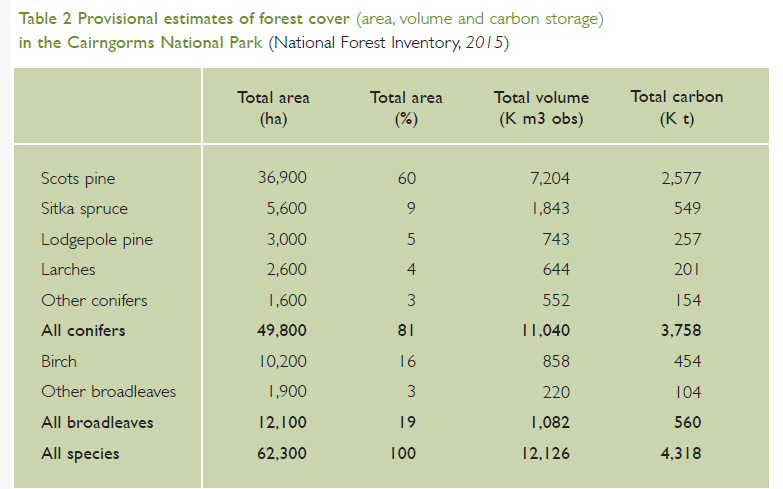
At 9% the proportion of Sitka in woodland in the Cairngorms National Park in 2015 was considerably less than the rest of Scotland where it now makes up 43% of tree cover. Given the propensity of Sitka to spread, it is now likely to cover a greater then 5,600ha, although how much will depend on what the CNPA defines as woodland (I have submitted on FOI request on this)..
The CNPA issued supplementary guidance (see here) to its Forest Strategy in 2025 which contains no reference to Sitka and states that it has no intentions of revising its strategy before 2038. Do senior staff and board members not see the evidence before their eyes when travelling around the northern parts of the National Park?
The table above from the Forest Strategy estimates the amount of carbon held in Sitka as 549Kt but, just like the Woodland Carbon Code, fails to consider the impact that spreading Sitka has on peaty soils (see here). Concern about that is a major reason why considerable effort and money is now being devoted to removing self-seeded Sitka from the Flow Country – so why not in the Cairngorms National Park?
As for the impact of self-seeding Sitka on nature, the CNPA’s current National Park Partnership Plan (NPPP) 2022-27 contains a number of actions in respect to protecting rare and endangered species while affirming that ‘ecosystem restoration is key for delivering in the medium to long term’. The NPPP, however, only contains a single reference to invasive non-native species (Policy A6b). This states it will tackle and reduce ‘the impacts of invasive non-native species’ but again not a mention of Sitka. It was the same with the Cairngorms Nature Action Plan 2019-24, which has not been renewed – Sitka was noticeable by its absence.
Although the CNPA has had multiple opportunities to consider the impact of spreading Sitka and agree what measures are required to manage/prevent this, so far it has failed to do so. There are good reasons why it needs to do so urgently.
Sitka produces large amounts of small light seeds, which are less likely to be eaten by native birds and animals than other tree species, and can be carried on the wind up hill and down dale (see here). These seeds tolerate wet ground, including peat bogs, and once they sprout are less palatable to herbivores then any other tree. The consequence of these natural qualities is they spread easily although it has taken many years for the impact of Sitka ‘rain’ to become fully apparent.
Part of the explanation for this is that around the northern foothills of the Cairngorms, other species like Lodgepole pine and Norway spruce, which spread less easily, were favoured by farmers and foresters. Sitka also tends to seed when older than Scots pine – usually at 20-25 years compared to 15-20 years – and there has consequently been a time-lag between it becoming the commercial conifer of choice and it starting to spread through natural regeneration.
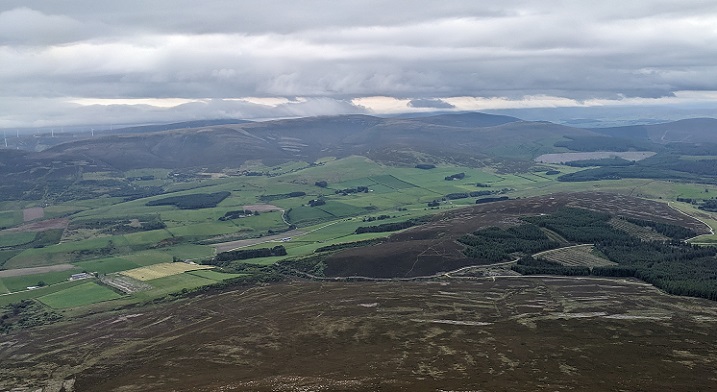
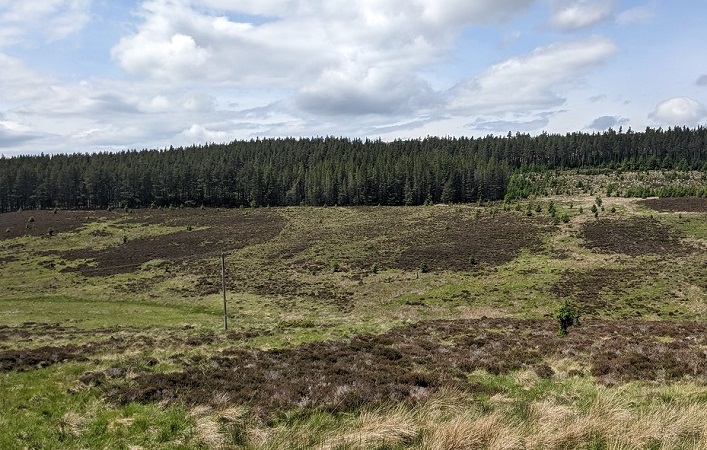
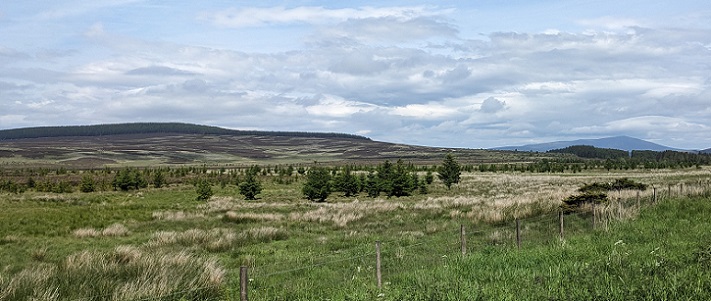
The other side of the explanation is that changes in land-use and management have enabled Sitka seedlings to become established in areas where previously they would have been killed off through browsing or burning. Agricultural abandonment, a reduction in deer numbers, a retreat from intensive grouse moor management, the significant increase in the amount of land used for wind-farms and the conversion of farmland and moorland to forestry have all played a role.
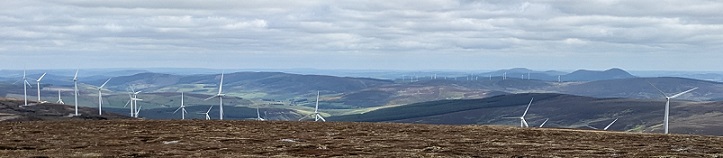
Although wind-farm developments are prohibited within the National Park boundary, similar changes in land-use have been occurring as illustrated by the photos above. As a consequences Sitka has been spreading both into the National Park and within it.
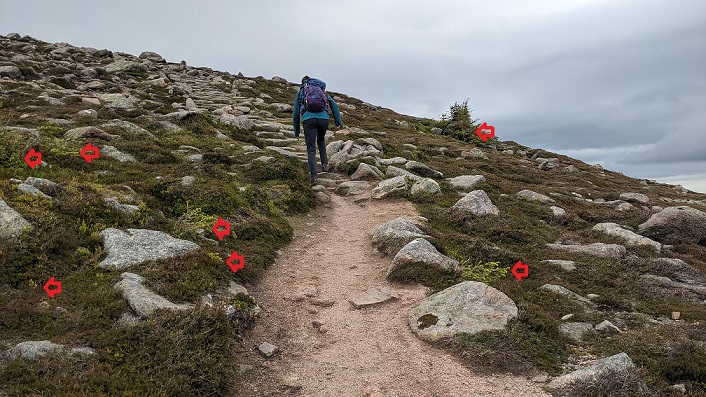
It can only be a matter of time until what is happening on Ben Rinnes also starts to happen within the National Park. Indeed it already has, on hills like Meall a Bhuachaille in Glen More. The potential threats to the central Cairngorms massif and the Caledonian pinewoods that surround it should be obvious. It should also be obvious that the longer the CNPA waits until it produces a plan to address the threat, the greater the problem and the harder and more expensive it will be to address.
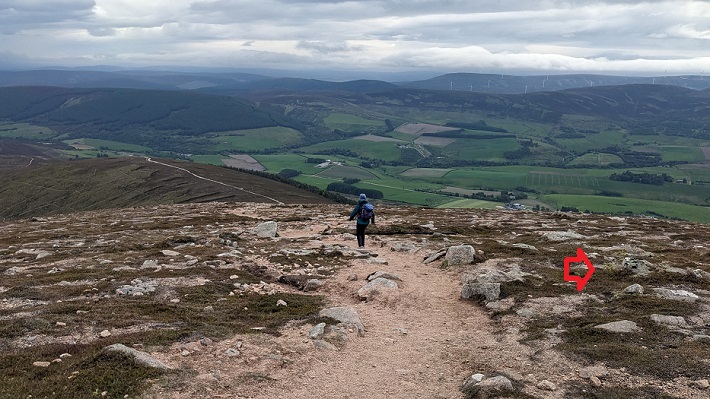
En route to the summit of Ben Rinnes, we uprooted over 60 Sitka seedlings by the path but found many too big to do so. If every visitor to the summit over the last decade had made a point of pulling out just five Sitka seedlings, much of the problem would have been contained – at least while muirburn continues on the lower slopes. Now, however, you would need choppers to remove much of the Sitka and in some places a saw. How long will it take until, like the moorland west of the B9008, a chainsaw will be required?
Although the CNPA has had multiple opportunities to consider the impact of spreading Sitka and agree what measures are required to manage/prevent this in the last ten years it has so far failed to do so. Rather than waiting to find out how Sitka might change the ecology of these places, why isn’t the CNPA, along with conservation-minded landowners, not encouraging visitors to the National Park to uproot invasive Sitka instead of planting native species? That would do far more for nature. The CNPA could then, along with Scottish Forestry, produce a plan to remove Sitka from areas outwith plantations.
Such actions would be fully in accordance with the precautionary principle and the statutory duty of Scotland’s National Parks to put conservation first.

Grouse industry, sheep industry, electricity industry, tourist industry: we are looking at an industrial wastescape, not a real national park or natural wildlife habitat.
Oops missed out the cellulose factory industry (AKA forestry)
Aye, this issue MUST be tackled and NO excuses are acceptable.
Flatulence against thunder, urinating into a Force 10 and trying to bale out the Titanic with a teaspoon
We are dealing, on national strategic landscape and biodiversity management with a political and bureaucratic structure that has all the forward vision of a flea on a dog’s arse.
Yup.
I was driving back home over the Lecht pass basically going south towards Donside when I noticed rather dwarf sitka strung along the edges of the road. They looked pretty stunted and often in groups of two or three. Perhaps it was the altitude, but no – further up the hill nearing towards the summit was one about 5 meters tall growing fine – a bit off the road. How did they get there? Well sitka get around you know but there were none or few colonising the open hill – which does get some sheep grazing but when I pass there I don’t see them grazing there. Then I remember that issue of when people – down in England somewhere – observed maritime species like sea pink and sea campion growing alongside roads many miles from the coast. They found that accumulation of salt from winter road treatments along the verges has basically created soils with salt concentrations you would find along beach margins etc. Fine! – But how did the seeds get there many miles from the coast? Investigations showed they were being carried in car tyres. Now is that how sitka seeds got up the Lecht? You do often observe sitkas growing alongside country roads in Aberdeenshire – apparently far from seed sources. And maybe accumulation of salt on the Lecht road verges helped limit growth of the sitkas there?
Now! Aren’t I a clever boy?
Like it or not, sitka spruce (and many other introduced species) are now part of our ‘new native’ flora. We have re-set the dial and reverting to the status quo ante is not an option. Trying to weed out all ‘non native’ species would consume more time and energy than is available and would never end. Natural processes have their own flow and we cannot stop that.