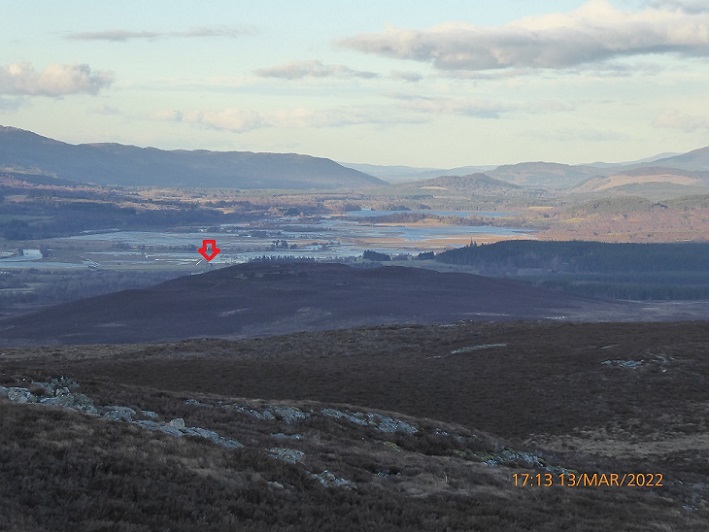
In 2024 the Abrdn Property Income Trust (APIT)’s shareholders took the decision to wind down the fund. Following the disposal of their other fixed assets in 2024, APIT have been having difficulty (see here) selling the Far Ralia estate which they bought in September 2021 for carbon trading purposes and then planted with trees with the assistance of a £2.56m grant from Scottish Forestry. On 18th September APIT published its interim results for the half year until 30th June (see here). These report that although:
“The Board and Investment Manager remain firmly focused on achieving the Company’s principal objective of disposing of its remaining asset, Far Ralia, at an appropriate value and on acceptable terms” they have so far failed to do so. They also state that “While a number of prospective purchasers have progressed to detailed due diligence, this interest has yet to translate into a transaction. Feedback from the market suggests that uncertainty surrounding the future value of carbon credits and wider natural capital markets continues to weigh on investor confidence and decision-making.”
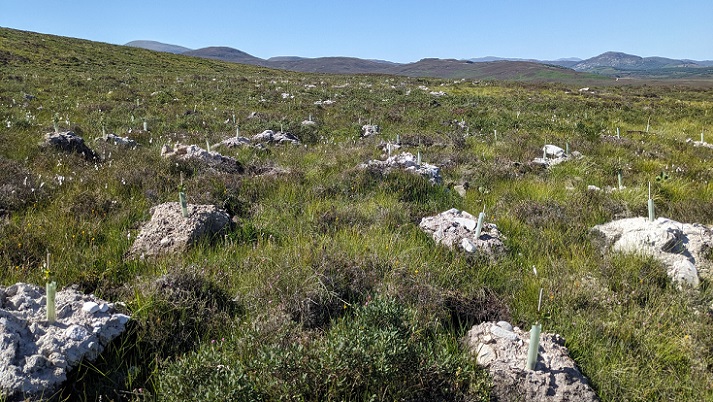
Unfortunately for APIT, the Woodland Carbon Code seriously underestimates the amount of carbon stored in organo-mineral soils (see here) while overestimating the amount of carbon absorbed by trees (see here). As a result planting schemes like that at Far Ralia, which have caused significant damage to organo-mineral soils, are likely be net emitters of CO2 for decades to come. It appears that after the initial rush to buy land at inflated prices, private investors are starting to appreciate these facts and that, in financial and carbon terms, their investments may not be worth the paper they are written on.
This loss of “market confidence” is reflected in APIT’s interim results which show a further reduction in the estimated value of Far Ralia from £7,868,000 in June 2025 to £6,050,000. (APIT originally purchased Far Ralia for £7.5m and put it back on the market in 2024 for £12m). This, and the costs of managing and trying to dispose of Far Ralia, has reduced the Net Asset Value of APIT’s shares in the last six months from 3.19p to 2.98p (0.11p being attributed to the reduction in the valuation of Far Ralia and 0.07p due to ongoing running costs). APIT’s share price has fallen even further from 2.37 to 1.85p, as reported by the financial press (see here).
The drain on APIT’s cash assets and reduction in the Net Asset Value per share to meet running costs is reported as being due to a lack of any rental income. This is significant because Far Ralia is registered under the Woodland Carbon Code, whose primary purpose was to generate income and financial returns for tree planting projects through the sale of validated carbon credits and Pending Issuance Units (PIUs). The Directors and managers of APIT are silent on whether they have made any attempt to sell PIUs, as Oxygen Conservation have been trying to do, but the fact that no income is reported from this source says something about the financial returns currently being generated under the WCC.
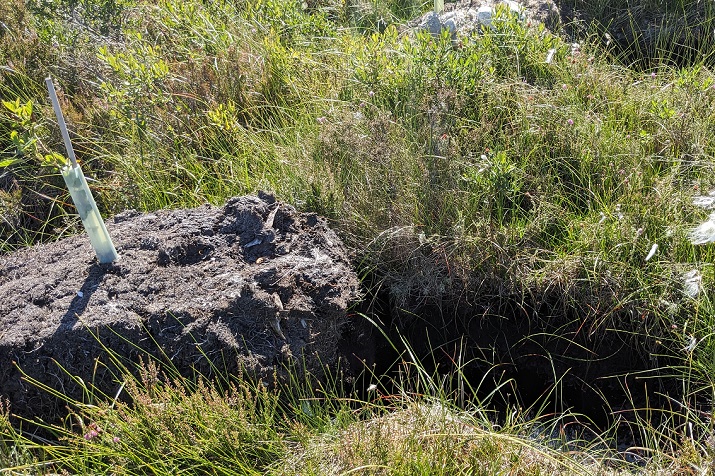
The Interim results report that APIT has now replaced planted trees which had died and met all the other requirements of Scottish Forestry’s grant contract. There is no mention, however, about the liabilities that could face future owners, such as removing the thousands of plastic vole guards used to protect the planted trees on the site.
The Directors also state they have not yet decided whether to claim the £1.65m of the forestry grant which is now due or leave this to the future owner. APIT is registered in Guernsey and I do not understand the tax system sufficiently to work out if this could be for tax reasons (any help on this would be appreciated) but delaying the claim would provide any future owner a wad of cash which they could use initially to help repay any loan for the purchase of the property. More gambling on uncertain returns!
By chance, a month before APIT published their interim results and the same day as I had looked at the wonders of nature along the A9 dual carriage south of Drumochter with Ron Greer (see here), I went for a short walk up Beinn Bhuidhe a few kilometres north of Far Ralia (top photo) to look at access problems at Gortonhall farm with Dave Morris.
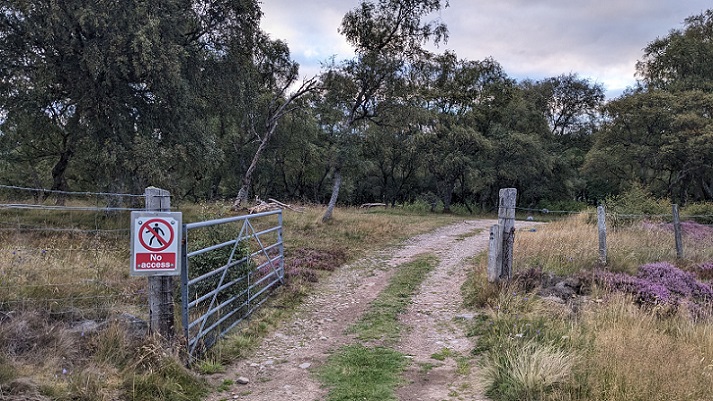
What Far Ralia could have been
I was not expecting to see more evidence of the wonders of natural regeneration but then I had not realised that the land above Gordonhall Farm, which forms part of the Ruthven and Invertromie estate, had been bought by Wildland Ltd, owned by Danish billionaire Anders Povlsen, along with the neighbouring Lynaberack estate.
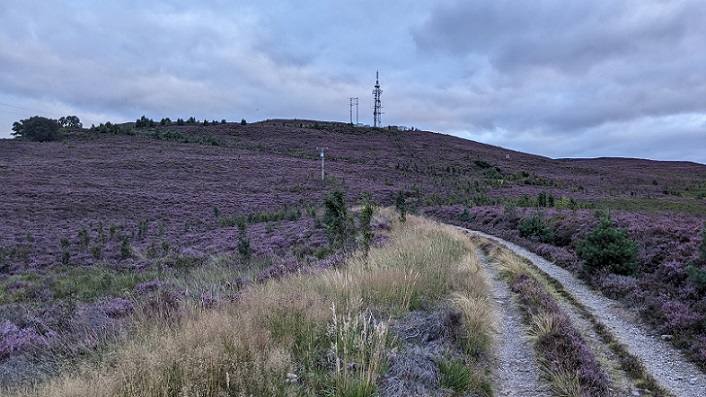
The spread of trees across the moorland is a natural consequence of how Wildland Ltd has changed the way that land at Invertromie was being managed. Simply by ending muirburn, designed to produce more grouse, and reducing deer density to under 2 deer per square kilometre, they have given trees a chance. This is similar to what has happened along the A9.
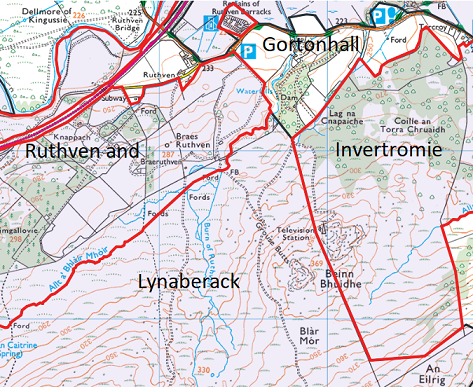
Wildland Ltd bought Ruthven and Invertromie on 2nd October 2020, less than two years before SLIPIT (now APIT) bought Far Ralia, having previously bought Lynaberack in July 2014.
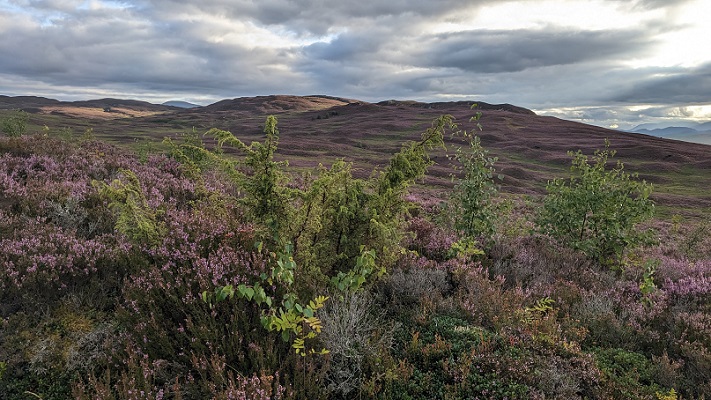
Looking out across Lynaberack, the contrast between how the moorland is evolving through natural processes and the environmental destruction at Far Ralia is striking. The one beautiful, the other ugly. You can see some of this from the air (and the differences would have been even more obvious if the heather was in bloom):
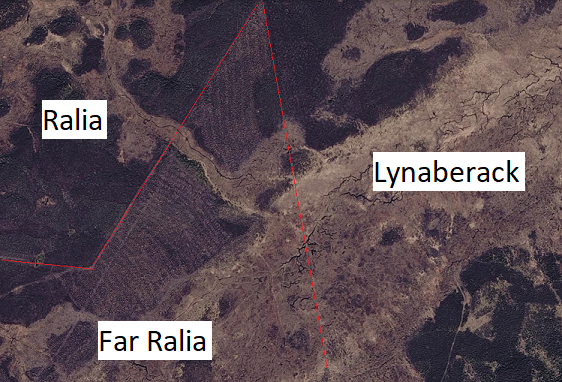
On Lynaberack, however, the most obvious signs of natural regeneration – trees emerging from the heather – were along the boundary with the former Ruthven/Invertromie estate and within a km of older native woodland there and at Gordonhall farm. The plentiful local seed source helps explain some of what I saw but the successful Lynaberack natural regeneration appeared quite recent and not to date back to when Wildland bought the estate twelve years ago.
The Native Woodland Inventory of Scotland, as it appears on Scottish Forestry’s map viewer, still records the herbivore impacts in the Invertromie woods (Coille on Torra Chruaidh) as high. That is clearly no longer the case and it appears that the sheep or deer which were preventing those woods from regenerating may also have been grazing Lynaberack and preventing natural regeneration there. This could help explain why Wildland Ltd bought the Ruthven and Invertromie estate.
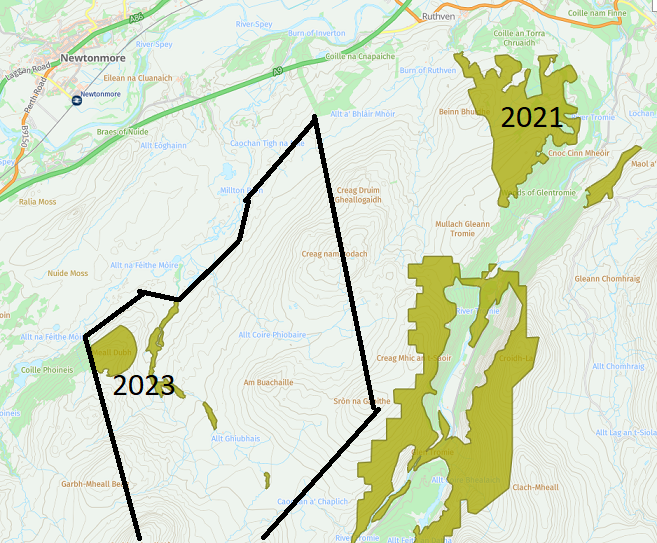
Wildland Ltd have for quite some time been pressing Scottish Forestry to reform the Forestry Grants Scheme to help fund the costs of deer control. In this they have had some success and in 2021 were awarded grants for much of Glen Tromie, including the land they had bought the previous year on Beinn Bhuidhe. That helps confirm that the natural regeneration I observed on Beinn Bhuidhe has become established in the last six years.
While the amounts Scottish Forestry awards towards natural regeneration are far lower than planting, they expect similar densities of trees to be achieved in short timescales as the planting schemes they fund. At the same time when taking decisions on natural regeneration schemes they appear only too ready to accept the “no seed source” myth (see here), informed by out of date research which suggests for natural regeneration to occur a local seed source is required. This probably explains why no forestry grant was awarded for natural regeneration on the Lynaberack side of Beinn Bhuidhe, even though Wildland Ltd is managing that land in exactly the same way as the area where it has been awarded a forestry grant (there is no deer fence to separate the two).
APIT’s initial proposal was to plant all of Far Ralia apart from areas of deep peat and the highest ground. After Dave Morris and I highlighted the extensive birch and alder in the western corner of the estate (see here), Scottish Forestry awarded a grant for natural regeneration rather than planting there – but also paid grant towards the cost of a new deer fence between this and the woodland on the Phoines estate!. This area was, however, very limited in size, as you can see from the map, and limited to where trees were growing in 2022-23, not to where they might have spread. What has happened at Beinn Bhuidhe shows Scottish Forestry could have insisted on a much larger area for natural regeneration and still met their targets for tree density.
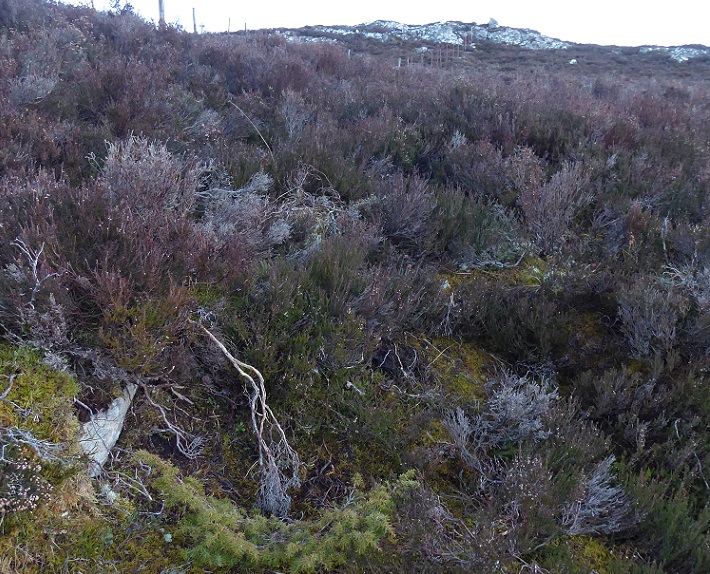
While Wildland Ltd may not have been awarded a forestry grant for natural regeneration on the area of moorland between the Invertromie and Far Ralia estates woodland will develop there in time so long as grazing levels are kept low. The process may take longer than on Invertromie, but there are a number of scattered trees across the moorland which will act as a local seed source and the seeds which are continually being deposited on the moorland by the wind, birds and animals will now have a chance to get established and produce seed in their term. In conservation terms Wildland Ltd are doing the right thing here, enabling natural processes to flourish by limiting their management of the land to control of grazing levels. (Unfortunately they have planted much of the area between Glen Tromie and Glen Feshie).
APIT could have chosen to manage the land they acquired at Far Ralia in the same way, effectively creating a large reserve for nature (and for people to enjoy) on either side of the watershed between the River Spey and the River Tromie. That would have meant being prepared to wait, however, to allow nature to restore itself and accept that any carbon removed from the atmosphere through natural processes would take time. Instead, they chose to plant, aided and abetted by Scottish Forestry and with the tacit consent of the Cairngorms National Park Authority. The consequences for both nature and CO2 emissions have been disastrous.
The implications of Far Ralia for financial investments in nature
In the world of city financial speculation it is never certain who will be left carrying the can but, if APIT makes a significant financial loss on its purchase of Far Ralia it could end up doing a great service for conservation in Scotland. There are still far too many in our public authorities who believe that investment is required to restore nature and believe that city financiers are the means to do that. Neither belief is correct.
First, by far the most important things we need to do in Scotland to restore nature in the uplands (in the course of which woodland would expand) is to stop muirburn and tackle overgrazing. This could be achieved through regulation, with very little need for any investment. If landowners are then not prepared to pay to meet regulatory requirements the answer is simple, they can sell their land to people who will. And if those regulatory “burdens” mean land prices drop and large estates get broken up many people in Scotland would see that as a beneficial outcome – land reform at last!.
Second, there oodles and oodles of wishful thinking among politicians and senior public sector managers about financial investors wanting to do good. This completely disregards some basic facts about financial organisations, their whole purpose is to secure a financial return. APIT’s ostensible intention in buying Far Ralia was to help offset its property portfolio’s carbon emissions and to help restore nature (see here). That might have fooled some but the £7.5m they spent buying the land would have better invested in reducing the CO2 emissions from their property portfolio and most of what they actually did at Far Ralia was financed by Scottish Forestry.
The reality, that finance always trumps conservation, was revealed just two years later when APIT’s shareholders decided their financial interests were best met by winding up the fund and trying to sell Far Ralia for £12.5m. A clear case of shareholders wanting to maximise profits before the speculative land bubble burst. If APIT’s shareholders had any real interest in carbon offsetting and nature, as was claimed by the fund managers who bought and planted the land on their behalf, their shareholders could have gifted Far Ralia to the National Park. (That could still happen if the land becomes a sufficient liability, i.e it proves impossible to sell!).
To give managers at Abrdn some credit, earlier this year they withdrew the £100m they had provisionally earmarked for NatureScot’s scheme to secure financial investment in the restoration of nature (see here). It appears they have realised that investment in nature cannot secure the financial returns demanded by their shareholders. While nothing is certain in the world of city finance, if APIT’s shareholders now make a significant loss on their “investment” in Far Ralia, that would confirm Abrdn were right to make this decision and would have major implications for other investors like Oxygen Conservation who are banking on making large financial returns from similar destructive planting schemes. Far Ralia should be a wake-up call to all those trying to promote private investment in “natural capital”.

The descending financial value of APIT’s Ralia Estate near Newtonmore in the Cairngorms National Park is great news. It should set the alarm bells ringing in Oxygen Conservation, Gresham House and all those other investment managers and land speculators who believe in the magic world of carbon credits in the Scottish Highlands. And if the Ralia and BrewDog financial disasters of recent times are not enough to awaken these corporate raiders then perhaps the recent wildfire in the Cairngorms will finally convince them that plantation forestry on carbon rich soils is ecological stupidity. Close behind are those politicians who gave the green light to these projects, wasting £millions of public money in the process and allowing these speculators and their advisers, such as Scottish Woodlands in their BrewDog adventure, laughing all the way back to their financial supporters and banking pals in far away places. But, as the Scottish Government finally gets to grips with this scandal, perhaps we will see a complete re-design of the grant and tax arrangements that underpin this outdated type of forestry in Scotland. In future, trees need to be planted in mineral, not organic, carbon rich soils, as recommended by the UK Government’s Climate Change Committee. And as public bodies are reduced in number in Scotland, perhaps we can see the end of Scottish Forestry. We do not need SF as the main mechanism for supporting tree planting by farmers, crofters and other landowners. Expanding the role of the rural payments department alongside adjustments to the role of our other state forest service, Forestry and Land Scotland, can meet all future requirements for woodland development on private and state owned land.
An important, useful and timely article which should receive wide attention and, hopefully, appropriate response.
Hi Nick, you refer to Gortonhall Farm…..not sure where you found the map…..the farm is GORDONHALL , which reflects a former land owner in the Kingussie area…….the Duke of Gordon.
Oops! Its my hearing! I have corrected, thanks, Nick