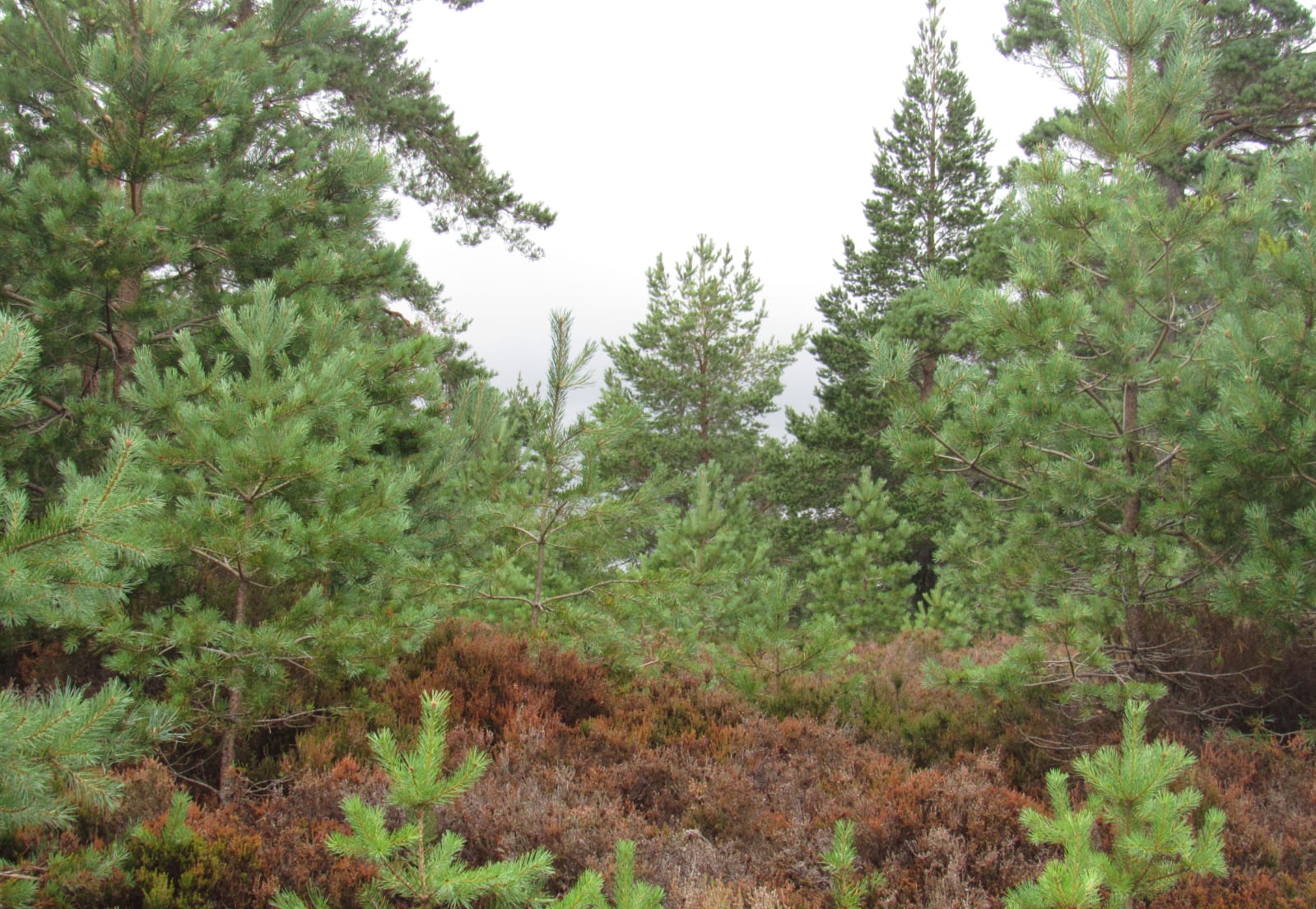
This very short post is concerned with pinewood recovery after wildfire, and based around a 10 minute video shot in the Forest of Birse on Deeside, 23 years after a big fire there in 2003. The video can be found viewed here.
The context is the big fires taking place at Glenmore Forest and Abernethy at the moment.
In this case, it took 3-4 years to get a feel for what might happen, but the result was that 80-100 ha of very scattered Scots Pine trees in long heather, possibly 15-25 years old, was replaced with a younger cohort of trees, growing at perhaps 10- 20 times the density. The unburned ground is regenerating, as can be seen in the video, but that is very sparse and gradual in comparison. The new wave of regeneration was able to overwhelm any deer that might have been present. There was no contraction of pinewood area, just that the new cohort was much thicker, and it happened very quickly.
Fresh seed fall on to burned ground will obviously have germinated much more easily than previously, perhaps with a lower mortality but it must also have been the case that the fire itself activated seeds, perhaps even as the trees were being burned. Others will understand the mechanisms better than me, but the outcome here as been markedly better than you might have anticipated.
I was employed on a neighbouring estate at the time, and until SFRS arrived, was partly responsible for those who attended, having taken the phone call that came in and initiated the response. I have had no input in to this from 2006, and this was just a return visit to see what was going on twenty years later.

very interesting indeed and glad Victor paid note to my request for photos as his info is most valuable in judging what can happen over time.
The last big fire was in Glenmore/ Rothiemurchus was 3 -11 June 1960 – you can see the dense regeneration after this fire as you drive/ cycle up the Ski Road: Old Logging Way to Loch Morlich. The fire started in a lay by next to the Ski Road.
There is more dense regeneration after the 1920 fire near Loch an Eilean. If the RSPB want to recover the Grannie Pines and ancient wood pasture landscape of Abernethy, they will have to graze cows, deer and ponies or the dense regeneration will shade out the plants -like blaeberry and wide crowned trees- that Capecaillie are dependant on.
Thanks Alexandra, dense natural regeneration is quite natural and if it happens RSPB need to be pressurised not to interfere. It will thin naturally over time and instead of interfering with natural processes to try and save one species, the RSPB would be better campaigning for commercial forests to be diversified to prove alternative living spaces for caper. I am not sure where you got the information that caper need wide crowned trees but the European spruce, among which they live in the Alps, forms an apex and adds to my argument that much received wisdom in Scotland is not based on science
The science we have in Scotland suggests that caper can use a wide variety of different woodland types for different purposes at different times of year. The ground vegetation (lots of blaeberry etc) is arguably more important than the species of tree overhead. Scots Pine is the most useful species overall, but larch is good for feeding on in the spring, spruce with branches down to the ground gives some protection against predators and provides a bit of warmth in the woods. Commercial spruce etc can be used as well, but it is better thinned. Thinning promotes blaeberry growth, so active management outwith the real core areas of ancient forest should be encouraged. My understanding is that there is something about the acoustics of areas of old granny pine that make these areas the preferred ones for lekking. Obviously, that is a key activity, but only at one time of year. The rest of the forest, of whatever species, will be useful at other times. Caper chicks do perfectly well in oak woodlands, as long as there is blaeberry underneath.