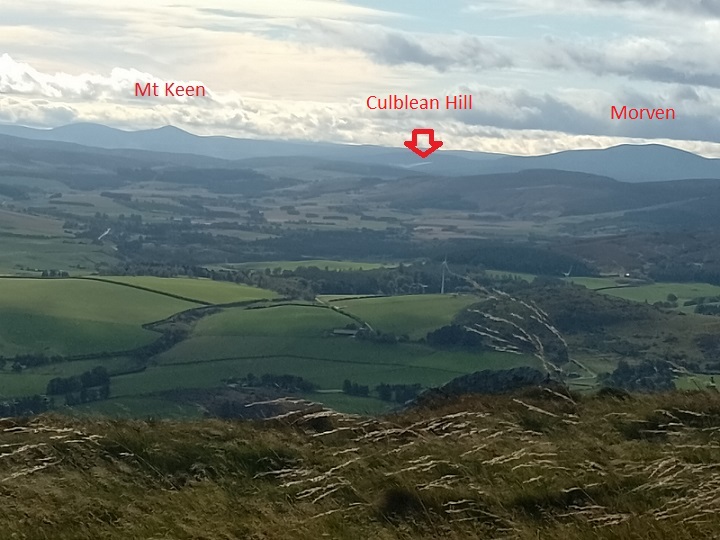
A reader sent me this photo of muirburn yesterday, taken from Tap O Noth, approximately 20 miles to the north. It was a windy day, with estimated gusts of up to 40mph.
Wind and the muirburn code
The old muirburn code refers to wind 13 times and contained important factual statements describing the impact of wind on fires, such as:
“The behaviour of fires changes with wind, slope, fuels and aspect and whether it is a head, flank or backing fire or indeed a ground fire”;
and the risks of burning in windy conditions
“Risks:
Heather fires can have high fire intensity with a fast rate of spread, and they react quickly to changes in wind direction or wind speed.”
It also contained very explicit advice about not burning in windy conditions:
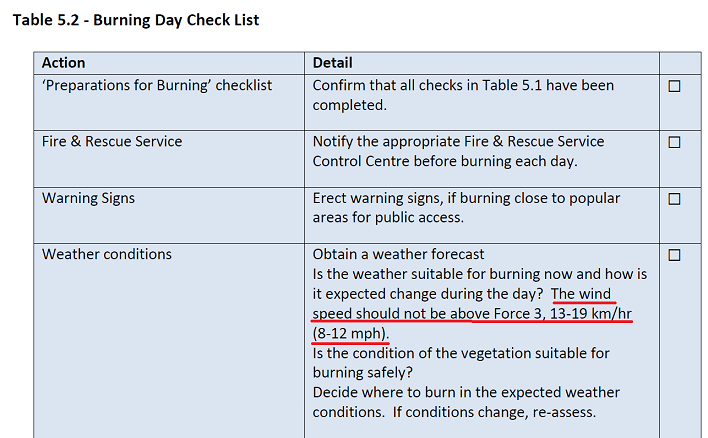
The new Muirburn Code which came into effect on 15th September contains just four mention of the words “wind” or “winds”. The descriptions of the impact of wind on muirburn have been completely removed along with the advice, in the section of what to do on the day, not to burn in wind speeds above above Force 3, 13-19 km/hr (8-12 mph):
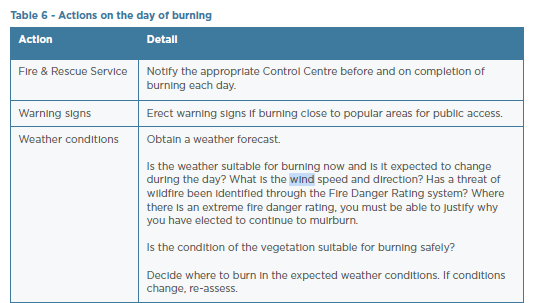
Back in May 2025 I described how the draft revised Muirburn Code produced by NatureScot for the public was weaker than the original and included a link to my response to the consultation where Iobjected to this, including the removal of references to wind speed (see here). I suspect I am not only one whose comments have been ignored.
The absolute folly of removing the advice not to burn in windy conditions is demonstrated by what happened with the Abernethy and Glenmore wildfire (see here). The fire started on 15th July, got out of control but then, just when people thought it had been almost extinguished, the wind got up and changed direction on 24th July and burned for another 10 days.
There is strangely no reference to the impact of this change in wind speed and direction in the Scottish Fire and Rescue Service’s timeline of the fire (see here). That is another reason why we need an independent inquiry (see here) but I will now try and found out whether SFRS made any objections to NatureScot’s proposal to remove the advice not to burn in winds speeds above Force 3. One might have hoped that SFRS would have been advocating for this advice to be strengthened and turned into a requirement that any land manager responsible for burning in windy conditions would lose their license.
The references to “wind” that remain in the Muirburn Code are restricted to advice on not burning short wind-clipped heather or on slopes vulnerable to wind erosion. All references to role that wind plays in turning muirburn into wildfires has been excised.
The location of the muirburn in the photo
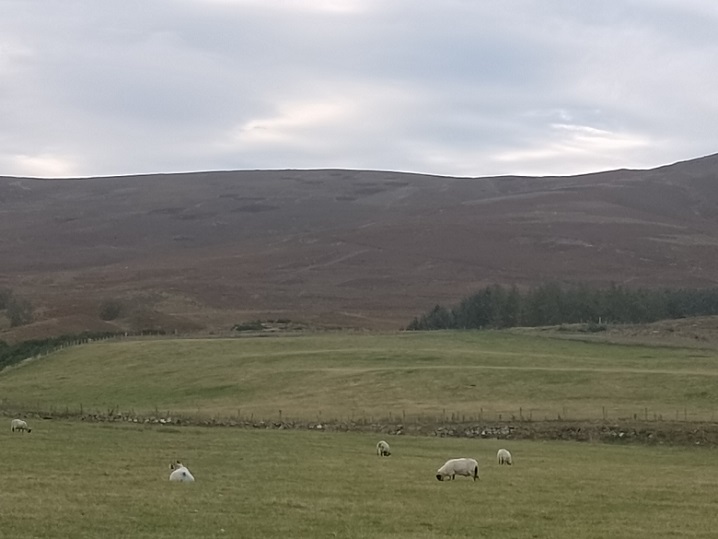
The reader who sent the photo yesterday thought that the muirburn was on the eastern flanks of Culblean Hill to the south of Morven. Today they went and confirmed it. While it appears strips had been mown around patches before burning to create firebreaks, in windy conditions such firebreaks are of little use. While the new Muirburn Code contains nine references to firebreaks, nowhere does it set out what size of firebreak would be required in what conditions. That is left to the discretion of staff on the ground.
A year ago there was a major wildfire on Culblean Hill caused by out of control muirburn in what appeared to be windy conditions (see here).
This illustrates the fact that the new muirburn code has been turned into a license for those who have been carrying out muirburn irresponsibly to carrying on doing so. Instead of becoming an important a means of preventing wildfires, it appears it will now serve to increase their likelihood.
The grouse moor interests that appear to have been behind the weakening the Muirburn Code include the Game and Wildlife Countryside Trust. The GWCT’s “research” project at Auchnerran Farm (see here) just happens to be located just below Culblean Hill.
While the commencement of the muirburn licensing scheme on 15th September was ignored by the mainstream media, it was marked by the GWCT who issued a blog (see here). In it they state the muirburn “season does not mean that conditions are automatically suitable for burning. Land managers have a responsibility to assess weather conditions, vegetation, and wildfire risk on the day.” What the blog didn’t say was whether the GWCT approved the introduction of a weakened Muirburn Code or whether the person responsible for the muirburn on Culblean Hill yesterday, should be stripped of their muirburn license.

What a sad state of affairs.