A late postcard – I am back in Scotland!
The most obvious impact of global warming in the Alps has been the retreat of the glaciers. At the end of the 19th Century the glacier on Triglav covered over 40 hectares. By 2019 it had shrunk to 1 ha and by 2022 was no longer consider a glacier (see here). We saw only a few snow patches on the north side of Triglav and some at the bottom of sinkholes in the limestone (dolines) protected from the sun.
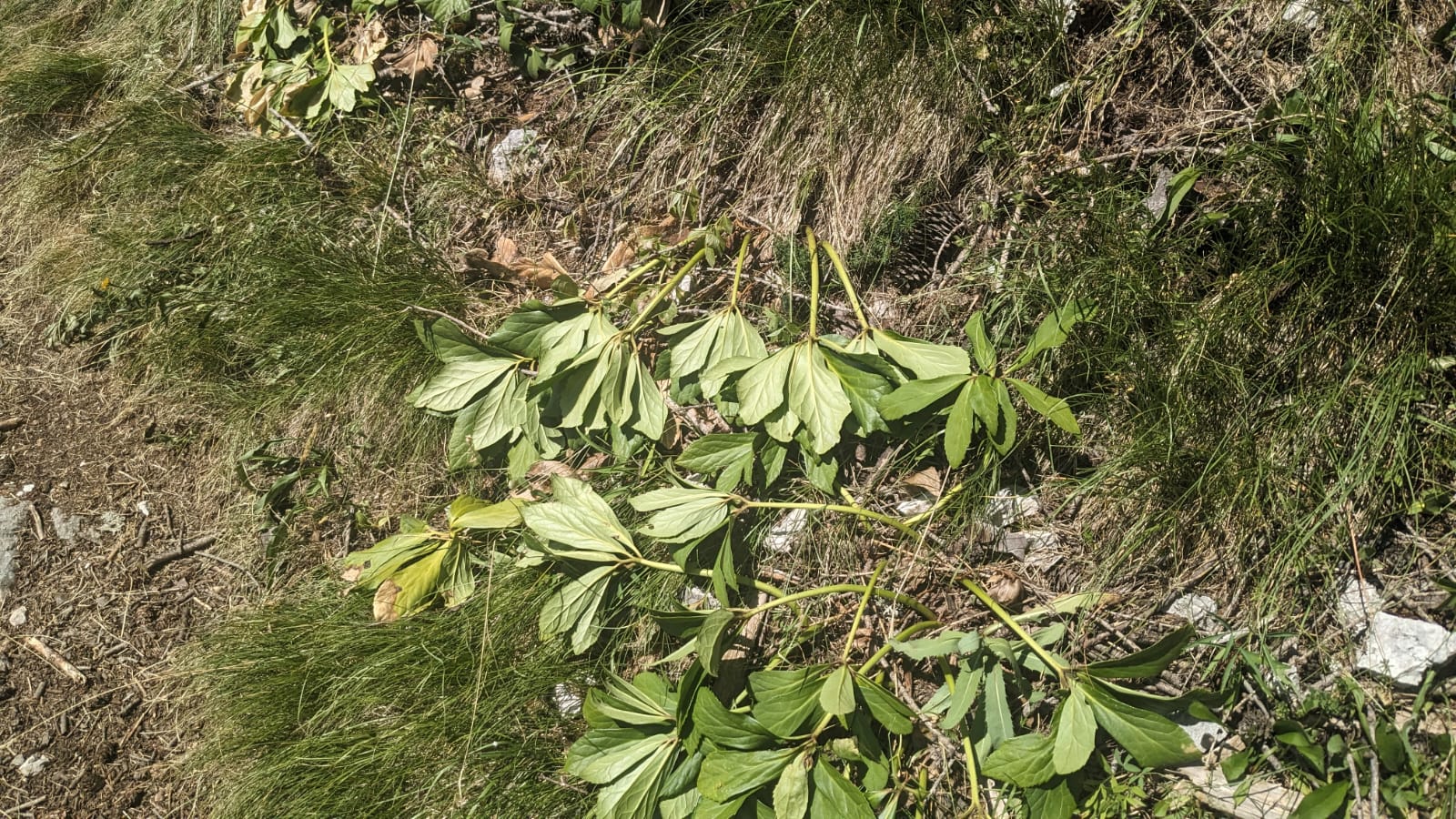
The impact of global warming on forests, including increased risk of wildfire from heat and drought (see here), has taken longer to become apparent and does not just impact on trees. The’Christmas rose, Helleborus niger, is found on the edge of woods and scrub on limestone. It appeared to be common in the Triglav National Park. As a short stemmed plant, whose leaves normally last through the winter before it flowers in early Spring (while snow is still on the ground), it would be vulnerable to grazing if it was not poisonous. Commonly cultivated as a garden plant for its flowers, it does not do well in dry conditions or full sun.
On the first few days of our trip, all the stems and leaves we saw were erect but then, increasingly, we came across plants that had collapsed through lack of water. This process started with those plants most exposed to the sun (as in photo above) but then began to effect plants growing under the protective shade of trees.
The flower bud of the Christmas rose normally starts to develop in the Autumn but requires healthy leaves: without those, the plant cannot reproduce. Its a good example of a woodland-edge plant that is being seriously affected by global warming. Trees are being similarly affected but the impact of heat and drought is slightly less immediate.
In the mountains thunderstorms help counter the drying out of forests in summer. In the week we were in the Triglav National Park we experienced one thunderstorm when we were walking up to a hut under Triglav. The rain lasted for a couple of hours, intense at first then relenting, but like many such downpours was local in extent. I don’t know whether the storm dowsed Prisojnik but, whatever the case, it doesn’t appear to have been enough for the Christmas rose.

The whole impact of climate change in the Alps on the forests must be extremely worrying for inhabitants. 60% of all the forests in the Alps are solely for control of slope erosion, landslides and avalanches.Without them most of the Alps are simply uninhabitable. I recall being shown around the Swiss Alps in the early 1980s by one of their senior scientists to look at the whole problem of foliage loss in their forests and as an experienced plant pathologist I could see how threatening this was and indeed there were thoughts of evacuating places if this process continued. I have no idea what happened to that whole crisis but it was indicative of the key role of these forests