Background
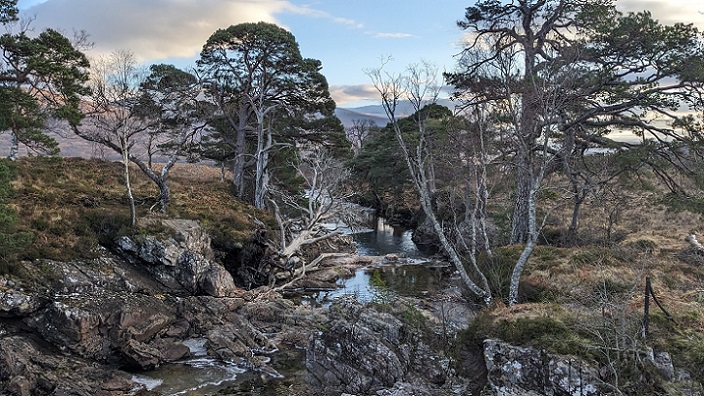
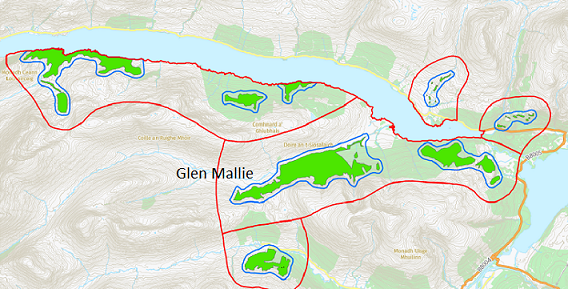
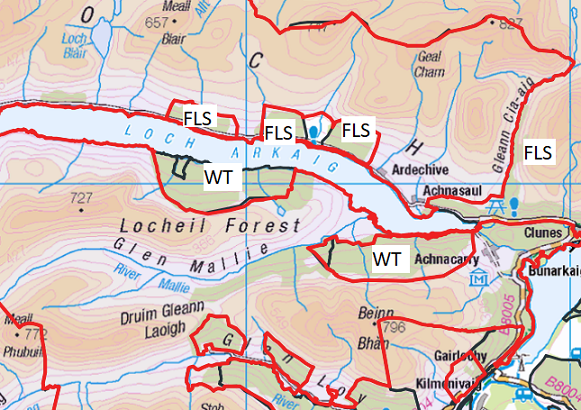
The areas of native pinewood around the east end and along the south shore of Loch Arkaig, taken together, form one the largest and most important remnants of the Caledonian forest left in the west of Scotland. The potential for them to join up and form one continuous area of native woodland is illustrated by the maps (see here) on the Caledonian Pinewood Inventory (CPI):
Originally lying within the Locheil Estate, which now operates under the name of Achnacarry, the condition of the core areas has been severely impacted on by a long history of overgrazing by deer, which has prevented them regenerating naturally, invasion by non-native species, including trees planted for commercial forestry purposes, and.a major fire in 1942 caused by wartime commando training. In the last decade, however, long after the initial attempts in the 1990s to restore native pinewoods elsewhere in Scotland, efforts were initiated to reverse their decline around Loch Arkaig.
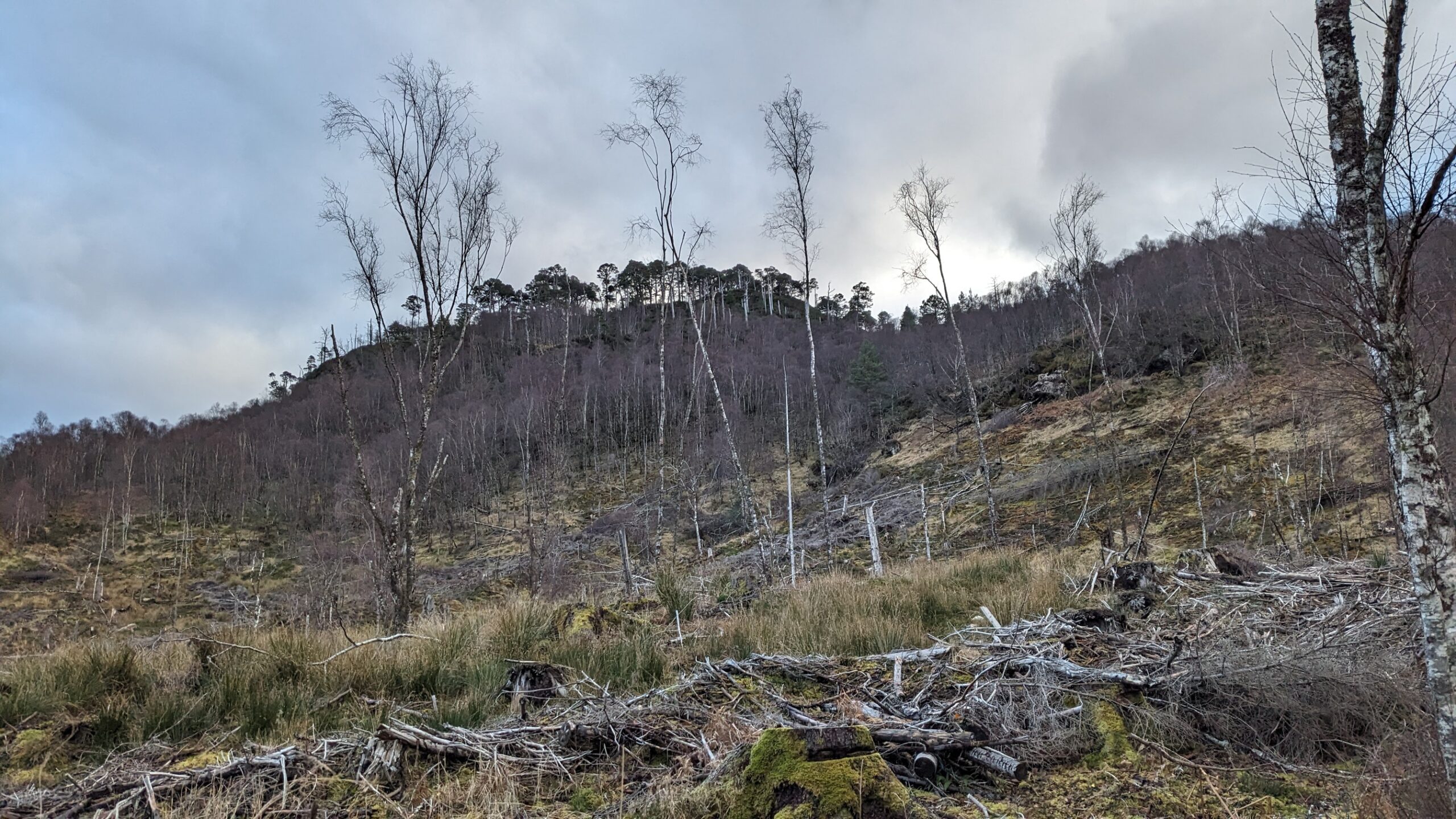
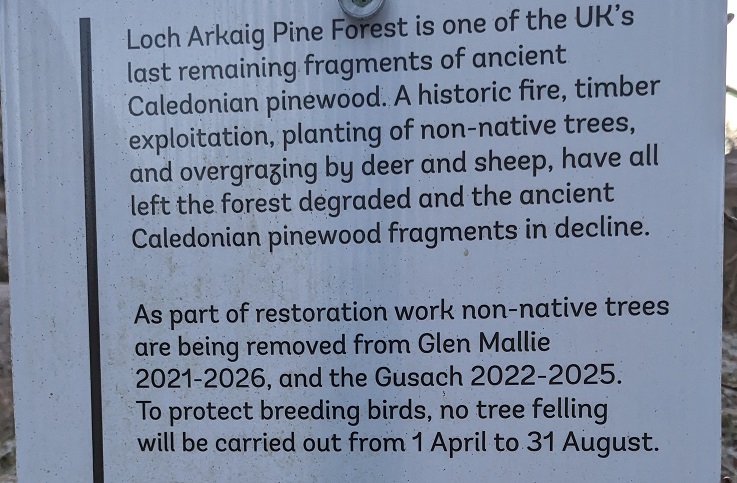
In the winter of 2016/17 the Achnacarry Estate sold the eastern half the Glen Mallie Pinewood and the Loch Arkaig woodlands, further to the west, for £495,000 and £469,892 respectively, to the Woodland Trust (WT) in partnership with the Loch Arkaig Community Trust (LACT) (see here). Since 2021 the WT have been removing the non-native trees and rhododendron which were threatening to overwhelm this area of the pinewood, a process that is due to finish this year, but unfortunately replanting some of it with trees grown at LACT’s tree nursery. .
Forest and Land Scotland (FLS) have similar plans to remove non-native trees from the smaller area of pinewood they own at the north east end of Loch Arkaig.
Meanwhile the Achnacarry estate, which still owns most of the land in the area, has been pursuing its own conservation projects, while continuing to operate as a sporting estate which also has commercial forestry interests. To pay for these conservation projects it has for the last few years been trying to attract external finance, effectively getting others to help restore the environmental damage that has been caused by the way it has managed its land in the past. It has also been trying to use some of these projects to generate income in the future through carbon offsetting markets.
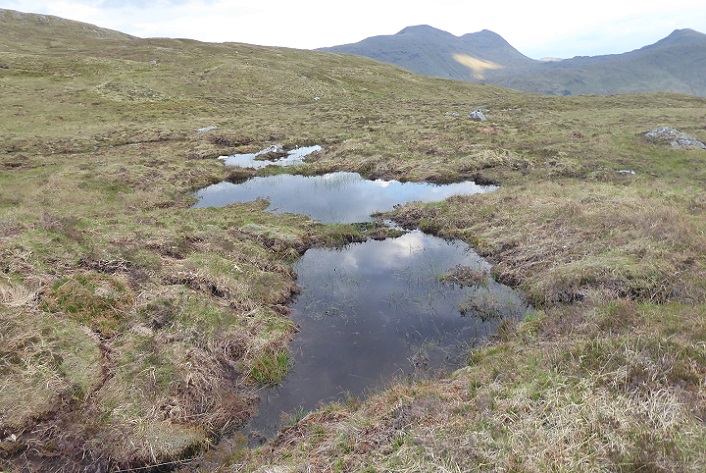
As an example of Achnacarry’s use of private finance, the Peatland restoration along the route from Strathan over to Glen Kingie, appears to form part of “Achnacarry Phase 3”. The work was carried out by Staginfrastructure Ltd, a local company based in Spean Bridge (see here), and partially paid for by LVMH (Moet Hennessy Louis Vuitton), the French luxury goods conglomerate, in partnership with Wetland International (see here), as part of their commitment to reduce carbon emissions. The scheme is registered under the Peatland Carbon Code and Pending Issuance Units (future carbon credits) have since been marketed by the Caledonian Climate Gaia company.(see here) along with PIUs from the Achnacarry Phase I and 2 schemes
Achnacarry is in various other partnerships, including the the Leverhulme Centre for Nature Recovery at Oxford (see here) but, most importantly for the Caledonian pinewoods, with the WT, FLS and LACT in the Airceag Beo. This comes under the umbrella of the Alliance for Scotland’s Rainforest and its website (see here) states the “estimated cost of delivering a project of this magnitude is more than £10M over the next 10 years”. In trying to attract private investment it has been the recipient of at least two rounds of grants from FIRNS (the Facility for Investment Ready Nature in Scotland) which is funded by NatureScot and the National Heritage Lottery Fund.
Achnacarry was also working with Abrdn, who after their disastrous project at Far Ralia in the Cairngorms National Park (see here), were interested in exploring the potential to finance nature projects without buying land. In April, however, it was reported that the Scottish Government had tried to cover up their withdrawal from a £100m partnership with NatureScot (see here).
This provides the background context to the state of the natural environment in Glen Mallie and the decisions by Scottish Forestry to award Achnacarry two woodland grants for conservation projects there.
Woodland and deer in Glen Mallie
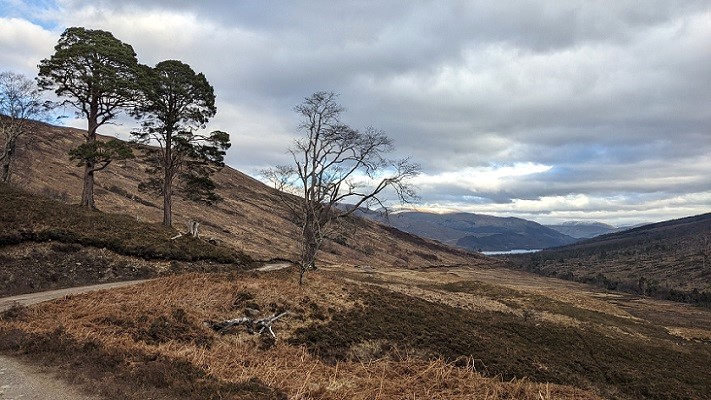
Glen Mallie runs for about 16km in a westerly direction from Loch Arkaig. The eastern half is covered with trees. There are mature Scots Pine not just within the CPI core zones but along the River Mallie and scattered across the hillsides. Towards the mouth of the River Mallie there is extensive alder woodland while on the western side of the glen there are reasonably sized areas of birch.
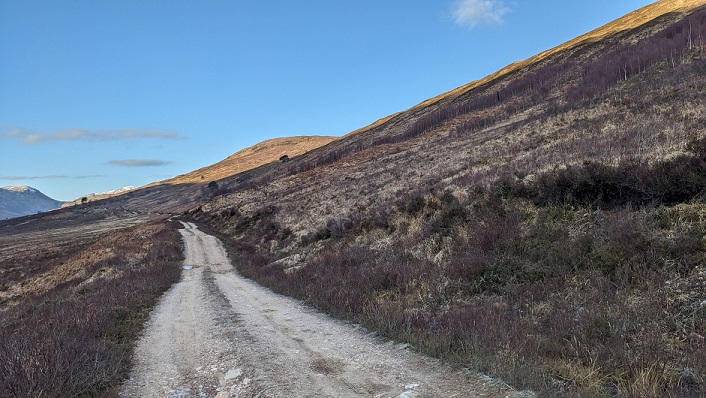
By contrast there is significantly less tree cover in the western half of the glen and what there is is mainly concentrated along the river banks and in gullies.
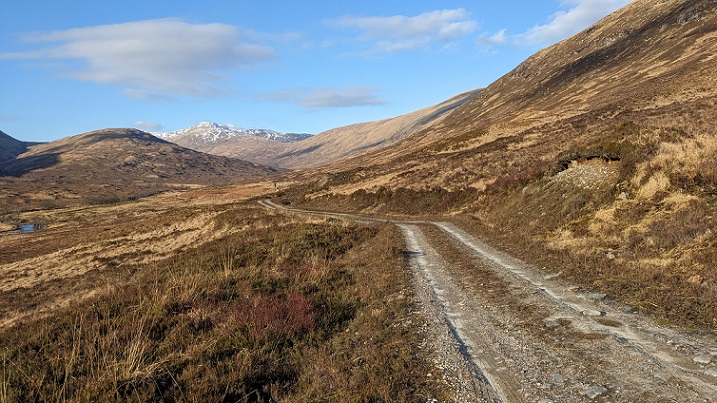
Part of the explanation for this difference appears to be that for most of the year red deer are concentrated in the western half of the glen and on the higher ground, some of which belongs to neighbouring estates, but in bad weather and in the winter they descend down the glen towards the shelter and food offered by the more wooded areas. (There is a parallel situation along the River Dulnain where deer descend in bad weather from the high ground of the Monadhliath to the Kinveachy pinewoods see here).
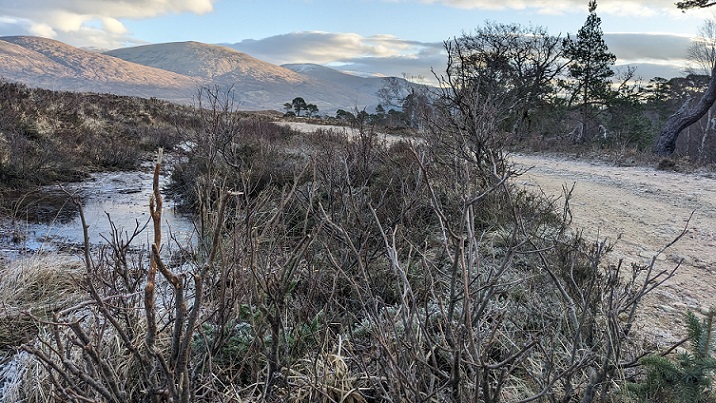
The Achnacarry Estate is split between the Knoydart and West Lochaber Deer Management Group (WLDMG), with Glen Mallie included in the latter as part of South Achnacarry and Moy. According to information contained within the draft Achnacarry Long-term Forest Plan consulted on last year, deer density in South Achnacarry and Moy was 16.1 per square km in 2018 and had risen to 17.1 by the time 2023 foot count. The average deer density across the WLDMG as a whole was lower, 11.8 per square kilometre in 2018 and 14.4 in 2023. The explanation given for these increases is stalking activity reduced during Covid. The target now is 10 deer per square km across the WLDMG or the upper limit recommended by the Report of the Deer Working Group (see here).
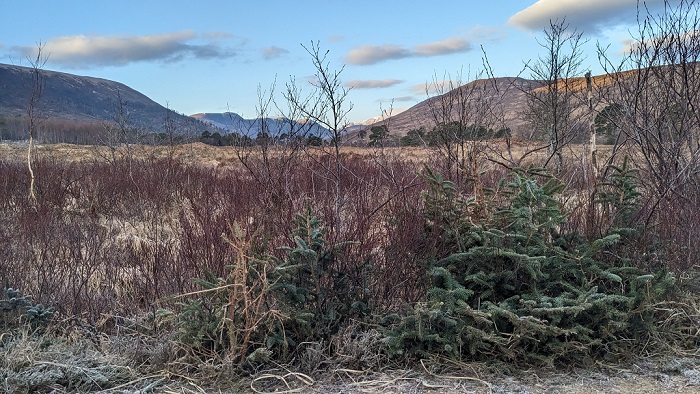
This target is considerably higher than the 5-6 deer per square km that Achnacarry is aiming for in their commercial woodland areas. It is also five times the density that evidence shows is required for native woodland to expand across the landscape through natural regeneration (see here). The wonder is that there has been any natural regeneration in the eastern part of Glen Mallie. This is probably explained by limited seasonal use of the area by deer. Unfortunately, at present grazing levels are such that while broadleaves are being eaten the much less palatable Sitka has started to establish itself in places
The impact of grazing on trees is also possibly being limited by the estate providing an alternative and better food source:
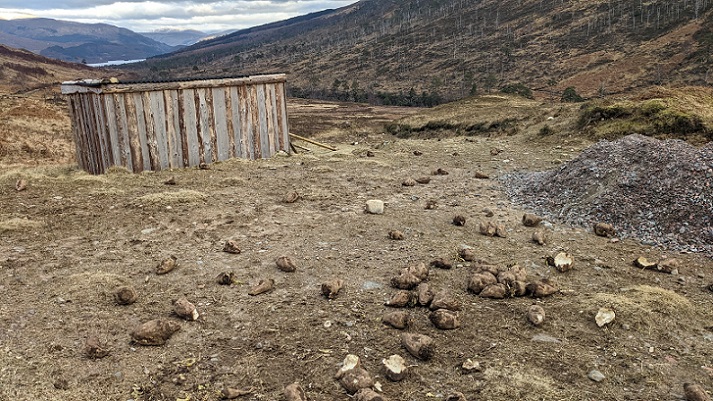
The problem with feeding, however, is that it helps more deer to survive the winter. This increases overall deer density and those deer then have to feed somewhere, so if its not in the eastern part of Glen Mallie is serves to increase grazing pressure elsewhere. (There are similar issues with diversionary feeding for pine martens, intended to reduce predation rates on capercaillie eggs and chicks, it is likely to increase pine martin mortality and therefore overall predation by pine martens).
A much more sustainable alternative to treating wild red deer like farm animals would be to reduce their population by shooting or capturing them when they come down to the woodland areas in bad weather or when there is a shortage of food. Culling deer has become far easier since the Scottish Government abolished the statutory closed season for shooting stags in 2023.
The woodland grant schemes in Glen Mallie
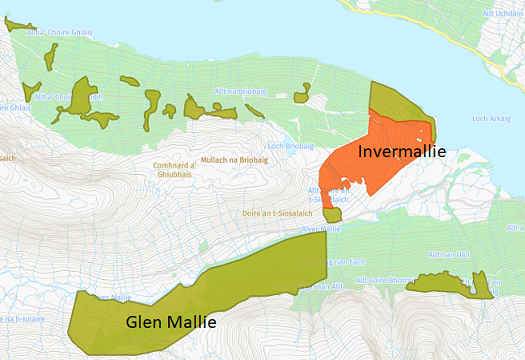
The Achnacarry Estate has been awarded grants by Scottish Forestry for two schemes in Glen Mallie. The first, called “Glen Mallie Pinewood New Natural Regeneration” (Ref 23FGS74753), which covers the core area of Pinewood burned in the Commando Fire, was approved in May 2024. The second, called “Invermallie Woodland Creation” (Ref25FGS84020), includes a planted area and two smaller areas for natural regeneration and was approved in July 2025. Scottish Forestry provided the contracts and plans for both the Glen Mallie schemes, which I refer to below, in response to a Freedom of Information request.
The first scheme covers a core of Caledonian pinewood, the second is in the Caledonian pinewood buffer zone (see top map above). The current policy of Scottish Forestry is set out in “The management of semi natural woodlands. 7.Native pinewoods” (Forestry Commission 2003)”. Written before the rewilding projects at Glen Feshie and Mar Lodge showed how Caledonian pinewoods expand once deer numbers are reduced to less than 2 per square kilometre, it nevertheless states “The most important single measure to achieve this (the conservation of the Caledonian pinewoods) will often be the control of browsing and grazing by sheep and deer so that the wood can regenerate and expand”. It also contains a (weak) presumption against planting as a means of restoring the Caledonian pinewoods in these zones.
After considerable pressure from a few landowners, led by Wildland Ltd, to contribute to the costs of deer control Scottish Forestry now provides grants for natural regeneration. These should have provided an opportunity to enable the Caledonian pinewood fragments in Glen Mallie and south of Loch Arkaig to reconnect. Instead, they are being used to erect deer fences around existing woodland. This is because Achnacarry, like most traditional stalking estates – the deer part of its business is called “Achnacarry Sporting” – don’t want to reduce the deer population to sustainable levels.
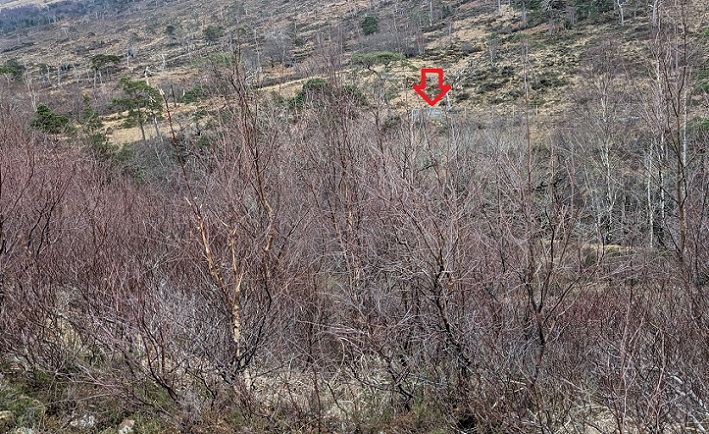
In theory natural regeneration grants are intended to enable “the successful establishment of natural regeneration of native tree species on open ground within or around the woodland edge” (see here for grant conditions). However, for these and other woodland creation grants Scottish Forestry defines woodland as areas where the tree canopy covers less than 20% of the ground. While the Glen Mallie pinewood is in the CPI core zone and has existed for thousands of years, surviving the “Commando fire” and the artificially high number of red deer promoted by stalking estates, it does not count as woodland from a Scottish Forestry perspective or the purposes of these grants. That has allowed Achnacarry to use the natural regeneration grant to erect a deer fence around the CPI core zone.
What has happened in Glen Mallie illustrates two further serious failings in Scottish Forestry’s natural regeneration grants scheme. The first results from the way that Scottish Forestry treats native woodland as it does commercial plantation forestry. It judges the success of any such scheme by how many new trees are established in the first five years. (What happens afterwards is of no concern to Scottish Forestry (see here)). This approach promotes native woodland creation schemes that look little different from plantations. In the case of natural regeneration schemes: “Stocking densities of a minimum of 400 trees per hectare are expected by year five” and the average height of these trees is expected to be 0.5m. The use of the term “stocking densities” is very revealing about Scottish Forestry’s mindset.
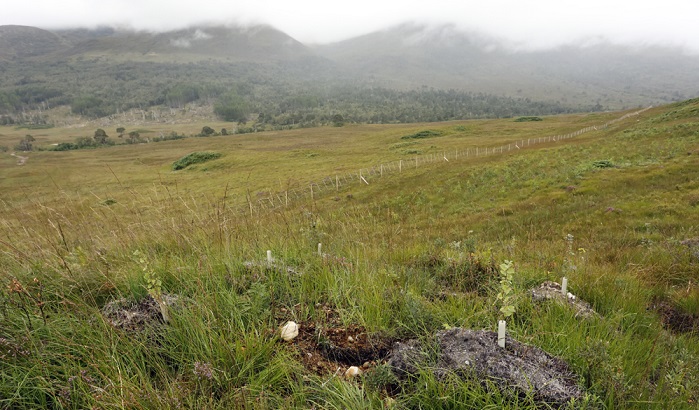
Although 400 trees per ha may appear significantly less than the densities required for native woodland planting schemes (the woodland creation part of the Invermallie scheme is required to achieve 1600 stems per ha by year five), this has significant consequences because, if these targets are not met, the grant is repayable. Instead of giving nature time to recover this encourages deer fencing, as is illustrated by the plan for the Glen Mallie scheme:
“Advanced natural regeneration surveys were carried out in June 2023 showing positive indications that there are reasonable levels of natural regeneration throughout the site which are being suppressed by herbivore impacts and therefore not achieving their potential. The survey implied that the seedlings are hanging on in the footprint from woodlands which existed in the 19th century and have been lost, but have the potential to regenerate through the exclusion [my emphasis] of browsing pressures”
Moreover, whether or not landowners are committed to reducing deer numbers, the probability of natural regeneration at this scale and within these timescales is only high in and around areas of existing woodland. This generally leads to small natural regeneration schemes, such as those shown on the map above on the land now owned by the WT, and is further reinforced by Scottish Forestry’s second pre-condition for grant funding, that the natural regeneration area should normally be within 50m of a seed tree. That Wildland Ltd managed to persuade Scottish Forestry to award them a natural regeneration grant in 2021 for a significant area of moorland on the Ruthven and Invertromie estate that was more than 50m from an existing seed source (see here) is something of a miracle. But then the owner of Wildland Ltd, Anders Povslen, has enough cash and appears committed enough to risk having to repay these grants.
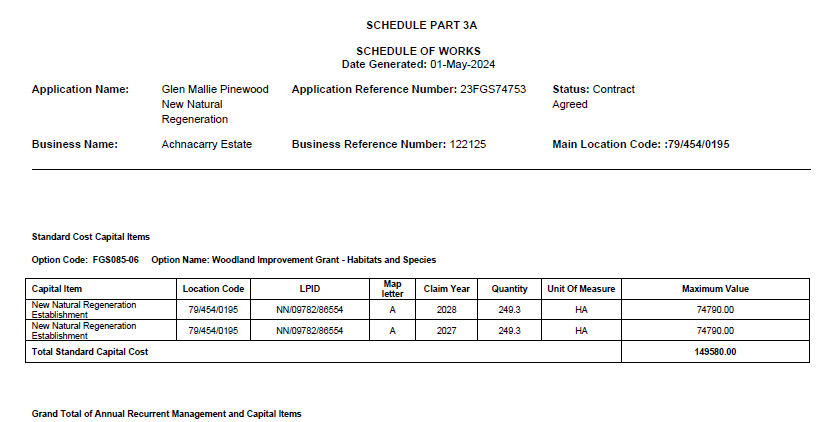
The total grant the Achnacarry estate were awarded for the Glen Mallie “new” natural regeneration was just under £150k. Using this to reduce deer numbers, as an alternative to erecting a fence around the CPI core zone, would have been foolhardy from a financial perspective. The grant would have paid the costs of one full time stalker for about three years. With average deer densities of 14.4 per sq km across the area at the time Achnacarry applied for the grant, there was no possibility of one additional stalker bringing deer numbers down in time to meet the binding contractual requirement of 400 new trees per ha. The timescales for successful deer control and natural regeneration are more than five years.
The Glen Mallie pinewood natural regeneration scheme covers an area 254 ha or 2.54 square km. Scottish Forestry’s contract with Achnacarry provides for a “compensatory cull In order to accommodate the area of ground being removed from the deer range……….of 8 stags and 15 hinds” a total of 23 red deer. At a deer density of 14.4 deer per sq km the minimum compensatory cull should have been 35 (2.5 x 14.4) not 23. This provides a good example of how Scottish Forestry is ignoring its own policies and is failing to use its grants schemes to incentivise and require sporting estates to reduce deer numbers.
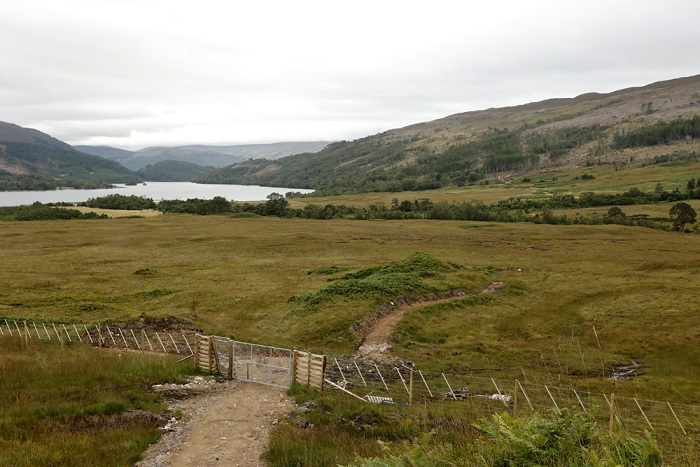
The Invermallie woodland creation project (see map above) was intended to connect the Glen Mallie pinewood with the other pinewoods on the south shore of Loch Arkaig by “enclosing a small stand of existing woodland at the southern end of the enclosure for natural regeneration, planting up the middle section where there is limited seed sources………..and naturally regenerating the northern end of the enclosure which has the potential for successful natural regeneration”.
Actually, woodland would also have developed in the middle section between the two areas identified for natural regeneration but not quickly enough to be judged “successful” by Scottish Forestry. As Achnacarry put it in their plan: “there is insufficient seed source or signs of natural regeneration to be confident of successful establishment therefore planting will be required”.
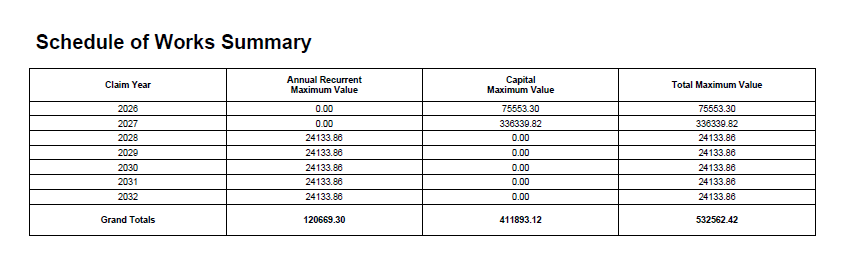
For planting the middle section, an area of 130 hectares, Achnacarry received £532,562.42 or three and a half times the amount they received for the Glen Mallie pinewood, which at 250 ha was almost twice the size.
£532k could have employed a stalker for almost ten years (or 13 years if it was combined with the £150k grant for natural regeneration). That would have been a sufficient period for an experienced and dedicated stalker to reduce deer numbers sufficiently to enable natural regeneration to take off between all the existing mature trees and woodland areas in the eastern half of Glen Mallie.
Unfortunately, instead of supporting a reduction in the deer population to sustainable levels the Scottish Forestry grants system firstly incentivises landowners to plant native trees and then secondly incentivises very damaging forestry practices through it requirement that recipients of woodland creation grants to meet target numbers of trees five years after planting, in this case 1600 per ha.
The problem is planted trees not only get browsed by deer, hence the deer fences, but some get nibbled by smaller herbivores like voles or hares and where the ground is wet the chance of planted sapling sbecoming established reduces considerably. The use of plastic vole guards and mounding, as well as deer fences, the cost of which are basically covered by the woodland grant, reduces the risk of having to repay that grant:
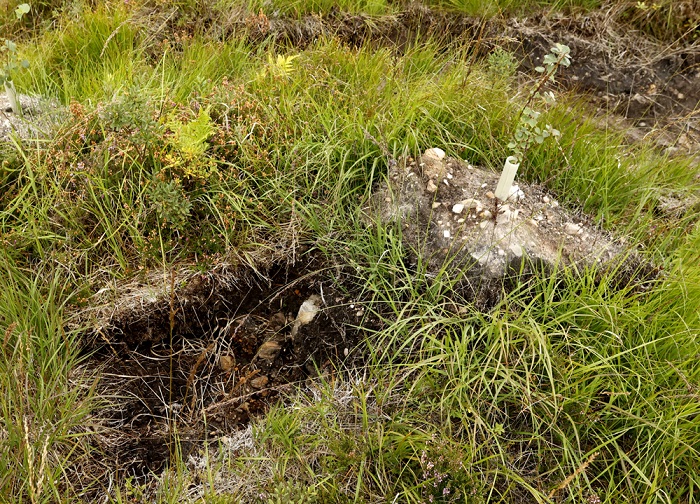
These commercial forestry practices release carbon from soils into the atmosphere, create hazards for animals, including humans, affect the hydrology of an area and pollute it with plastic. This undermines the ostensible purpose of the buffer zones around the Caledonian pinewood remnants which is to protect them from damaging land-management operations.
Implicit in the idea of regeneration and buffer zones around the Caledonian pinewoods, whose particular value is they are woods which have regenerated naturally for thousands of years, is that as the surviving core zones expand, the natural regeneration zones should expand out into the buffer zones. If the buffer zones are planted and their soils disturbed and polluted what results will never be Caledonian pinewood and the possibility of reconnecting the core zones will be gone for ever.
To rub salt into the wound being inflicted on the Loch Arkaig pinewoods, the grant awarded for the Invermallie woodland creation scheme is for birch and other broadleaves and not for Scots pine. The reason given for this is that the tree nursery established by the Loch Arkaig Community Trust had not started to grow Scots Pine at the time of the grant application but “it is intended to use Scots pine as a beat-up species (i.e to replace dead broadleaves and meet planting targets) when stock becomes available”.
The lessons from Glen Mallie and the need for reform
Glen Mallie provides of good example of how the conservation and expansion of native woodland, including Scotland’s Caledonian pinewoods, is not compatible with the maintenance of traditional sporting estates which wish to maintain high numbers of deer.
Unfortunately, instead of challenging Achnacarry about the high deer numbers Scottish Forestry, NatureScot and the WT have become partners in crime against nature. This is demonstrated by:
- Nature Scot awarding the estate grants to attract private investment for conservation, while deer run rampant outside the fenced commercial forestry areas;
- Scottish Forestry paying for fences and planting, instead of deer control; and,
- FLS, the WT and LACT entering into a partnership with Achnacarry through Airceig Beo.
Airceig Beo describes itself as “an almost perfect microcosm of highland land ownership – a traditional estate, a community group that has exercised its right-to-buy, a government agency, and a nature conservation charity” and states that “the partnership is inclusive, with all partners being equally involved in project governance, development and decision making”. In effect it appears Achnacarry as the largest landowner has a veto on any decision that might affect how it wishes to manage its land. What the others partners have failed to explain is how they believe the conservation objectives of the partnership, which include “sustainable deer management”, can possibly be delivered when Achnacarry wishes to maintain a deer density of 10 per square km.
At best it appears the other partners are hoping Achnacarry will change over time. It looks as if Abrdn has had more sense and realised that any investment in nature restoration when deer numbers are so high would be a total waste of money. That would explain why they pulled their funding from NatureScot’s £100m nature restoration fund.and what were intended as demonstration sites around Loch Arkaig. Ironically it is the city and not our public agencies and conservation NGOs which is helping to expose the natural capital charade.
The priority for the £10m that Airceig Beo state they wish to raise in 10 years to deliver conservation project should be deer control. Half of that sum would employ ten stalkers for ten years and enable the Caledonian pinewoods to regenerate naturally, as they have been for thousands of years, without any human help or further damaging forestry practices. Those stalkers could also weed out the Sitka and other invasive species which would also spread as deer numbers reduced.
The fundamental problem is Achnacarry is committed to continuing as a traditional stalking estate, which wants its sporting clients to be able to shoot deer easily, while looking progressive enough to undermine campaigns for more fundamental land reform. Unfortunately, none of our public agencies or the WT will call this out and none of our public agencies will use their powers to force Achnacarry and other such estates to change. Its all carrot and no stick Instead, our public agencies are sustaining traditional sporting estates by backing conservation projects, paid for by public funds and others, to make it appear that it is possible to enable nature, including Scotland’s Caledonian pinewoods, to recover while maintaining the high deer numbers. Those high deer numbers, along with the actions of our public agencies, are in fact destroying the natural environment and protecting what remains in small parcels behind deer fences.
The involvement of the WT, one of the UK’s most prominent environmental NGOs, helps legitimise this whole rotten system. Having bought two areas of pinewood from Achnacarry, ostensibly to conserve it, it was always going to be difficult for them to criticise the estate. Indeed, one wonders whether a condition of the sale was they would never publicly criticise Achnacarry for the way they are managing the rest of the estate?
But across Scotland the WT are also accepting woodland grants which they are spending on fencing and planting rather than tackling the high deer numbers which are the primarily reason ancient woodland is not regenerating naturally. Having taken the King’s shilling, the WT’s ability to speak out on the need to reform the woodland grants system has also become highly constrained. Sadly it means they now appear as much a part of the problem as any solution. I hope to write further on this in the coming months.

Well, Nick as I have oft times commented, the NGO-Quangocracy is part of the problem. The Estates talk the talk, but just won’t do the walk
Well, Nick as I have oft times commented, the NGO-Quangocracy are part of the problem. The Estates talk the talk, but just won’t do the walk. The politicos listen to the gobshite and deliver the spondoolits
There seems to be a plate of bureaucratic/administrative tangled spaghetti with a plethora of loose ends going back on each other. We need clarity and simplicity of organisational structuring with straightforward protocols, project briefs and accountability—but damnit , this is Scotland!
As I read through your piece I kept thinking, Woodland Trust, Woodland Trust, Glen Shieldaig, (and now for some unknown reason, re-named) Gleann Shìldeag.
So I was pleased to see at last that you, Nick are catching up and we can now look forward to you visiting Glen Shieldaig and giving us your appraisal of the two hideous schemes, recently completed. With another in the wings costing the tax payer, that is most likely including me and you, a fortune? Hundreds of thousands of pounds on fencing which as you say, could have employed boots on the ground culling the perceived problem deer there. (BTW there is one stalker that covers Glen Shieldaig? I believe).
One other point would be that on my recent visit to Mar, spending a bit of time there I was astonished not to hear a grouse, roaring stag or for that matter anything, it was the silence that was deafening in all that regeneration. To be fair we did see one red squirrel.
Aye, you’re right Bill mixed native woodland is such a terrible habitat for wildlife, but luckily for Mother Nature, who’d been getting it wrong for millennia, along came the Cheviot & Blackface sheep, followed not long after by the creation of the VED estates to get it all sorted out. Graze burn and kill as we gang alang the hill has served us so well these last two centuries and don’t those neat rectangular muirburn patches look so cute?