 “This region represents every wild aspect of the Central Highland scene – wooded lochs, strong rivers, high flat-topped mountains with rock corries deeply inset, wide sweeps of grass rather than the heather of the Cairngorms, peat-hag and bog, broad bealachs and sharp ravines, and good tracks.”
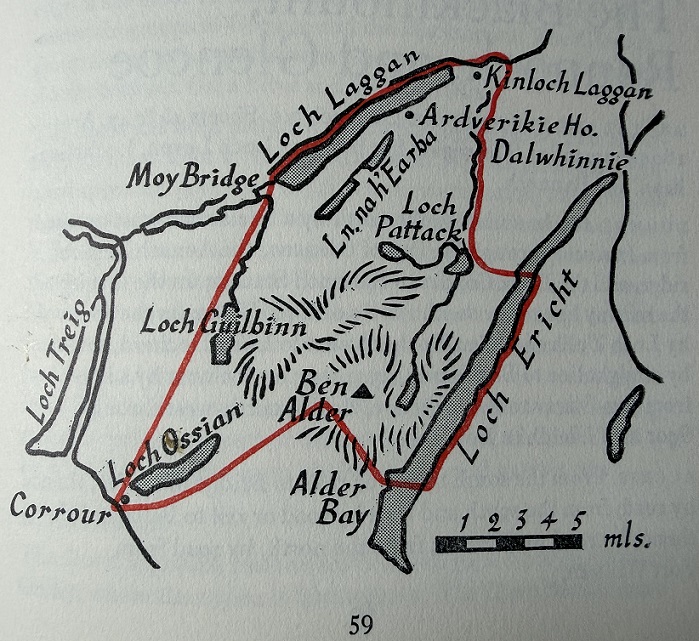
So wrote Bill Murray, in his 1962 Highland Landscape, describing the Range of Ben Alder – which stretches from Loch Laggan in the north to Alder Bay on Loch Ericht in the south; and from Loch Ossian in the west to Kinloch Laggan in the east. Nearly all of Murray’s suggested areas of outstanding landscape value went on to become National Scenic Areas.
However several were rejected, and the most notable of these was the Range of Ben Alder itself. Why was it left out when the Scottish Government finally agreed to bring forward National Scenic Areas (NSAs) between 1978 and 1980? I have written elsewhere that buried somewhere in the archives of Nature Conservancy for Scotland and Countryside Commission for Scotland we’ll find evidence to show that strong economic and political pressures came to bear, because of the huge hydro electric interests related to smelting aluminium in Kinlochleven. Whilst most of this had been completed by 1980 – the potential for more would have been seen sufficiently tempting to disallow this potential NSA.
You’ll see at the centre of the small diagrammatic map from Bill Murray’s work and the description, that Loch na h-Earba was included in what could (should?) have become a National Scenic Area.
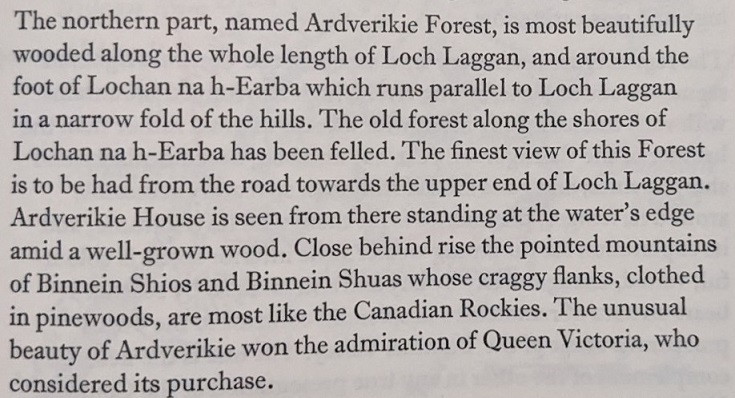 Murray left areas that had been disfigured by hydro schemes out of his proposed boundaries, including Loch Treig from the Range of Ben Alder.
National Scenic Areas have since become the quiet and unassuming designation which has served Scotland surprisingly well. To date there have been no major intrusive developments allowed – for instance no wind farms – within NSAs. And the controversial clauses in National Planning Framework 4 which allowed development in Wild Land Areas – specifically excluded NSAs and National Parks. Quite right too.
However, this leaves us with questions prompted by the blog from Dave Morris (see here). What would have happened had the Range of Ben Alder been adopted as a National Scenic Area in 1978 / 1980? Why has this question not been revisited in the 46 years since the NSAs were designated? Is it too late for Lochan na h-Earba?
I was in Highland Council last week speaking to planners from across the north of Scotland about the history of the NSAs. As part of the day, we had a field trip to look at some of the local landscape designations, protecting the landscape quality of Loch Ness. I was asked – ‘Could Loch Ness become an NSA?’ It was not an impertinent question. Stood on the shore at Dores looking down the length of the Great Glen on a sunny summer’s day, it is astonishing that such magnificence doesn’t have landscape protection at the level of national significance.
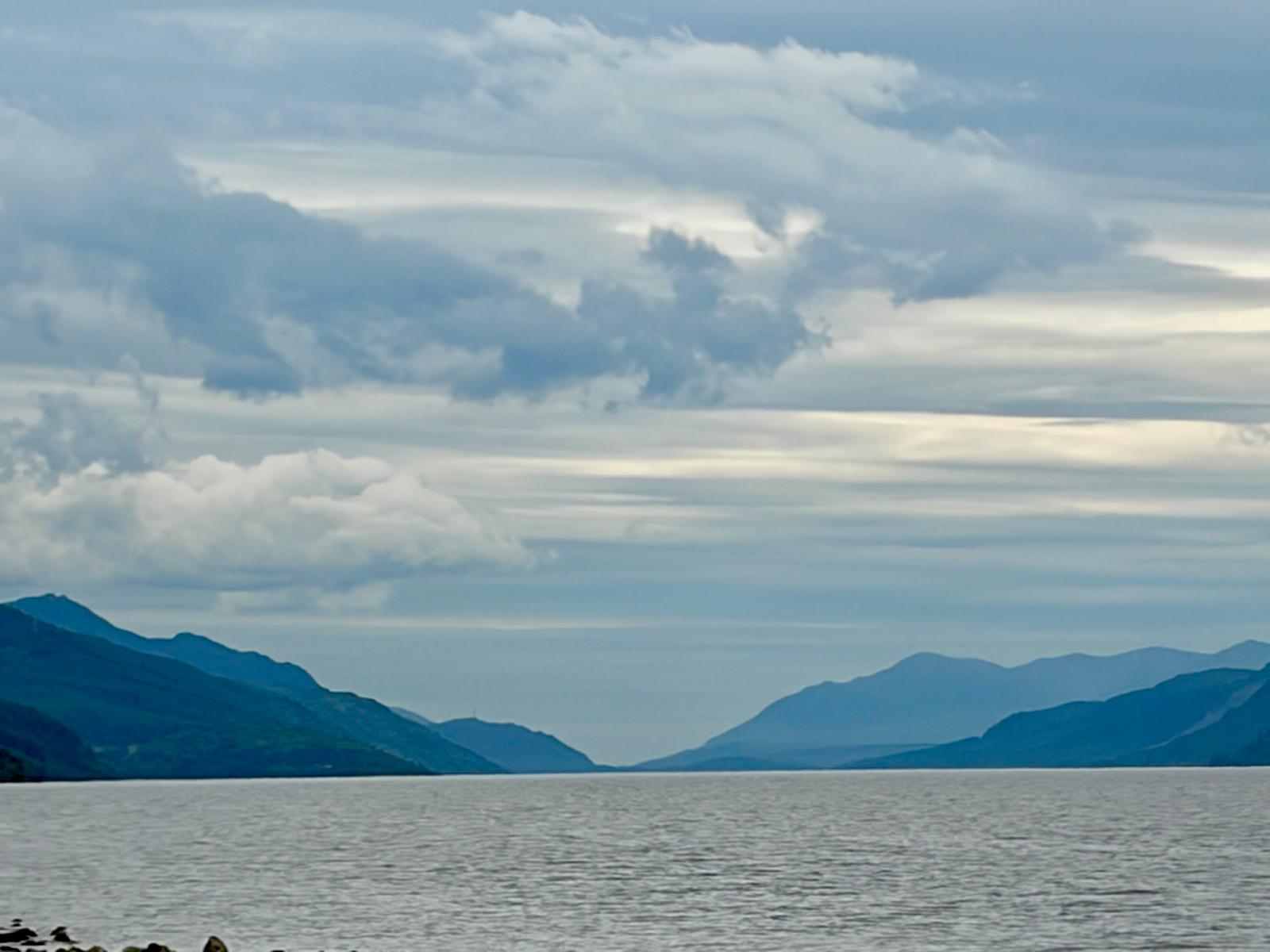
Like Lochan na h-Earba, Loch Ness and the steep hills alongside, heading down the Great Glen, are threatened by the two massive pump storage schemes mentioned in Dave Morris’s blog. The striking scene of Meall Fuar-mhonaidh (696m high) will be altered by a new dam. And from the same standpoint at Dores, you’ll be able to see the massive dam approved for the Loch Lochy pump storage scheme reflecting the morning sun beneath Ben Tee.
All three of these schemes now have approval and government backing though none has been before a planning committee. It leaves us with the questions Dave Morris is asking, along with the thought whether any would have been allowed had NSA designation been given 45 years ago. I ended my conversation with the planners from the Highlands by asking them where they thought a new (or several new) NSAs should be designated. They seemed quite enthusiastic that Loch Ness should be the 41st NSA in Scotland. That would be a tremendous way of celebrating their 50th birthday. Perhaps there is hope yet.
[Bob Reid is the chair of Action to Protect Rural Scotland https://aprs.scot/ and former President of the Mountaineering Council of Scotland]

Designation, primarily gives power to the designator and is only effective if properly administered and policed. Sadly, so often in Scotland, such designations are just paper tigers( wet ones at that) used as catchy lip-service only soundbites by politicians who knuckle under to corporate vested interests at the merest whisper of development; the classic example being our non-national national parks.
The failure of designations is also apparent in terms of protecting native biodiversity; the classic sample here being the multiply designated Rannoch area and the loss of native fish biodiversity in Loch Laidon and likely loss in Loch Rannoch.
Hi Ron, while I agree designations are mostly ineffective, what we don’t know is that IF Earba and the Range of Ben Alder had, as W H Murray recommended been protected under what became the system for National Scenic Areas, this application would have been ruled out of order. While the Loch Fearna PSH scheme on the south side of Spidean Mialach above Loch Quoich has now apparently thankfully been dropped, it was another area lacking NSA protection because W H Murray concluded that, like Loch Treig, it has already been spoiled by hydro despite the very fine hills all round. Nick
Another example is that of the River Spey, both designated in its own right and being in a region with several other designations. This has not prevented the introduction of exotic fish species threatening our native salmonids.
Having said that, Nick it doesn’t get round the need to make effective legislative reforms that give us defined land categories and associated permitted uses that protect that classification, whatever that is, and is policed accordingly, most obviously in the form of REAL national parks and of course my preferred option of National Wildlife Refugia where NO industrial or urban development takes place.
Vick Allan’s Herald article of 23rd July well worth a read.