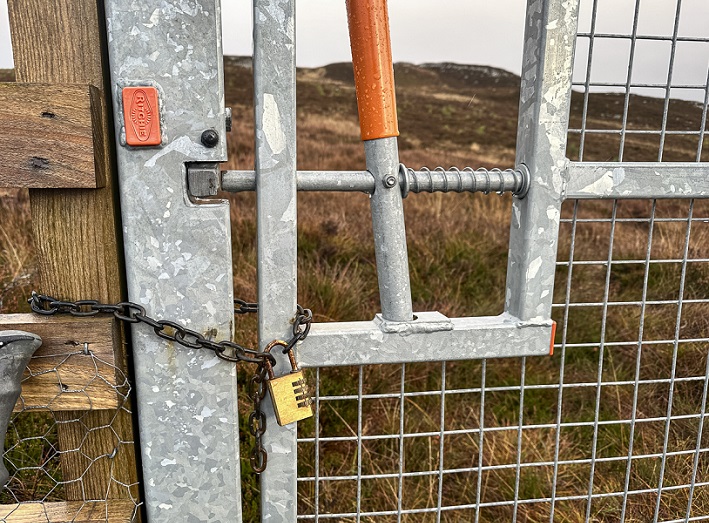
On 19th March I wrote to both Scottish Forestry and the Cairngorms National Park Authority (CNPA) about the locked gates (see here) in the deer fencing around the Balavil Estate’s Creag Bhalg woodland creation scheme.
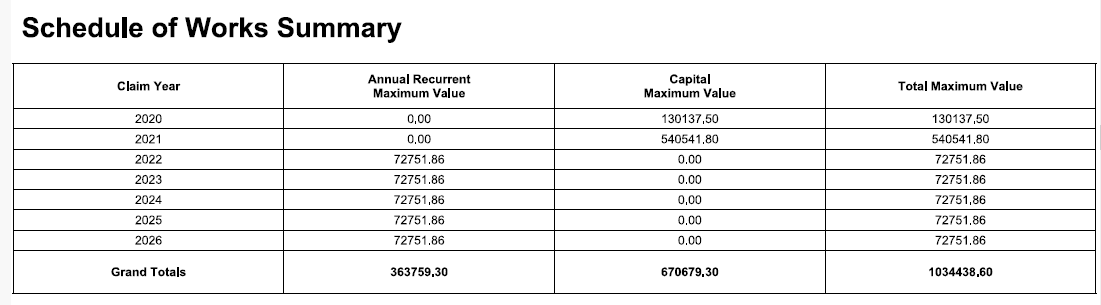
I had asked Scottish Forestry for a copy of their contract with Balavil, which I received yesterday, and requested they withhold the remaining forestry grants they were due to pay for the scheme until the access obstruction was removed. Scottish Forestry’s contract show they agreed to pay the Balavil Estate up to £1,034,438 towards the cost of the scheme:
The contract contains Scottish Forestry’s standard condition about access rights: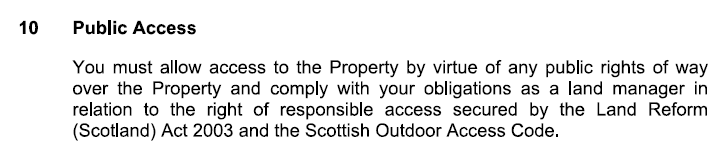 This sum included The Operational Plan prepared by Trees for Life Woodland Services, which forms part of the contract, does not mention access once. That contrasts with the Operational Plans in the Lost Forest and the Far Ralia contracts both of which emphasise those woodland creation schemes were committed to access rights. The omission is potentially significant as the Operational Plan is the part of the contract estate staff are most likely to read.
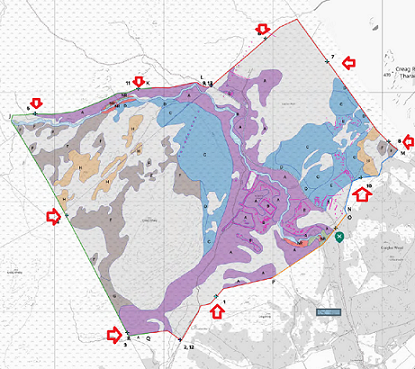
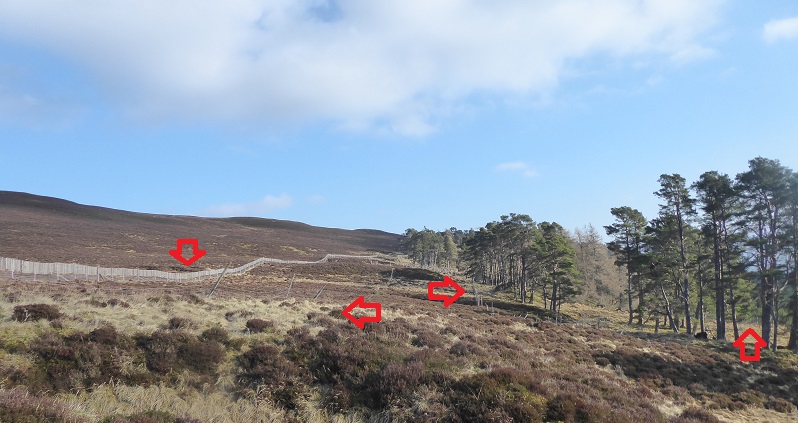
The Operational Plan does, however, contain a map of the scheme. This shows nine standalone non-vehicular self-closing gates along with further pedestrian gates alongside vehicle access points:

Not having around the perimeter fence, I don’t know if all these gates were installed and how many are now locked. It seems clear, however, that the intention behind the plan was to create multiple access points for pedestrians into the new woodland.
While this information is very helpful, Scottish Forestry have not yet informed me what action they are taking to remedy this breach of their contract and to uphold access rights. Variations to the contract show the planned works schedule was delayed slightly and Scottish Forestry is due to make payments until 2027 so grant could be suspended until the Balavil Estate commits to keeping the gates open.
The CNPA access team by contrast have informed me they will investigate my complaint and visit the site. Just why a visit is needed, however, when I had provided photos and locations of the two locked gates is unclear. Why not just phone the estate manager and ask them to deal with the obstruction immediately? Unfortunately the provisions in the Land Reform (Scotland) Act 2003 to uphold access rights, where staff are still employed to fulfil these functions, have become heavily bureaucratised and less and less effective. Still,if the CNPA Access Team walk the whole perimeter fence to check that all the pedestrian gates through the deer fence are in place and unlocked that would be progress.
I also requested that both Scottish Forestry and the CNPA consider whether the section of fence between Balavil and Pitmain should not now be considered redundant under existing policy and should be removed. My justification for asking this is that the Pitmain and Balavil estates now apparently share the objective of creating native woodland on the lower ground and fences are now proliferating in the area. I also asked the CNPA to consider whether the 5 km stretch of deer fence between the Far Ralia and Phoines estates is not now also redundant given the woodland creation schemes on either side (see here).
Scottish Forestry has yet to reply on this point. The CNPA have responded but have told me: ‘In terms of redundant fencing I’ve passed this query onto our woodland advisor for further advice, as this is not a matter for the access team’.
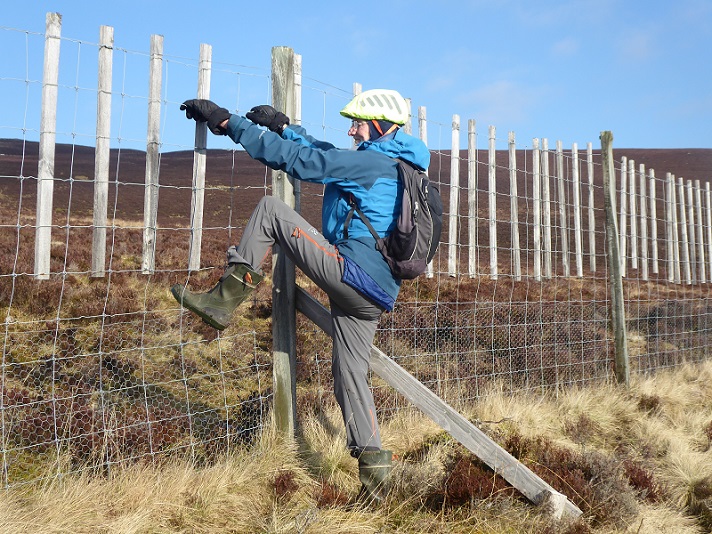
In my view this claim is completely wrong. Deer fencing does obstruct people’s ability to exercise their access rights. Designed to stop deer, it also prevents people from wandering freely over the land and enjoying the countryside. That is why it is so important that there are lots of access points through it and any gates are not locked. Gates through deer fences represent a compromise between our rights of access and Scottish Forestry’s commitment to deer fencing as a cheaper alternative for landowners than controlling deer numbers properly.
Once deer fencing has become redundant for forestry purposes, either because it has ceased to prevent access by deer or is no longer necessary to protect trees, there is no justification for it remaining in place, either from animal welfare and conservation perspective (see here) or from an access rights perspective.
In terms of access rights old redundant deer fencing is often more difficult and hazardous to cross than new fencing because of loose wires or rotten posts. Where new fencing is erected alongside old fencing these problems are compounded further still.
The CNPA now appear to be treating access rights like in England, mainly a matter of providing a few paths (Rights of Way in England) through what is an enormous area. Their advice in terms of advice and fines is to tell people to keep to those paths as much as possible and, as long as gates are provided where those paths cross over into fenced woodland, that is sufficient for them. This approach to access rights is at best myopic and at worst driven by landowners who have never really accepted the right to roam. It needs to change. The CNPA’s Local Outdoor Access Forum and Board need to instruct and support their Access Team to take a far more proactive approach. Deer fencing would be a good place to start..

Access would appear to be a ‘non-priority’ for the CNP Authority theses days so not surprised they are reluctant to take action. Could they not use a drone to ‘walk the fence’ as a routine check? Scottish Forestry could also do likewise to check stocking. There is another problem with fencing and access – sometimes new fencing blocks access points into other areas which are not recognised paths. This is also not in keeping with access rights and seems to be part of a strategy to keep people on footpaths and hinders their right to roam. Appalling state of affairs really given the amount of resources being ploughed into ‘access’
Cuis bono as Cicero asked. Who is this restriction of access for, who manages it and who is responsible for it.
Regarding redundant deer fencing, what does not seem to be realised is that basically, they are just another kind of litter – like the many, many, thousands of plastic tubes placed around newly planted trees and then just left.The redundant fencing problem is already widespread in agriculture and rather dangerous. I could not say how often I or companions have had to avoid coiled wire from past fencing tangled in grass etc – often old barbed wire. Deer fencing has a working life of just 20 years and it should be built into grant aid that it should be removed when redundant. I recall that when farmers were given grant aid to help pay for new fences it was urged that removal of old fences replaced should be a condition of the grant but the NFU resisted.
Aye, Drennan I’m not known as a sheep lover, but on two occasions I’ve had to cut barbed wire off a sheep. Where was the noble long suffering impecunious farmer? Will they need a subsidy for this.
When I first encountered a rewilding fence with occasional gravity gates my immediate thought was how easily they could be locked so it’s no surprise that they increasingly are.
There’s no guarantee that the gate you passed through in the morning won’t be locked when you return, with an arduous trek to any alternative which might also be locked. This is potentially dangerous.