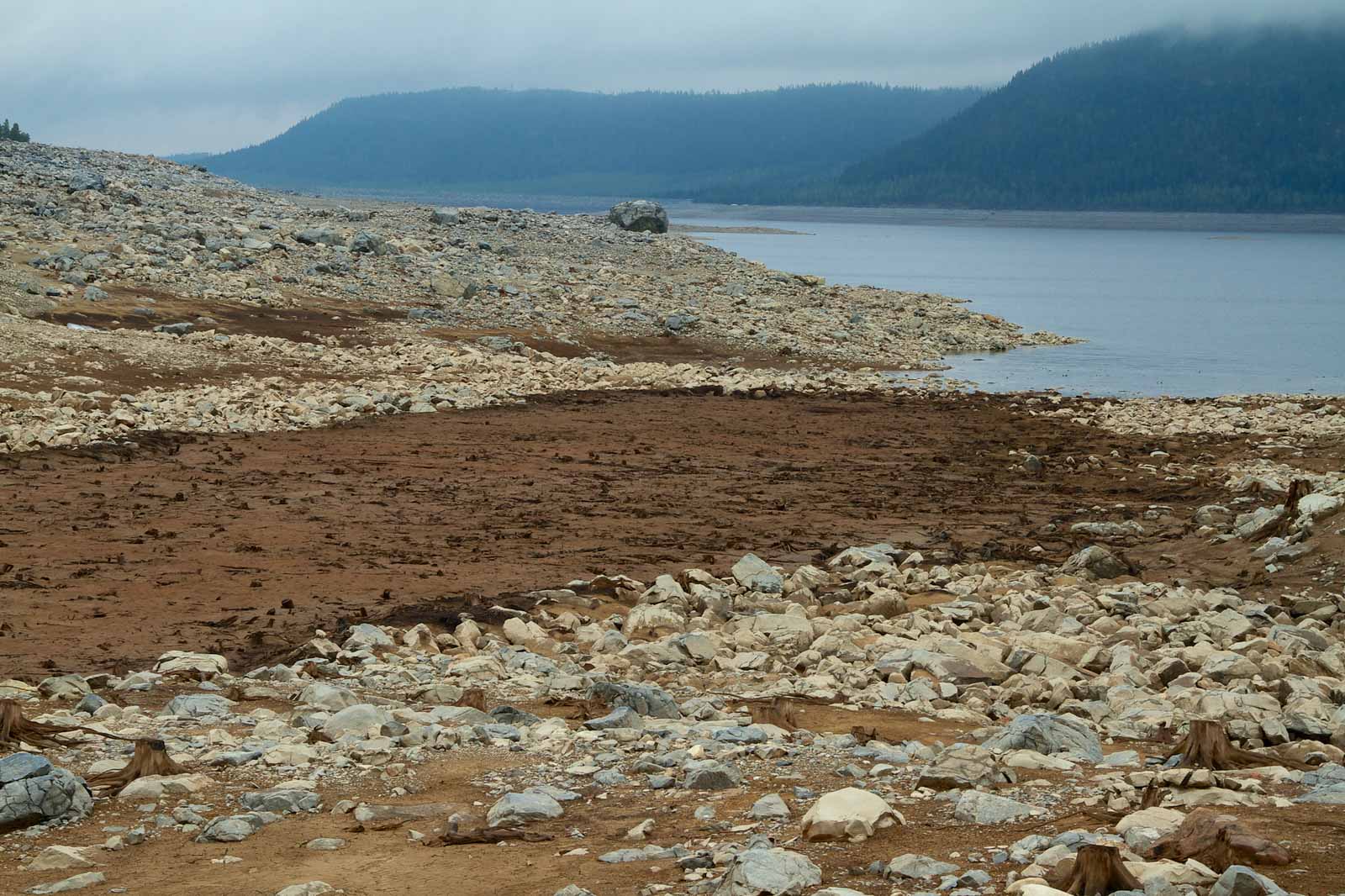
This short piece is very much a supplementary to my article ‘The Hidden Horrors of Hydro’ featured here on 23rd of August 2018 and of course the catalyst was the more recent (3rdJuly) article on pumped storage in Scotland by Dave Morris (see here). I was minded to do so because the negative profundity of pumped storage hydro on both visual amenity in the landscape and freshwater ecology is vastly greater than even the already devasting effects of ‘standard’ hydro, as outlined in the 2018 article.
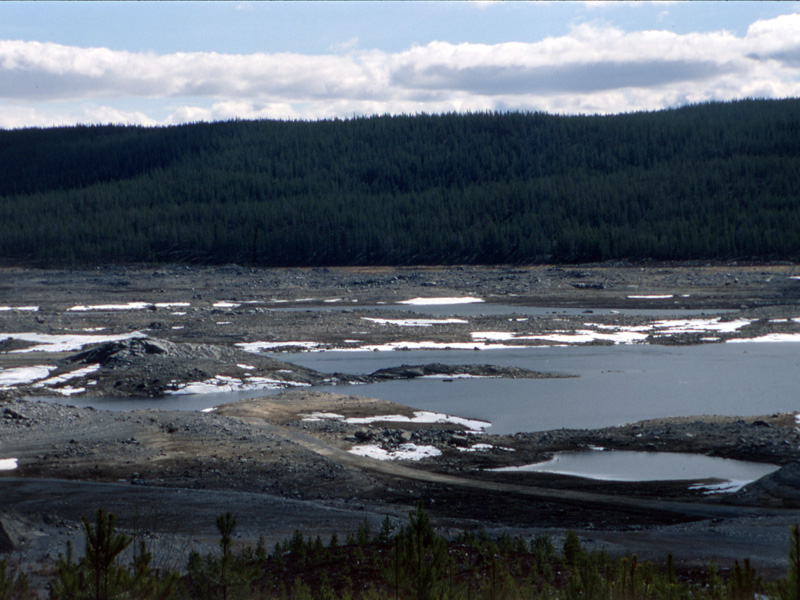
Essentially, apart from the obvious visual impact of the barren draw-down zone in standard hydro, the biological impacts centre around the disappearance, due to periodic desiccation, of the living and dead plant material that forms the basis of the food for aquatic invertebrates. These in turn feed higher animals, most obviously fish and aquatic birds. Research over many decades in Scandinavian hydro-reservoirs indicates that well over 50% of the production of aquatic invertebrates may be lost, that regulation amplitudes [fluctuations in water levels] of over 5 metres will wipe out major food items such as the freshwater shrimp, Gammarus and the severity of the impacts is related to the increasing degree of regulation amplitude.
Scotland lacks the detailed long-term studies carried out in Scandinavian reservoirs, but we are fortunate in having a comparative study of three lochs in the western Grampians carried out by then student, Elizabeth McMorrine for her degree dissertation, which gives us a measure of insight previously lacking Lochaber-Hydrological-Scheme-Impacts-Dissertation-1. The three lochs, in ascending order of regulation amplitude were Loch na h-Earba, Loch Laggan and Loch Treig, all in the same watershed.
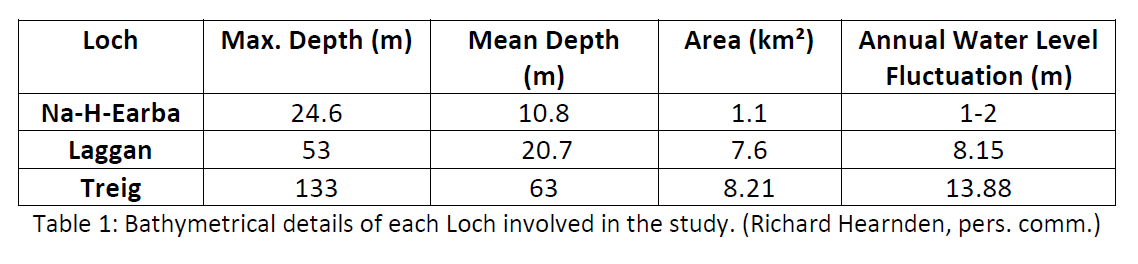
The first named is of course the target for the proposed new pump storage reservoir.
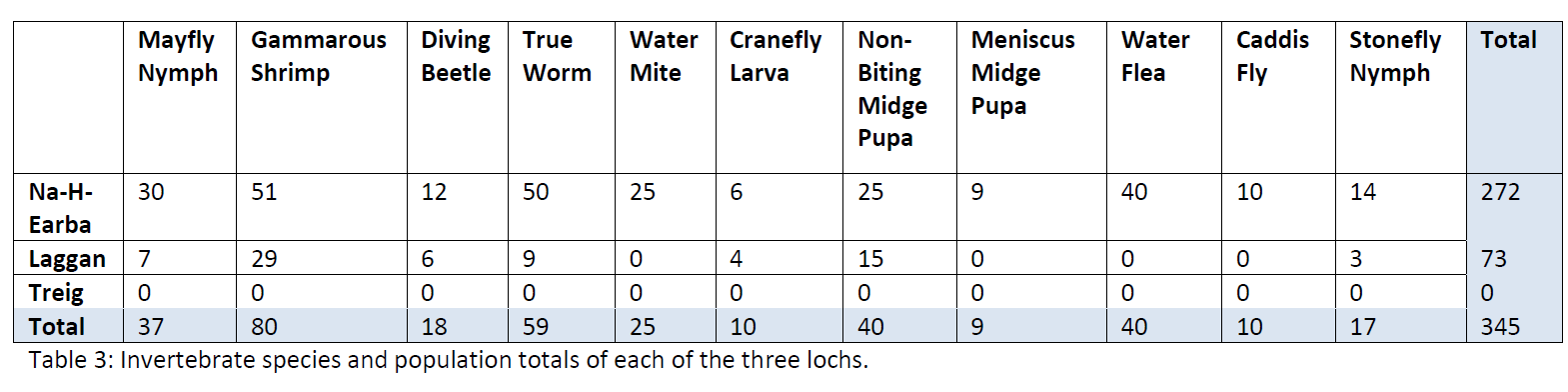
The data showed that the loch with the least regulation amplitude (Lochan na h-Earba) had the highest fish catches in the netting sampling and the highest number and diversity of species in the invertebrate samples and that the loch with the greatest regulation amplitude (Loch Treig), had the lowest catches of fish and invertebrates. Loch Laggan was intermediate in all aspects.
OK, just an insight from one study, but it’s interesting and significant, nonetheless since the Pumped Storage hydro proposal would change the regulation amplitude at Lochan na h’Earba from 1-2m a year to 18m, potentially each day, while the top reservoir, Loch Leamhain, would fluctuate by up to 70m.
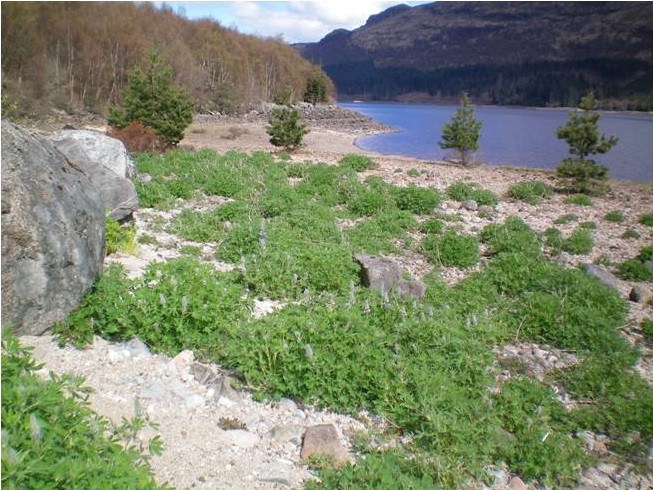
All three lochs, like the majority of other Scottish hydro-reservoirs, currently have a seasonal regulation regime which, by and large, means that there are months of low water levels during the summer growing season for terrestrial plants. This characteristic opens up possibilities for potential remedial measures, using plants, such as some tree species and more especially the Nootka Lupin,(as mentioned in the 2018 article and more recently in the youtube film ‘Scotland’s Missing Forests by Lesley Riddoch see here) that are tolerant of winter inundation.
The very nature of pump storage regulation amplitudes, being very large and very short term between high and low, with no seasonal stability, render these options null and void. Pumped storage presents no opportunity for either terrestrial or aquatic plants to colonize the large draw-down zone and presents a major, if not impossible challenge, for native species, especially fish. At Lochan na h-Earba it will leave us looking at a man-made environment that is an intractable aquatic and terrestrial desert.

Oh dear, how sad, never mind: it’s only fish, invertebrates, aquatic birds, visual amenity and it’s only Scotland. The main thing is that the landowners and the power companies make lots of dosh whilst the prole scumbags get relief from reality by having enough electricity to watch soaps, and celebrity game shows.