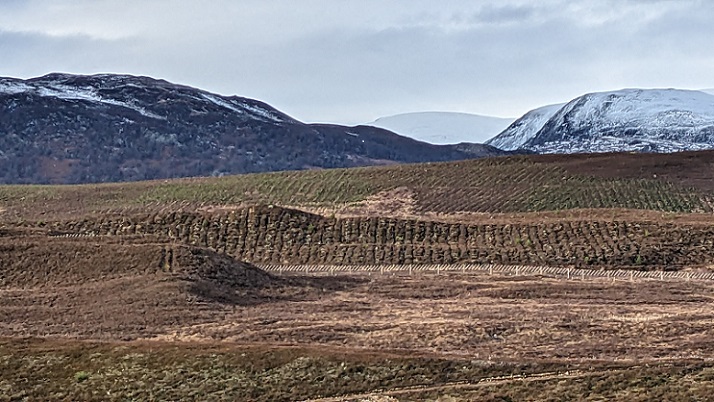
Across Scotland’s Highlands, a quiet transformation is underway. Estates once used for grazing or sporting are being rebranded as “natural capital assets,” supported by public grants, enclosed for regeneration, and entered into carbon markets. The narrative is compelling: restore nature, capture carbon, and allow industry to offset its emissions. It presents itself as a virtuous circle.
But beneath that narrative lies a more complex — and more uncomfortable — reality.
Recent estate transactions illustrate the shift. Properties such as Kinrara and Far Ralia have been bought, repositioned, and marketed explicitly around their carbon and natural capital potential. In these cases, the projected future value of carbon sequestration is not simply an environmental outcome — it becomes part of the financial logic of the land itself. Carbon is not only being stored; it is being priced, forward-sold, and embedded in valuation.
At the heart of this system are carbon credits issued under frameworks such as the Woodland Carbon Code. These credits are sold to companies — airlines, manufacturers, energy firms — seeking to balance their emissions. The idea is straightforward: carbon released in one place is offset by carbon absorbed elsewhere.
The difficulty is that this apparent symmetry does not hold under scrutiny.
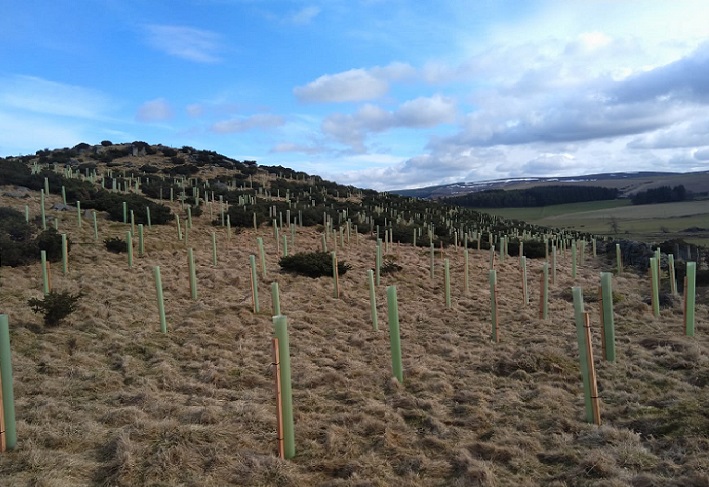
Carbon credits generated from woodland creation or peatland restoration are not based on direct measurement of carbon removed today. They are based on models — projections of what might be absorbed over decades, sometimes a century. They rely on assumptions about tree growth, soil conditions, management practices, and the long-term stability of the ecosystem. They also depend on a counterfactual: what would have happened to that land in the absence of intervention. That counterfactual cannot be empirically verified.

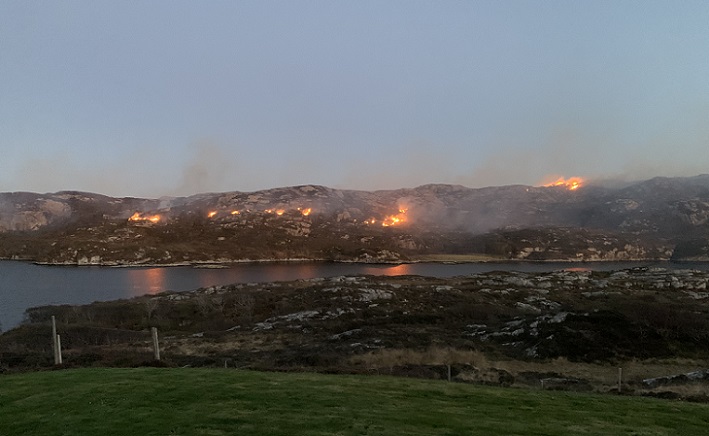
More importantly, the carbon is not permanently removed. It is stored — in biomass and soils — and remains vulnerable to fire, disease, land-use change, or mismanagement. In contrast, emissions from fossil fuels are effectively permanent on human timescales. Treating these two as equivalent is not a scientific conclusion; it is a policy choice.
This distinction matters.
Once carbon credits are sold, the future carbon value of that land has effectively been monetised in advance. The land is then committed to long-term management obligations — often extending 40 to 100 years — to maintain that storage. Its flexibility, a core component of land value, is reduced, yet market pricing does not always fully reflect that constraint.
This creates a subtler risk: not of double counting carbon units, which are tracked through registries, but of double counting economic expectation. The same “green value” can be priced into the initial acquisition, realised through credit sales, and then implicitly assumed again in subsequent valuations. When that occurs, the system begins to resemble speculative finance as much as environmental restoration.
Concerns about this dynamic are not limited to critics of carbon markets. Practitioners within the sector have raised similar questions. One woodland adviser has argued that some schemes risk becoming “more about sequestering money than sequestering carbon,” highlighting the extent to which financial structuring can shape land-use decisions.
There is a further, more fundamental issue. Carbon accounting captures only one dimension of environmental change. It does not measure biodiversity outcomes, hydrological impacts, soil disturbance during establishment, or the broader ecological consequences of large-scale land-use conversion. Even within carbon itself, the picture is more complex than commonly presented. Research on tree carbon dynamics in Great Britain suggests that a significant proportion of carbon storage and sequestration occurs outside formal forests — in hedgerows, field margins, and dispersed trees. These systems are rarely monetised or incorporated into carbon markets, which instead favour large, discrete, and measurable projects such as plantation woodland.
The result is a structural bias: capital flows toward what can be monetised and traded, not necessarily toward what is most effective or ecologically appropriate.
Early-stage impacts further complicate the picture. On certain soils, particularly carbon-rich or peaty ground, site preparation and planting can release stored carbon before any long-term sequestration benefit is realised. Outcomes vary by location and management, but the assumption of immediate climate benefit is not universally valid.
Alongside these environmental and financial considerations are emerging social and economic questions. In parts of the Highlands, the shift toward carbon-driven land use is already generating debate about employment, land management, and local decision-making. Documentaries and sector commentary, such as The Last Keeper, have highlighted concerns about the displacement of traditional rural roles and the concentration of control in externally driven investment models. These concerns are contested, but they underline an important point: land-use change at this scale is not a neutral technical process. It produces distributional effects, with different groups experiencing gains and losses. Yet these transitions are often framed — particularly in investment and policy narratives — as inherently positive and environmentally necessary, with insufficient scrutiny of their underlying assumptions or their local consequences. They are presented as unambiguously beneficial, an impression that reflects the logic of carbon accounting more than the full complexity of environmental and social reality.
None of this is an argument against woodland creation or peatland restoration. Both can deliver real and lasting benefits when appropriately designed and managed. Nor is it an argument against carbon markets themselves. They can play a role in directing capital toward environmental outcomes that might otherwise struggle to secure funding.
But it is an argument for clarity.

A carbon credit is not proof that an environmental impact has been cancelled. It is evidence only that a project meets a particular accounting methodology under a defined set of assumptions. Those assumptions may be reasonable — or they may prove optimistic — but they are not equivalent to physical or ecological equivalence.
The same applies at the corporate level. Offsetting mechanisms can form part of a broader transition strategy, but where they are materially cheaper than emissions reduction at source, they risk delaying more fundamental change.
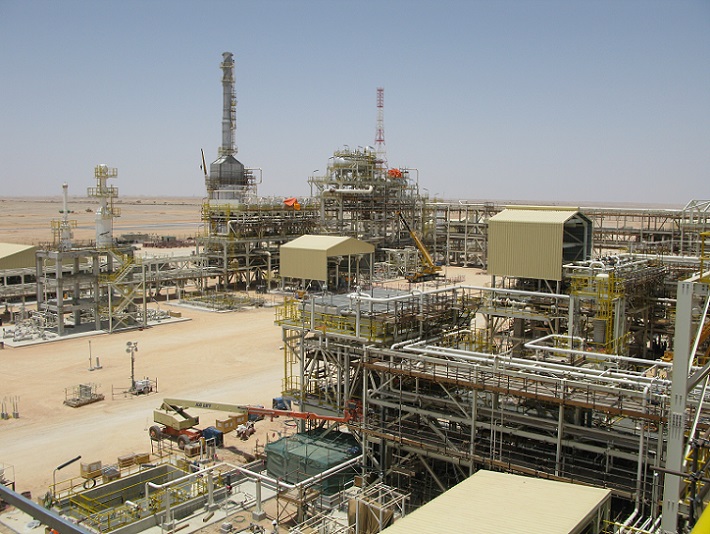
In other jurisdictions, particularly where carbon management has been tied more directly to industrial regulation, greater emphasis has been placed on measurement, verification, and enforceable outcomes. The UK approach has been more flexible, more model-driven, and more dependent on long-term projections. That flexibility has enabled rapid growth in natural capital markets. It has also introduced ambiguity.
If we are serious about both climate and environmental integrity, that ambiguity must be addressed.
At a minimum, policy and planning frameworks should make explicit that compliance with a carbon standard does not demonstrate overall environmental neutrality. Carbon metrics should inform decisions — but not determine them. Land valuations should reflect the reality that once carbon rights are sold, they are no longer available. And a broader set of ecological and social metrics should sit alongside carbon accounting in assessing outcomes.
Above all, the public deserves an honest account of what these schemes do — and what they do not do.
Because if we mistake accounting for reality, we risk constructing an entire system on projections, assumptions, and financial expectations — and calling it certainty.
[Author note. Richard Evans brings over 32 years of senior international experience with Shell Plc, spanning geoscience, petroleum engineering, project management, technical governance and HSE across Europe, West Africa, the Middle East, and the Russian Far East.
He has led major environmental programmes, including the Western Gray Whale Conservation Project with International Union for Conservation of Nature and the Sakhalin Energy Environmental Programme, aligning operations with international sustainability standards and responsible resource development.]

Excellent article. This modelling approach is distorting woodland establishment practices…specifically plantations behind fences are the preferred approach over natural regeneration of woodland without fences The latter is much thd best outcome for nature , landscape and access and the pretendy carbon market.
Refreshing to see this argument set out so clearly. Many treasured landscapes are currently being remodelled in a highly unnatural way in the interests of so-called carbon management, for which read financial gain; the glens are fenced off, the deer pushed to the absolute margins, and the walking public forced into narrow corridors between fences in some instances as the old stalker’s paths fall into disuse under rank vegetation. Why do we never see balance in these things? Why is it always all one way or all another way, never the middle way? Rhetorical question, of course.
A really important intervention from some-one who understands the oil sector and the different timelines associated with emissions and the mitigations that the carbon markets are currently being operated. We need to put in place something that works in practice.
Well that’s what I’ve said all along, about the “financial logic,” finance capital is all over it, since Rio 1992. Their politics sucks. It’s a $multi-trillion Wall St debt and rent money for nothing scam. The same people behind that are gunning for wars off the dial. The military are causing climate change and civil society are getting the blame and the bills for it. It’s a circus. The ring masters are making a mint out of all this greenwash. The German Greens have gone full-Adolf. The American Communist Party have teamed up with the Workers Party. The rest aren’t even at the races. They couldn’t manage a bag of chips.
A cellulose factory is not a forest
Well argued and presented Richard.
Makes it clear that this ‘industry’ is landscape-scale creative accounting.
‘It has been decided’ that Ralia estate will be covered in trees for the next hundred years. The people affected, those who WILL BE living in the area in 50 years time, obviously had no say. If future generations find a Sitka plantation here unappealing or harmful, tough luck.
This enduring burden has been created so the passengers of flight VS 45 on 1 May 2026 could enjoy another damaging air trip, guilt-free.
We, the future owners/Government of Ralia/Scotland/UK/ 51st state/Putin…, solemnly bind ourselves to perpetuate this nonsense for a century, to labour in perpetuity to maintain the woodland, and guarantee that no deer, wildfires, storms or disease will affect these trees.
We appreciate that contract conditions will be strictly enforced by the ghosts of the passengers of flight VS 45 in 2026, lest they are afflicted by posthumous pangs of guilt.
I’ve always said that the worst place to plant trees is on shallow peat, or on podsols generally, as these have the best long-term potential for carbon sequestration: thousands of years of potential peat growth ahead of them; and peat erosion is less likely to set-in on shallow peats. The probability of erosion increases the deeper the peat. Instead, the ground preparation, the trees themselves and future harvesting all releases soil carbon.
So most current tree planting in the Highlands is on the worst possible locations for carbon sequestration. Not to mention the reduced albedo from three-dimensional woodland compared to two-dimensional moorland, resulting in localised warming from the new forests. There is more to climate change than just carbon.
And this is not even considering the loss of biodiversity…
It’s good that someone from inside the oil industry admits that carbon credit trading doesn’t work, but it’s not a new insight by any means. And it’s not just about accounting methodology around how much CO2 trees sequester, but also that it actively discourages actual cutting of CO2 emissions. But this all has been understood for as long as the credits have been traded.
Critically though, In Scotland this problem is very tangible because it’s all part of the new lairdship strategies, just as the large scale sheep farming of centuries gone by got replaced by grouse and deer ‘sport’, so the new generation of lairds are shifting toward rewilding and carbon trading. The fix needed is not ‘a broader set of ecological and social metrics [to] sit alongside carbon accounting in assessing outcomes’, but a radical land reform to get rid of this consolidation of land. That’s the necessary starting point, the land will continue to be abused by a small number of entities for their private agendas until that happens; in this regard it makes no difference if we are talking about ‘natural capital assets’ or ‘rewilding’, billionaires or NGOs.