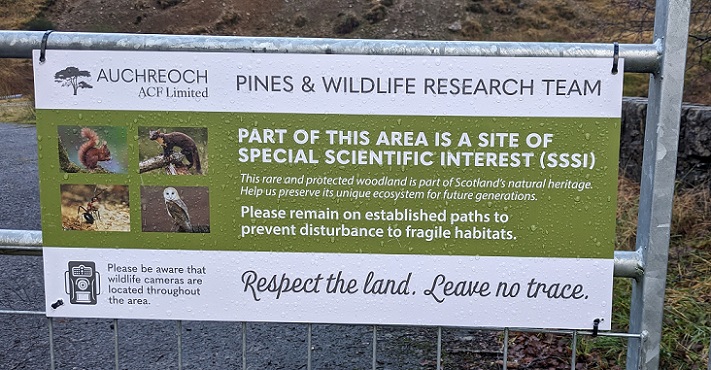
I visited Coille Coire Chuilc (CCC), the second most southerly Caledonian Pinewood in Scotland near Tyndrum and a Site of Special Scientific Interest (SSSI), on Tuesday. The main purpose of the visit was to look at the state of the pinewood with two other people but also wanted to check whether the unlawful access sign which I had complained about in September (see here and below) had been replaced. It had.
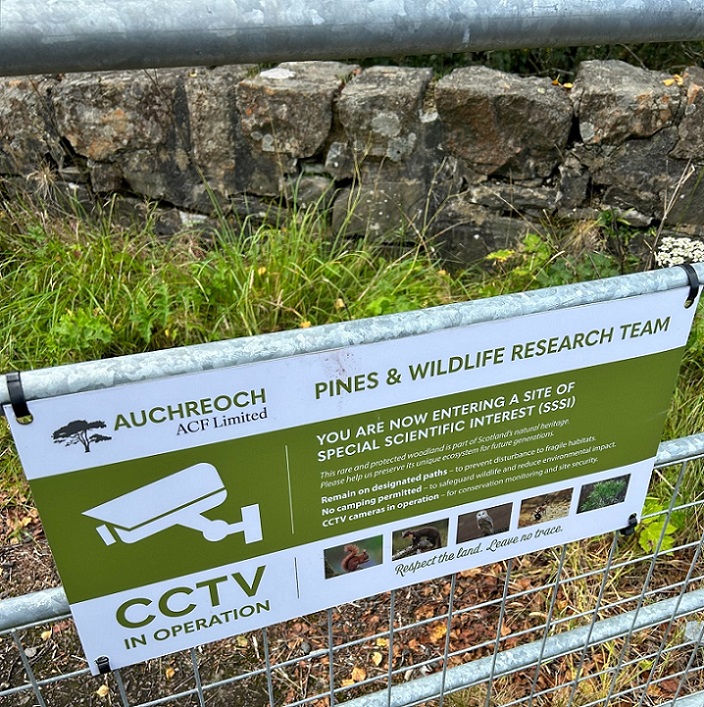
While the worst of the misleading and unlawful text from the first sign has been removed, the new one still fails to promote access rights and displays elements of a false mindset that blames access by people for conservation failures
The positive things about the changes are:
- the CCTV graphic and text has been removed and replaced by information saying wildlife cameras are in operation (it appears there was no CCTV after all and that the previous sign was designed to intimidate);
- the statement “no camping permitted”, which was contrary to access rights and unlawful, has been removed
- the false claim that “you are now entering a Site of Special Scientific Interest” have also been removed. The original signs and their replacement are located well away from the CCC SSSI.
Unfortunately, negative elements remain in the new sign::
- no means is given to contact the “Wildlife and Research Team” and I can find no find no trace of such a team or how to contact the estate through internet searches;
- the request “Please remain on established paths to prevent disturbance to fragile habitats” which, linked to the statement “Help us preserve its unique ecosystem for future generations” suggests that informal recreation by the public is a threat to the natural environment.
The evidence we saw on the site visit shows how wrong that is.
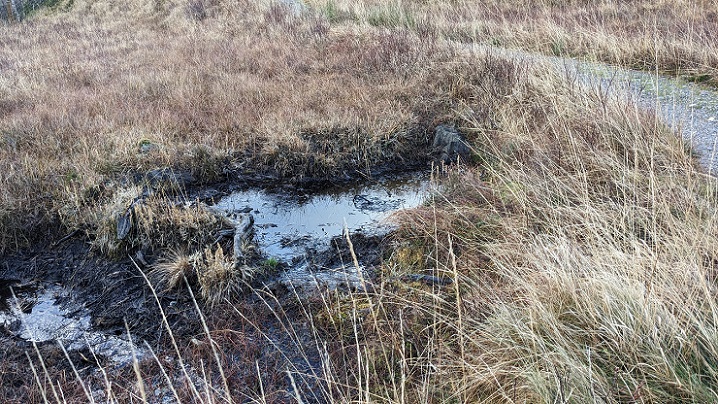
Few people are likely to visit CCC by any other route than the path to the bridge over the Allt Gleann Auchreoch which forms the eastern boundary to the SSSIs. This is because the ground on either side of the path is bog and the Allt Glean Auchreoch is normally difficult to cross while the River Cononish, which forms the northern boundary of the SSSI, is even harder to cross.

Once we had crossed the bridge, which has no gate to prevent livestock using it to enter the SSSI, we almost immediately left the main path which heads up through CCC towards Beinn Dubhcraig, and instead made our way to the western boundary of CCC. The very boggy path, visible in the photo, was intermittent and we soon left it, using animal tracks through the vegetation when helpful.
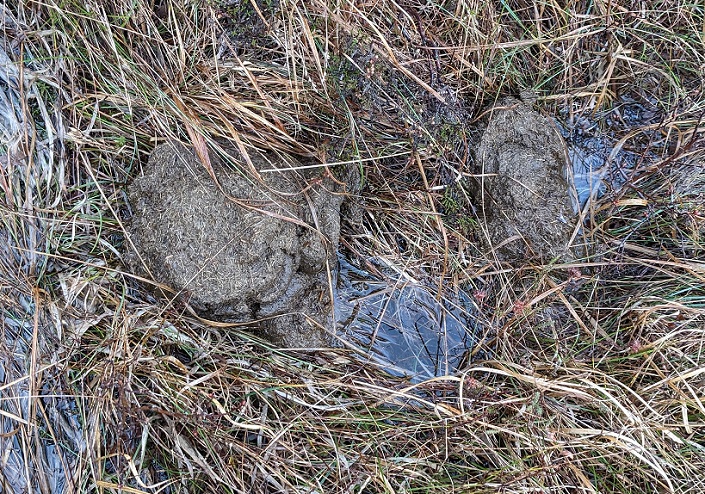
It was several hundred metres before it became obvious to us that some of these animal tracks had been made by cattle. It is possible those cattle had entered the SSSI accidentally over the bridge – the Allt Gleann Auchreoch forms an impassible barrier for much of the year. But the cattle could also have been introduced deliberately to break up the vegetation to enable trees to regenerate more easily or to help wildflife, as the RSPB is trying to do at Abernethy (see here).
Cattle have far greater impact on vegetation than humans: their hooves sink further into the ground; their large size means they do far more to break up shrubby vegetation or saplings as they move; and they graze as they go. If therefore cattle have been introduced to CCC Caledonian Pinewoods deliberately to do all these things, then the claims on the signs about the impact of human on fragile habitats would be clearly completely rubbish.
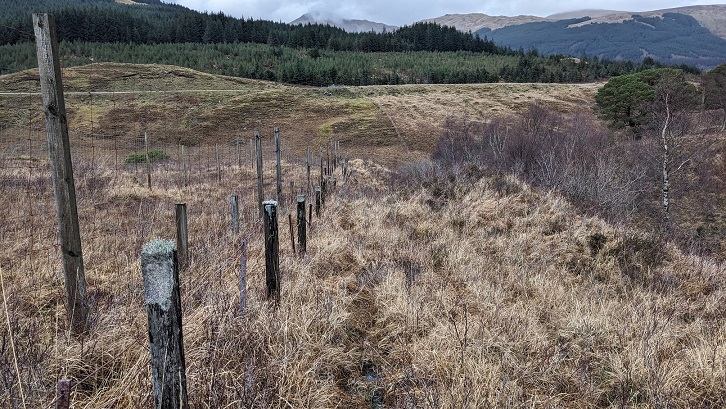
The evidence of the impact of cattle and deer on ground vegetation was most obvious where they had been directed by fencing to follow certain routes. The strip of ground between the first deer fence on the left and the second, is also intensely trampled. The second deer fence forms part of a new and separate enclosure for planting trees agreed by the Loch Lomond and Trossachs National Park Authority (LLTNPA) as mitigation for the Cononish goldmine.
The impact of this triple fencing on wildlife will be significant. For example, black grouse have been found in the CCC in the past and like capercaillie have been scientifically proven to be very prone to flying into unmarked deer fences. They also tend to feed on the forest edge. Yet neither of the two original fences on the forest edge are marked with batons (some internal ones have been removed). The LLTNPA has added to the problems with the new unmarked fence it has approved.
If Auchreoch has established a Pines and Wildlife Team, they need to address the real problems about how CCC has and is being managed rather than designing misleading signs for walkers. The LLTNPA agreed to create a new unmarked fenced enclosure adjacent to a Caledonian Pinewood and also agreed Auchreoch’s new sign – I have an email confirming that – represents another failure on the part of the National Park Authority to be clear about and focus on what matters. Rather than address the real causes of the nature crisis and the climate emergency, it is much easier to mislead the public.
Access rights apply to all of the land at Auchreoch, including CCC, and there is no justification for asking people to keep the path. In fact the best way to enjoy the Pinewood is to leave the path but most people are unlikely to do so because it is so boggy. I will look at the relationship between bog and pinewood at CCC in a further post.
