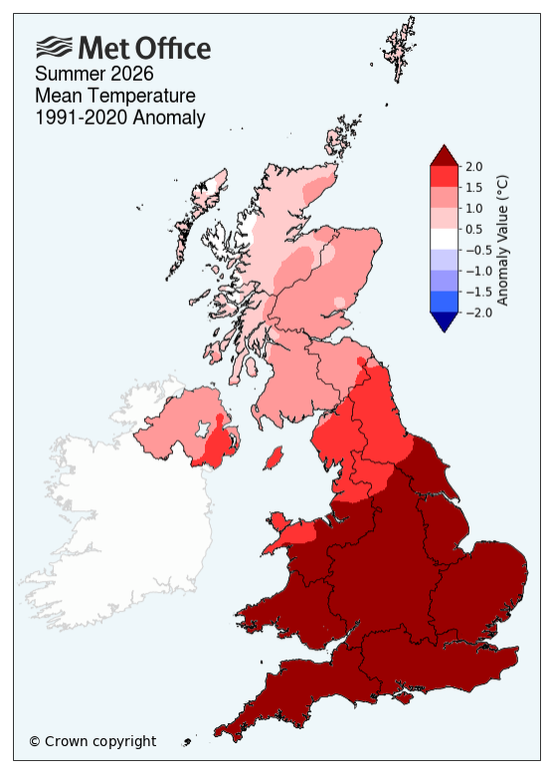
Global warming caused by the release of CO2 into the atmosphere from burning fossil fuels is all too real and with that climate change. However, climate change is not affecting all parts of the world in the same way, as was demonstrated this summer by the differences in temperature and weather experienced in Scotland compared to much of England and most of continental Europe. Those differences have significant implications for the likely impacts of climate change in Scotland and how we might mitigate them. This post considers two examples of where those differences have been ignored and claims made about the impact of climate change which are not supported either by the facts or the predictions of climate scientists.
The impact of climate change on Scotland’s rainforests
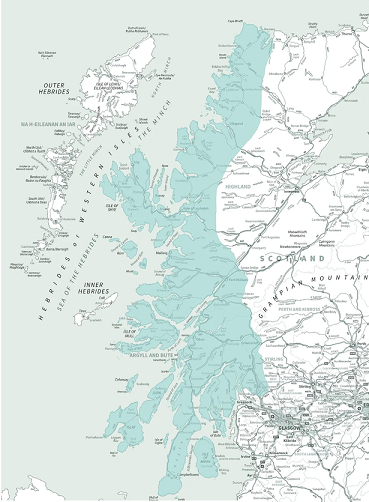
On Monday the Alliance for Scotland’s Rainforests was reported in the Herald (see here) and the National as stating:
“One of the projections for future climate change on the UK is, for example, that our summers will get warmer and they will get drier. Something like that represents a threat to the existence of the rainforest and the species that occupy the rainforest. They’re unlikely to cope with these periods of drought, these warmer and drier conditions we’re likely to experience in our future summers”.
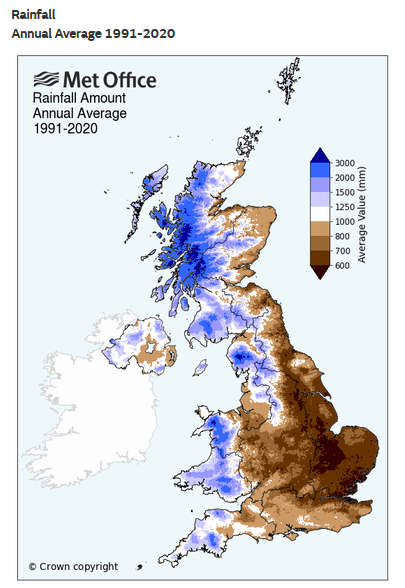
Anyone who has visited or lives on the west coast will know that this claim is not substantiated by the weather that has been experienced in most of Scotland’s “rainforest zone” this summer. Its been rather wet and that is corroborated by the draft statistical reports from the Met Office which show that, apart from Argyll, most of the rainforest zone has experienced above average amounts of rainfall (see here):
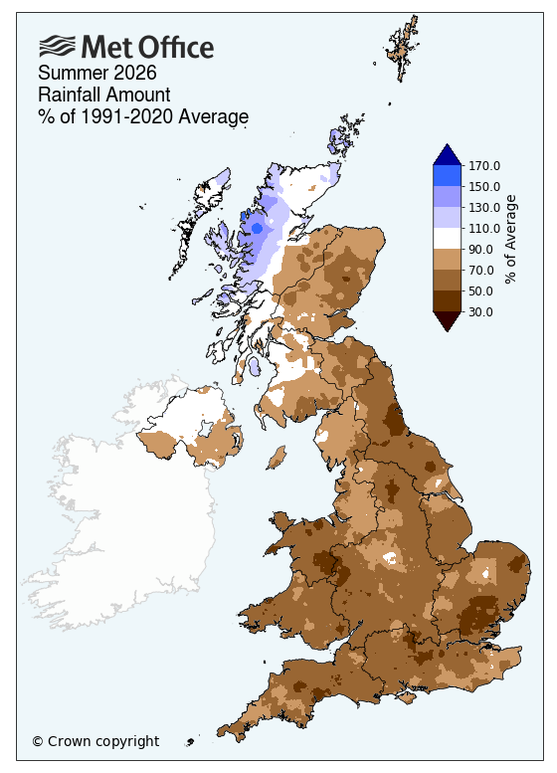 Of course, what matters in trying to plan for the consequences of climate change is not what happens in any one year but the longer terms trends. Nonetheless, it is worth noting that the Alliance for Scotland’s Rainforest made no attempt to explain the disconnect between this year’s weather and their claims about the likelihood of warmer and drier conditions, including drought, in future. In my view that risks undermining their credibility and playing into the hands of those who deny or minimise the impact of climate change.
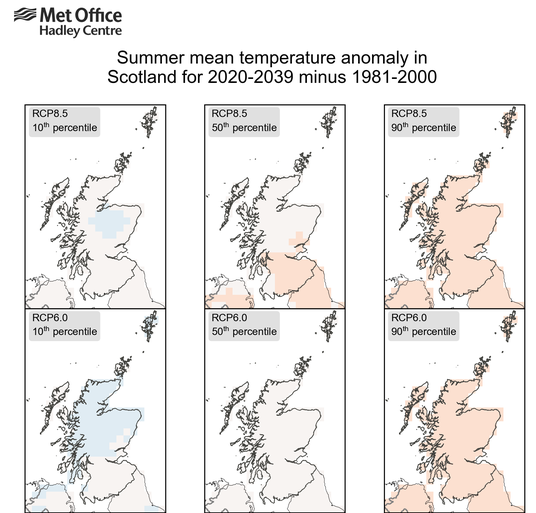

The Met Office’s predictions (for the UK, the home nations and regional areas within them –see here) are based on the amount of greenhouse gases in the upper atmosphere (for an explanation of RCPs see here) and on probability, using models based on scientific observations and climate systems to predict climate in future. There are many uncertainties affecting Scotland including whether the Atlantic Meridional Overturning Circulation (AMOC) could overturn, removing the warming effect of the gulf stream, and causing much colder conditions for a time (see here) The left hand maps above show that even if global temperatures were to increase by 4.3C, there is a 10% chance significant parts of Scotland could get colder. That could be as much a risk to Scotland’s temperate rainforests as drier conditions.
Although the right hand maps above predict there is a 90% probability that mean temperatures in Scotland will increase, in all scenarios this is predicted to be significantly less than the global mean. In that respect it is interest that this year the Met Office reports that temperatures in Scotland did not break records unlike the rest of the UK:
“England, Wales and Northern Ireland also broke their respective mean temperature records for summer, while Scotland reported its joint-sixth warmest summer on record.” (Met Office)
Changes in precipitation In Scotland are even more difficult to predict because they depend on the position of the Gulf stream and the warm wet air this brings across the Atlantic. While for several years there were predictions of warmer, drier summers, as Scotland’s Rainforest Alliance claims, that now appears far less certain with Met Office projections predicting further likely increases in summer rainfall: 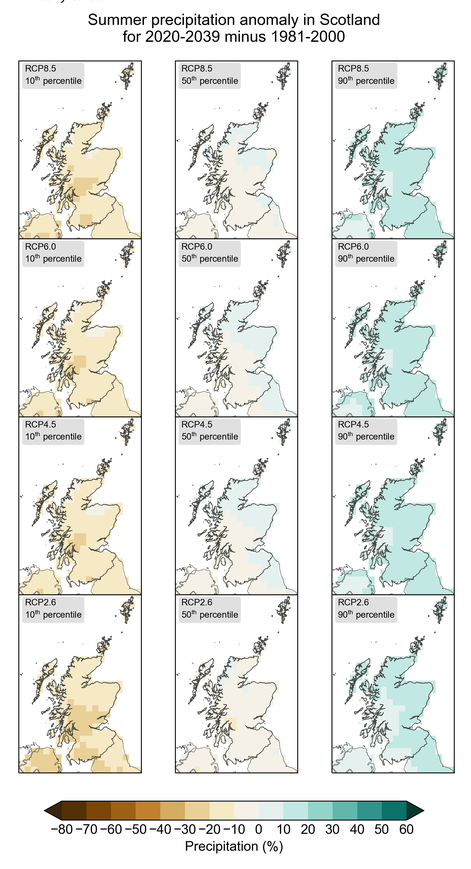
Whatever the accuracy of these predictions, they come on top of a 9% increase in annual rainfall in the last decade, compared to the 1961-90 average (see here), and more than that in the uplands, “with rainfall in June-August increasing from an annual average of 237mm of rain during the period from 1993 – 1997 to an average of 363mm during the period from 2016 – 2021” (see here).
What matters for the future of Scotland’s rainforests, however, is how they might respond to changes in rainfall. In that respect, increased rainfall could pose a greater threat than drier spells. Historically we know that while the warmer wetter climate of the last millenium helped temperate rainforest to develop, it also enable bog to expand at the expense of woodland. There is now evidence that the increased rainfall of the last few decades is having an adverse impact on the ability of the more western Caledonian pinewoods, which are now included under the umbrella of Scotland’s rainforests, to regenerate (see here). There appears to be much less evidence about the potential impact of drought on Scotland’s rainforests.
Despite the major uncertainties about the future impact of climate change in Scotland, Scotland’s Rainforest Alliance used it to repeat the claim that £500m is needed to restore Scotland’s rainforest because of climate change. While they are probably right that doubling the extent of this woodland would increase increase its resilience to climate change, whatever impact this has on the rainforest zone, the biggest factors constraining the expansion of Scotland’s rainforest (apart from bog) are overgrazing by deer and the spread of rhododendron ponticum. So why did they not simply say that £500m is needed to cull deer and remove rhododendron rather than making dubious claims about the impact of climate change?
Climate change and wildfire in Scotland
There have also been various people and organisations making claims about how climate change in Scotland is increasing the risk of wildfires. For example, John Swinney while visiting those fighting the Abernethy/Glenmore wildfire was quoted as saying (see here):
“We’re clearly facing significant changes in our climate and the prevalence of wildfires in Scotland on a now, unfortunately, frequent basis is an indication that climate change is happening,”
Mr Swinney appeared unaware that the west of Scotland had been experiencing a wetter summer than normal or that the number of wildfires recorded in Scotland was negligible compared to England:
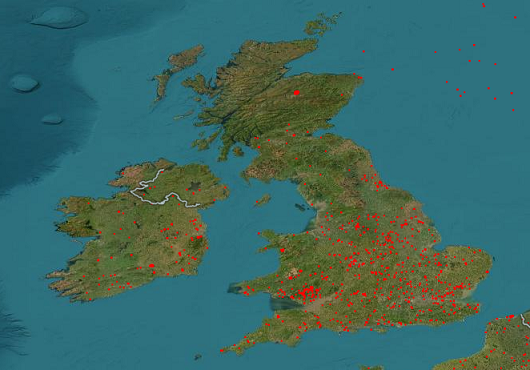
Most fires are started by people, most often accidentally, but it appears the reason why so many fires got out out control and were large enough to be detected by satellite this summer in England is that the weather was significantly hotter and drier than in Scotland. The risk of wildfire therefore were very high in England whereas on the west of Scotland they were negligible due to the wet conditions.
From a wider European perspective the risk of wildfires from increasing temperatures in Scotland appears relatively very low. Most European countries would be laughing if their maximum summer temperatures were peaking at under 30C and they received as much rain as the drier parts of Scotland.
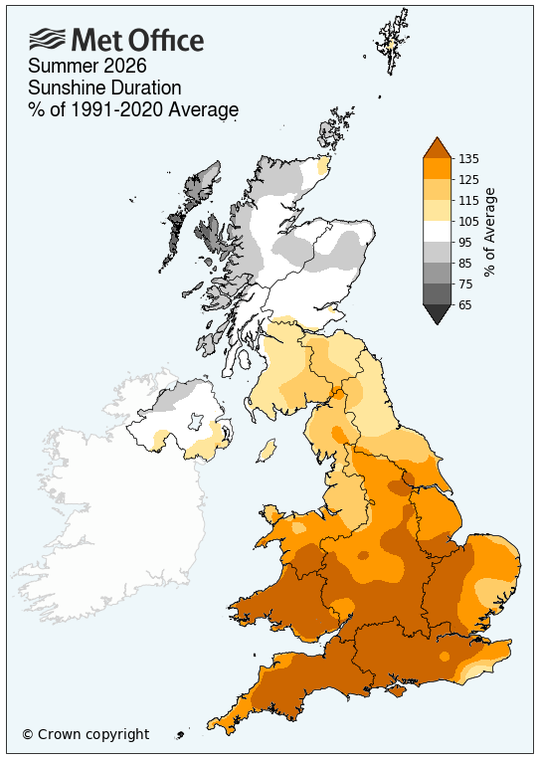
Other natural factors reducing the likelihood of wildfires over in Scotland over the summer compared to England and much of Europe include cloud cover (which reduces the chances of the sun’s rays igniting fires through broken glass etc) and the lower frequency of thunderstorms and lightning strikes (see here).
Unfortunately, the Scottish Fire and Rescue Service (SFRS) do not include in their statistics (see here) any information that would support Mr Swinney’s claim that wildfires are becoming more prevalent in Scotland or their own claim (see here) that “The period where wildfires can happen is extending from Spring into Summer”. That contrasts with DEFRA n England which has just published provisional wildfire statistics, with supporting data, for the period 2010-2026 (see here). (Incidentally these suggest that 2026 was not the worst year on record in England and that the number of wildfires and area burned was greater in 2022)..
 What has mattered in the past in relation to wildfire risk is not mean temperatures or average rainfall (except for some places along the east coast) but the occurrence of dry spells and periods of drought. It is those dry spells and the nature of the vegetation that explain why muirburn and wildfires (the two are often associated (see here)) take place in the generally very wet west.
The Scottish Environment Protection Agency (SEPA) issues warning about water scarcity but although these have now been brought into one data set for the period 1991-2025 with the help of Strathclyde University (see here) this does not appear to have been used to produce reports on the length and frequency of dry periods over the last 35 years. As for the future, NatureScot published a research report in 2021 (see here) predicting periods of extreme drought would increase in the period up to 2040, from one every 20 to one every three years, with the biggest increases in the Autumn, based on the Standardised Precipitation-Evapotranspiration Index (SPEI) (see here).
In my view it is probably safer to follow SEPA whose water scarcity reports warn there is considerable uncertainty about the future and ClimateExchange,whose research tool on predicting extreme weather in Scotland (see here) noted:
at present we will be unable to produce robust predictions for changes to weather related fire as there is no suitable model for predicting wildfire risk in Scotland due to its particular distribution of plant matter and topography (Naszarkowski et al., 2024). Instead, we advise users to consider that an increased probability of wild fire ignition is likely to co‐occur with drought extremes”
Once the link between dry spells and fire is appreciated, whatever the challenges of predicting dry spells in future, it should be easy to take preventive action to reduce the risk of wildfire whenever there is a period of water scarcity or drought. The SFRS are actually very good at issuing warnings about periods of high fire risk and what areas within Scotland are affected. Instead, however, of taking appropriate action to reduce risks in these periods, the Scottish Government appears on the one hand to be blaming climate change more generally and on the other to treat outdoor recreation as the main cause of wildfire. Hence its approval of the Cairngorms National park Authority’s “fire management” byelaws which ban campfires and barbecues anywhere in the great outdoors from 1st April till 30th September, whatever the fire risk, while continuing to allowing residents of the National park to have barbecues in their own gardens and land managers to light other fires during periods of high fire risk.
Even worse, the new Muirburn Code allows the holders of muirburn licenses, which allow muirburn over the winter months (1st October to 31st March) to “carry out muirburn during an ‘Extreme’ Wildfire Danger Assessment period” if they have “undertaken a detailed risk assessment and put in place mitigations to prevent the risk of wildfire from undertaking muirburn”. There are no measures in the new licensing scheme which would effectively ban muirburn during any period of high, as opposed to extreme, fire risk.
Andy Burnham’s ban on the sale of disposable barbecues this summer (see here) was important because it showed that central government does have powers it could use to reduce the risk of wildfires during drying spells. What the Scottish Government could and should do is ban ALL outdoor fires, wherever and whenever the SFRS predicts there is high fire risk. This should include campfires, barbecues (whether in the great outdoors or in ones garden), garden fires, muirburn, stubble burning etc. A rule that applied to everyone would be much fairer and far more likely to be respected.
Conclusion
A large part of the problem with claims that people are making about the impact of climate change in Scotland are that they appear based on comparisons with the rest of the world which are not valid. This is not to deny global warming is affecting Scotland’s climate, it clearly is, or that we need to be taking actions in Scotland to reduce our carbon emissions, we clearly do. However, our rising temperatures, which are well documented, are not as extreme as those documented for other parts of the world and their impact on rainfall appears to be far less predictable because of our oceanic climate. We therefore appear to be in a period of considerable uncertainty when it comes to predicting future dry spells and how these might affect Scotland’s rainforests or risks of wildfire.
Its appears that appealing to climate change has become a good way to raise money (or justifying development) while blaming climate change has become a good excuse to do nothing. The danger is that in ignoring facts, such as the very wet summer on the west coast, those making these claims lose all credibility and feed those denying climate change.
In this post I have tried to show that those doing so would be better focussing their attention on what they can change, in the case of Scotland’s rainforest overgrazing by red deer, and in the case of wildfire, banning all the most likely sources of ignition during periods of high fire risk

It is quite frustrating Nick that you write such a good article but then draw some of the wrong conclusions. You are right that policymakers should look at the Scottish evidence on climate change, rainfall etc before making decisions. And you are right about deer overgrazing BUT you are wrong to conclude that all ignition sources should be banned during high fire risk. As discussed in previous comments re Muirburn there is a big difference between trained muirburn practitioners (quite a small number of individuals) and the total population plus tourists who might decide to have a campfire and who have little or no expertise in what they are doing and probably don’t care either. It is not a question of ‘fairness’. Muirburn practitioners have a job to do and are paid to do it, campers are on holiday!
In addition Scottish Fire frequently publish high risk of wildfire notices when the local conditions suggest the opposite (as they did on several occasions this Spring). At other times they are behind the curve. These matters should be reserved for the trained experts out in the field.
It’s quite frustrating that you can appreciate the quality of Nick’s article, but cannot or will not appreciate that muirburn, which does not create or preserve natural grouse habitat or natural habitat for other species, is one part of the tripartite ‘graze, burn and kill’ mentality of the Victorian-Edwardian Dystopia of our uplands, with a strategic landscape outcome that is primarily there for the priorities and indulgences of a land monopoly cabal and not for the benefit of the comity of the nation or the native biodiversity, much depleted as it is by these very same land use activities
Could I remind you, Colin, that this excellent article is primarily about the integrity and survival of Scotland’s temperate rainforest and regardless of how climate change turns out, what we can be more certain about is that the well being of our rainforest is not well served by a grazing and muirburning burning regime rooted in a 19th century paradigm. In fact that continuing paradigm, slightly modified as it may be, is actually one of the greatest inimical factors involved. One cannot have a burned grouse moor and a rainforest in the same place at the same time.