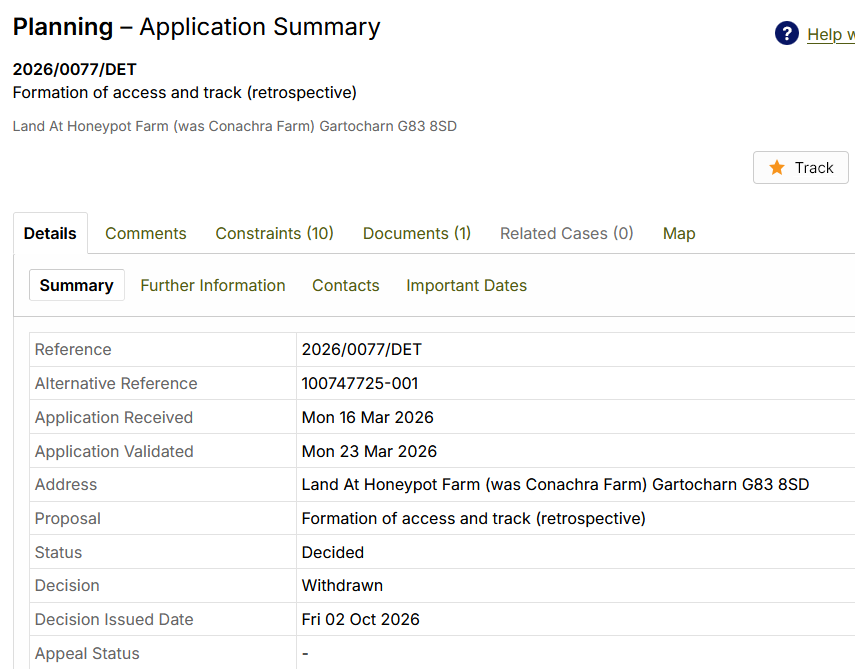
 The retrospective planning application for the unlawful new road to Honeypot Farm (see here), submitted in March, has been withdrawn by Michael Hyde Planning Associates, the agents on behalf of the owner of the farm, Sam Newall. Without a retrospective planning application there is no longer any justification for allow the new road to remain in place and the Loch Lomond and Trossachs National Park Authority (LLTNPA) therefore should now take enforcement action to ensure the land is fully restored. Michael Hyde Associates have, however, subsequently informed the LLTNPA they intend to submit a new planning application.
The LLTNPA’s handling of the unlawful development to date
Local residents had tried to get the LLTNPA to stop the work to construct the new road once they realised what was going on. Their pleas fell on deaf ears and the LLTNPA instead allowed the developer to complete the new road and asked them to submit a retrospective planning application.
The LLTNPA’s approach to this unlawful development served to undermine the integrity of the planning system and encourages planning lawlessness in the National Park and more widely afield. This is because if a developer knows a planning authority will approve a development retrospectively, as the LLTNPA did with a new driveway at Tarbet in 2022 (see here), it is easier just to go ahead with a development and present a fait accompli for approval.
In the case of new access off public roads, which has significant safety implications, in 2020 the LLTNPA did take enforcement action when they issued a temporary stop notice against the creation of a new vehicular road off the A811 east of Gartocharn and highlighted their actions in a news release:
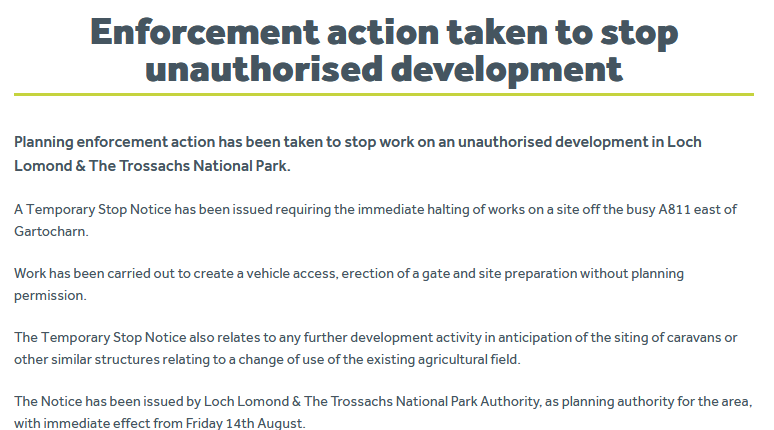
This history suggest the LLTNPA has been taking a more relaxed approach to road safety requirements since 2020.
There are additional issues in the Conachra farm case, however, because the LLTNPA had had contracts with Sam Newall’s company, Honeywagon Ltd, to provide them with mobile toilets. They therefore had a clear contract of interest in this case which may help further explain why they did not issue a stop notice (this is something which their Planning Committee should investigate).
The original deadline for determining the application was Friday 22nd May. The LLTNPA was unable to meet this deadline because of the number of issues raised by local residents which they then drew to the attention of others.
A good example was the objection from the Walk and Wheel Cycle Trust, the successor to Sustrans:
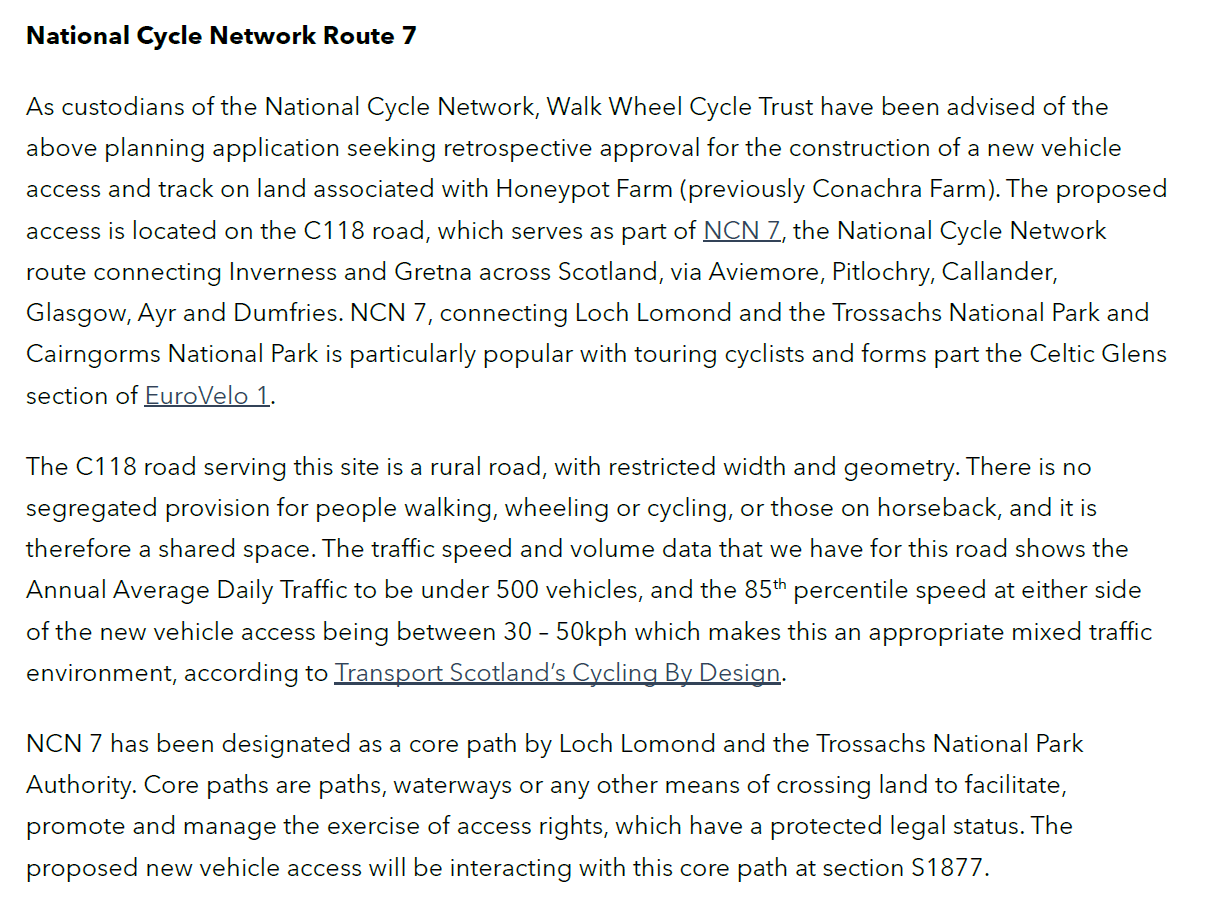 Like many of the objections, that from the Walk Wheel Cycle Trust shows the LLTNPA should have taken enforcement action: in this case it appears their senior management were not even prepared to protect the safety of the National Cycle Routes and one of their own core paths from an unlawful development.
However the objection that finally put an end to the current retrospective planning application was that from Stirling Roads. After considering new documentation submitted by the developer over over the summer, which attempted to justify constructing the new access onto a point in the road where there was very limited visibility, Stirling Roads finally decided they could not relax their approved design standards and submitted an objection on 22nd September:

It is one thing to override objections to a planning application by local communities and non-statutory bodies, quite another to ignore an objection from another public authority and it appears this forced LLTNPA officers to prepare a report for their Planning Committee recommending the application be objected and that in turn caused the applicant to withdraw the application.
From a developer perspective it is normally far better to withdraw a planning application, than to have one rejected, as this enables them to play cat and mouse with the public and erase the planning history (see here). That is just what the developer intends to do in this case:
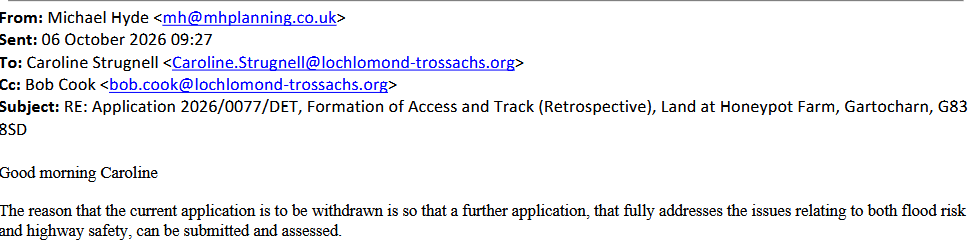
This history is also important in this case because, now there is no retrospective planning application, it evidences the need for the LLTNPA now to take enforcement action. It is of concern, therefore, that the LLTNPA has removed all the documentation relating to the planning application from its planning portal. (Unfortunately I failed to download copies of the documentation so have now made an FOI request).
Honeywagon’s new vehicle/storage park
The email from Michael Hyde Planning Associates goes on to state:
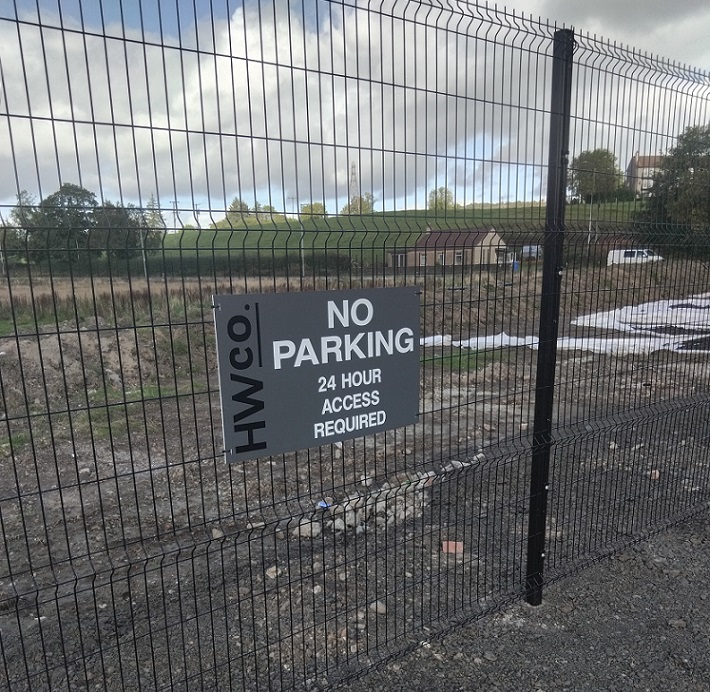
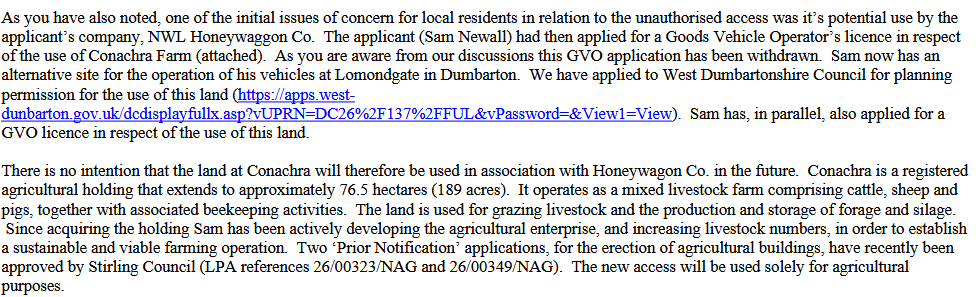 This effectively confirms that local residents were right to fear the real reason for the new road was to allow land at Conachra farm to be used for storage purposes and that the LLTNPA should have issued a stop notice, as residents requested. What Michael Hyde Planning Associates has omitted to say in his email to the LLTNPA is that his client has commenced the development of a storage area at Lomondgate without planning permission:
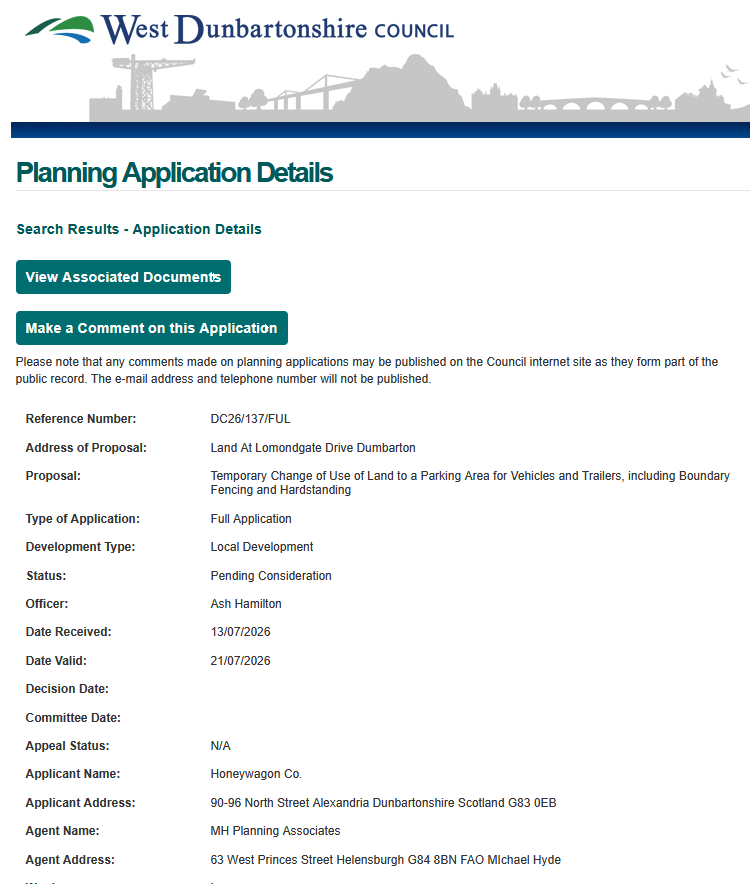
A planning application to West Dunbartonshire Council (WDC), on behalf of Mr Newall’s company Honeywagon Ltd, by Michael Hyde Associates in July. This was for “Temporary Change of Use of Land to a Parking Area for Vehicles and Trailers, including Boundary Fencing and Hardstanding” for an area of land near the Lomondgate roundabout (see here) . WDC’s planning portal clearly shows the application had not been decided by 7th October:
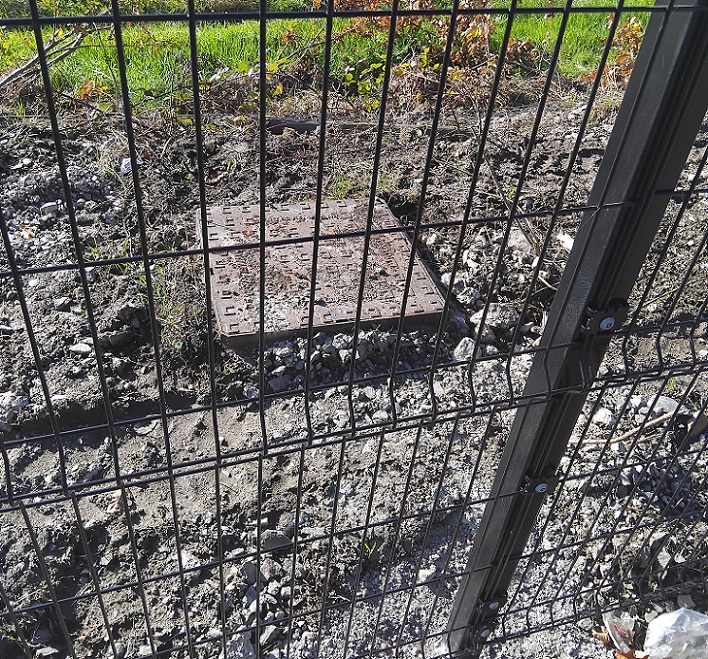
A number of objections have been lodged to the application, including from local residents, which indicate that work has already started on the site and covers a far larger area than is being applied for in the planning application. This is further evidenced by photos supplied by a reader:
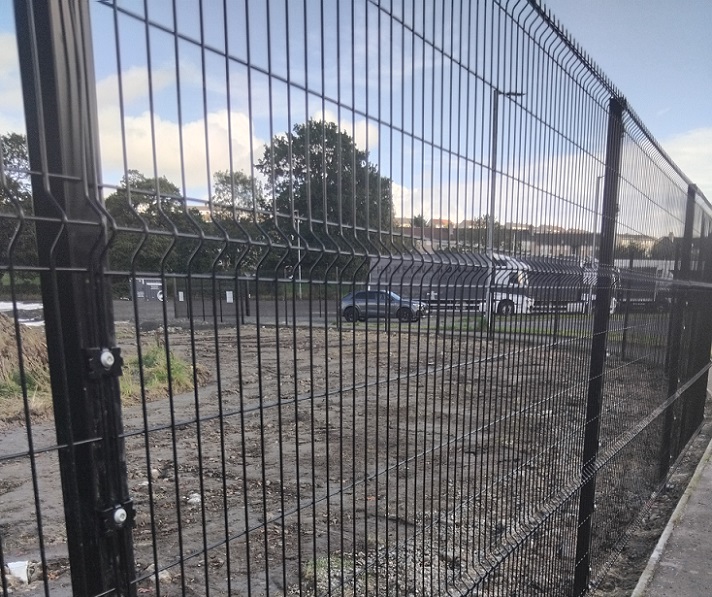 Not only has most of the site now been fenced but land within it has been bulldozed/altered in preparation for its potential proposed use to store vehicles and equipment.
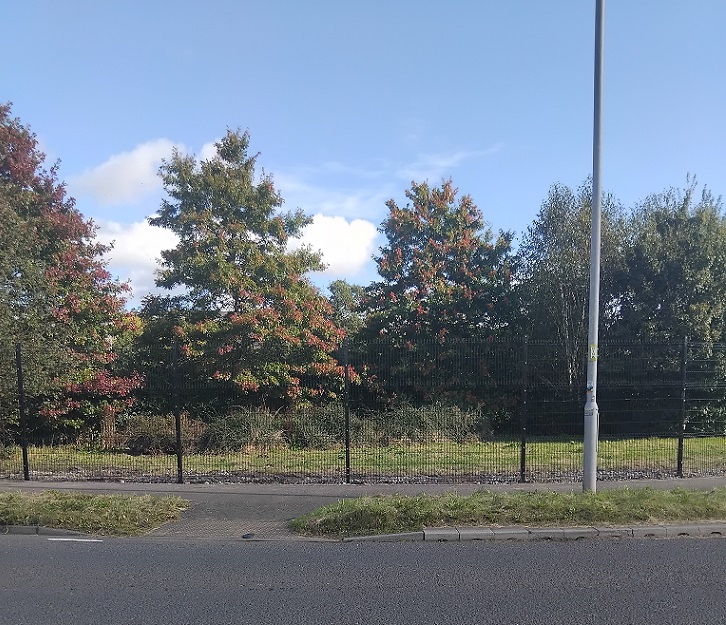
The planning application is for use of the site as a storage site for a period of up to four years for what is described as a brownfield site. The reason the application is temporary appears to be because the proposal is contrary to the land-use agreed in the Local Development Plan. (A storage site at Conachra Farm, over the boundary from the new track, would also have been contrary to the Stirling LDP). Part of the Lomondgate site, however, has been landscaped and the fencing, which is right up to the public footpath, has implications for local amenity which would normally be considered as part of the decision making process on a development (e.g even if it was minded to approve the temporary development WDC might have insisted the fence be set further back).
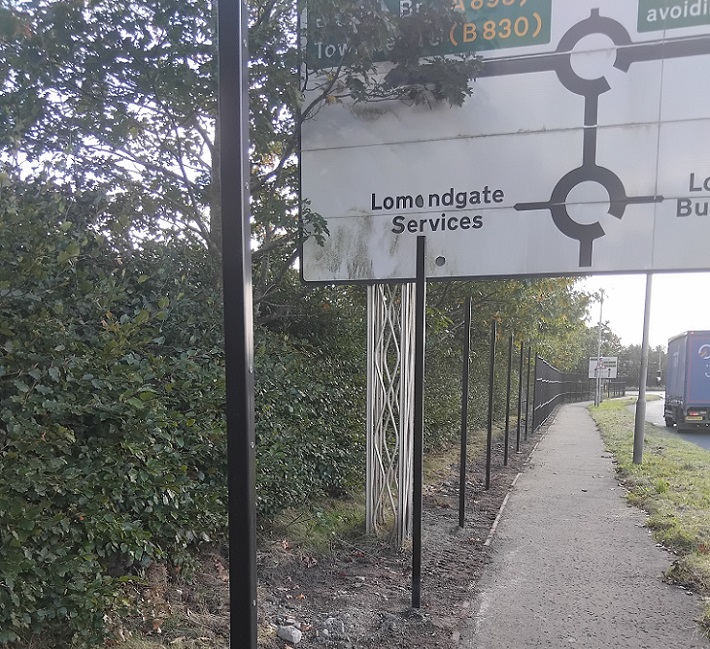
The photos show the fencing also has implications for access to public utilities, some of which are in the process of being enclosed behind the fence.
Discussion
The evidence from both Lomondgate and Conachra Farm shows why it is so important that planning applications are properly decided through due process BEFORE any development takes place. It shows why it is in the public interest for planning authorities to take enforcement action in the form of stop notice whenever they are informed of unlawful developments to ensure they are not presented with a fait accompli.
Unfortunately, it appears that WDC is trying to legitimise the unlawful development at Lomondgate, just as LLTNPA tried to do at Conachra Farm. On 2nd October, weeks after the work on site had started, the planning application was advertised in the Lennox Herald and the advert was then uploaded to the WDC planning portal.
The Lomondgate planning application further confirms the unlawful development thee and at Conachra/Honeypot farm are be connected. The supporting statement explains that Honeywagon is expanding and needs an extra storage area but that alternative sites have been found unsuitable:
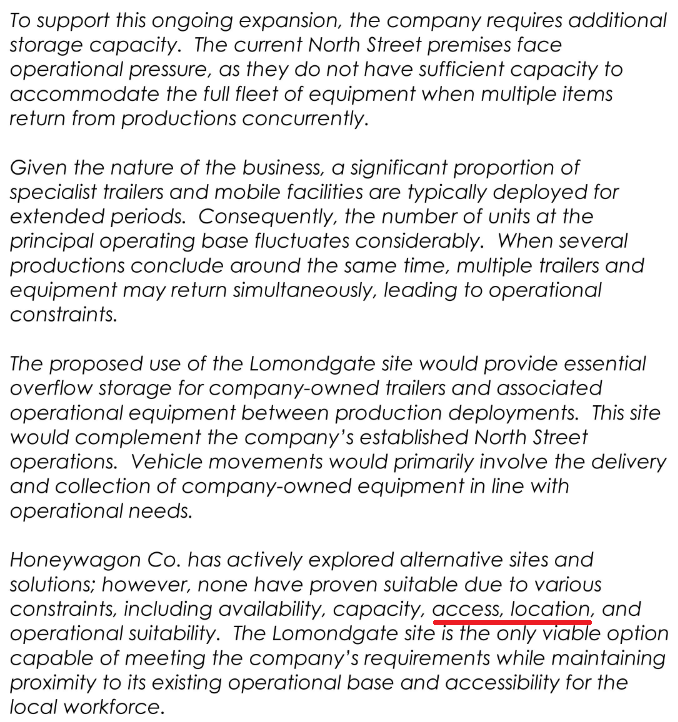 It appears that by early summer Mr Newall realised he need to look for a storage area for his vehicles and equipment elsewhere. That was the right thing to do but he once again proceeded to implement his plans without planning consent. And instead of accepting that the additional entrance to Conachra Farm is dangerous, he still appears determined to try and get it approved. That means he would have the infrastructure in place for Honeywagon’s vehicles to access the farm should WDC take enforcement action at Lomondgate or, if temporary planning consent is granted, when it expires in four years time.
Unfortunately, instead of setting an example to WDC and other neighbouring planning authorities on how to manage unlawful developments in the public interest, the LLTNPA has been doing the opposite. It now appears they are quite happy to allow Mr Newall to play cat and mouse with the public and to give him another chance at the expense of the interests of the local community, road users and recreational interests. The LLTNPA is a National Park Authority that has become part of the far wider problem, in which the planning system serves as a means of legitimising development whatever the consequences for the general public or the environment.
Its one law for developers, another for everyone else.
