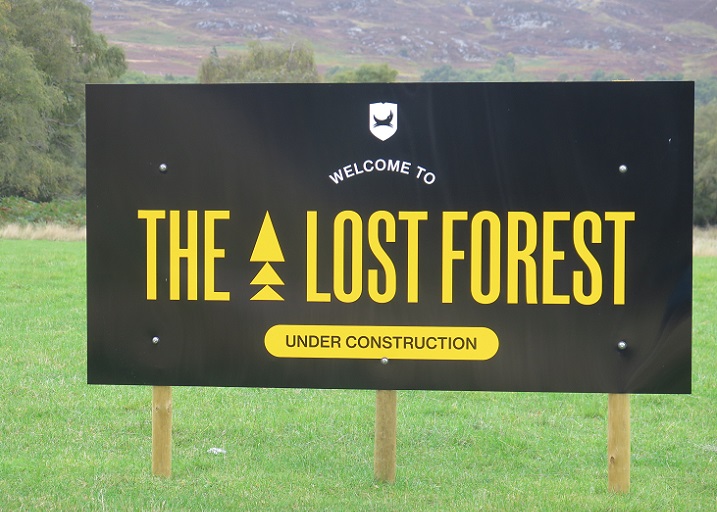
BrewDog’s sale of Kinrara, the estate near Aviemore which it purchased for £8,800,000 in December 2020, and the announcement by Oxygen Conservation earlier this week that it had purchased it (they have not disclosed the sum) were both sadly entirely predictable. The short explanation is BrewDog financial balloon has well and truly burst while Oxygen Conservation’s financial balloon is on steroids and is inflating at incredible speed.
The reasons for BrewDog’s sale
BrewDog made a £34.5m loss after tax in its financial year to 31st December 2024 despite claims earlier this summer that it had returned to profitability after four years (see here). Besides recently closing ten pubs in the UK it is reported to be paying £17.3m in annual interest at rates of up to 18% on loans it took out in 2022 and 2023.
In May BrewDog took out a third loan from HSBC which was secured through a charge on the Kinrara estate, owned through its subsidiary the Lost Forest Ltd (see here). The Lost Forest Ltd has been in the red from the start, despite all the public grants it received, because its purchase of Kinrara was financed through a loan from BrewDog rather than by the investment of share capital. The land itself, however, still had financial value to BrewDog, especially if it has now managed to sell it for more than the purchase price (as Abrdn has been trying to do at Far Ralia (see here)).
BrewDog’s Lost Forest was always a marketing gimmick designed to persuade the public that it was serious about becoming a carbon negative company – “drink punk, kill carbon” (see here). The accounts of the Lost Forest Ltd suggest BrewDog never actually invested any of its own money, or that of its drinkers who thought they were helping to plant a tree, in managing Kinrara but instead relied on Scottish Government grants to finance its “construction work” (the employees of the previous owner were quickly made redundant).
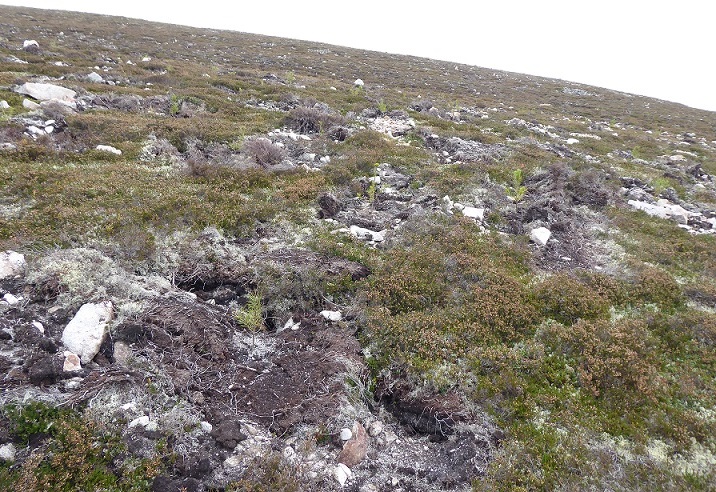 BrewDog, advised by two competing sets of consultants, used funding from Peatland Action to restore peat in some areas while using funding from Scottish Forestry to scrape away pleat in other areas to plant trees.
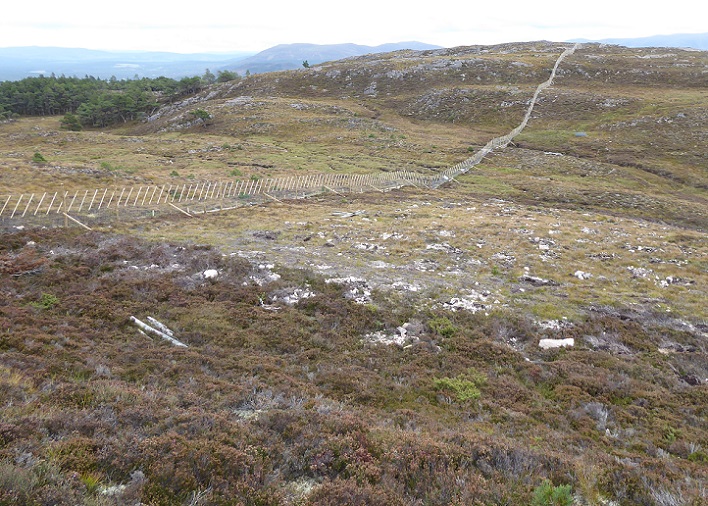
BrewDog had little clue what they were doing and, among all the other damaging impacts caused by their Lost Forest (e.g see here), they allowed those capercaillie killers, deer fences, to be erected within the dispersal zone of one of Scotland’s most threatened birds (see here).
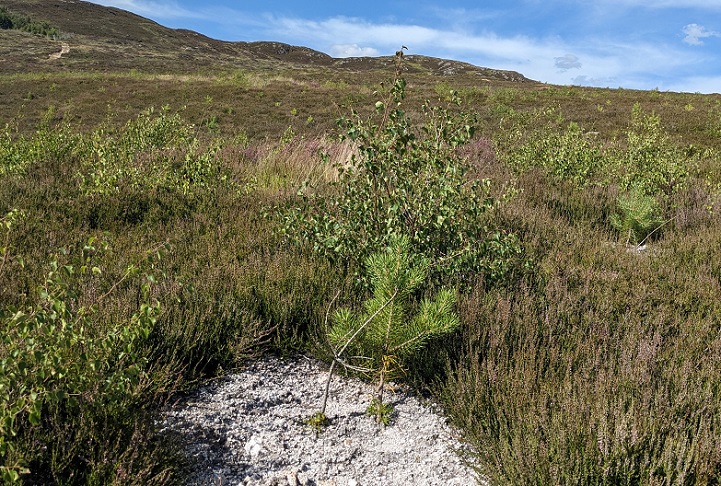
BrewDog then faced disaster when over half the trees they planted in 2023 died, an inconvenient truth which they did not reveal to the public until forced to do so (see here).
That no doubt helped prompt BrewDog’s announcement last summer that it was dropping claims to be carbon negative – because of the poor quality of carbon offsetting schemes! – and that it was going to exit the carbon credits market and instead focus on reducing its own emissions (see here).
Enter Oxygen Conservation whose business model is in large part built on that very same carbon credits market……………….
The reasons for Oxygen Conservation’s purchase
Having convinced some banks – they borrowed significant sums from Triodos initially – and other investors of its business model, Oxygen Conservation appear to be awash with offers of finance and have been on a land buying spree. This is having serious consequences for the landscape, nature and people across Scotland (see here and here for the Glen Lednock windfarm). I will come back to this in more detail but, for those interested in Oxygen Conservation’s view of “natural capital” markets, a recent video of their founder and Chief Executive, Richie Stockdale, in New York is worth viewing (see here):
Laugh or cry, one thing is clear, Mr Stockdale is as much driven by marketing and dreams of money as BrewDog’s founder, James Watt, ever was. Here, however, I just want to consider the claims Oxygen Conservation made this week (see here) about its purchase of Kinrara :
Claim: “Leading natural capital asset manager Oxygen Conservation is proud to announce that it has acquired Kinrara Estate, a landmark habitat spanning nearly 10,000 acres, part of which lies within the world-renowned Cairngorms National Park.”
Comment: a good example of meaningless spin. Kinrara is not a “landmark habitat”, whatever “landmark” means. It comprises a number of habitats (as the following para shows), while the Cairngorms National Park is hardly world-renowned. In fact it has allowed significant parts of what was once mooted as a World Heritage Site to be burned to bits as Prof Douglas MacMillan showed earlier this week (see here).
Claim: “This landmark acquisition propels Oxygen Conservation past 50,000 acres under management across the UK, marking a powerful step forward in its mission to Scale Conservation. Formerly owned by BrewDog, the Kinrara Estate is not only home to vast peatlands, native woodland, and sweeping moorlands but also the site of ambitious woodland creation and peatland restoration projects already underway.”
Comment: Oxygen Conservation’s vision is to build “the leading natural capital portfolio in the world”, valued at over £1 billion by 2030 (see here). Its primary mission therefore is to buy up land – hence why the news release emphasises the total size of its landholdings – and make money money for those who are funding this and other land acquisitions. How Oxygen Conservation then manages its land is then primarily determined by how it can make a return for its investors – hence the windfarm at Glen Lednock – and not by science or ecology. “Scale conservation” is required because the more land you own the more money you can make for investors.
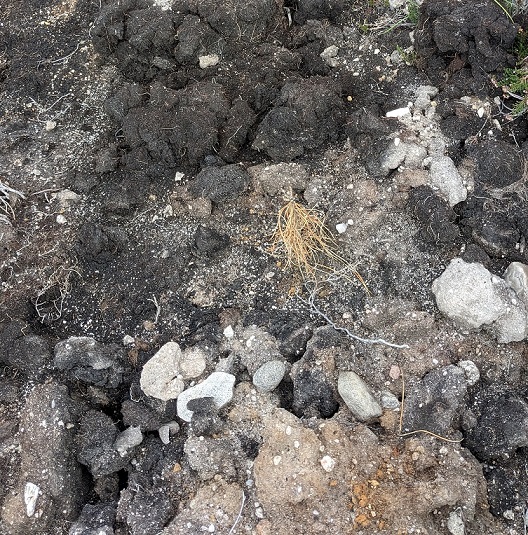
Claim: “We’re delighted to be taking forward the next chapter of Kinrara Estate, following BrewDog’s work on ‘The Lost Forest’ – one of Scotland’s most ambitious woodland creation projects. They took on a complex, challenging landscape and delivered it to a high standard, from ground preparation to deer fencing and especially the use of locally sourced seed. Kinrara offers both scale and ecological improvement opportunities, and we hope to take it into its next chapter whilst continuing the ambitious woodland creation and peatland restoration projects already planned across this landscape,” says Rich Stockdale, CEO, Oxygen Conservation.”
Comment: most of the ground preparation at Kinrara was not needed and dire, as illustrated in the photos above, and exposed soil carbon to the atmosphere, where it reacts with oxygen to form CO2 and dries out – one of the reasons so much of BrewDog’s Lost Forest died!
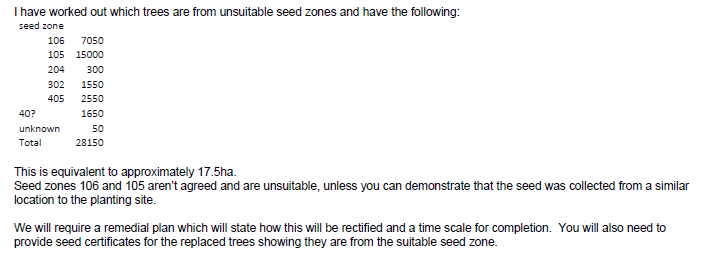
As for the seed at Kinrara being locally sourced, it appears that Oxygen Conservation have failed to conduct due diligence, either that or Mr Stockdale and his public relations staff have failed to read the selective but thorough report from Scottish Forestry staff.
Claim: “Oxygen Conservation’s vision for the Kinrara Estate is characteristically bold. Across nearly 10,000 acres—part of which sits within the Cairngorms National Park—we will deliver landscape-scale restoration that enhances biodiversity and reimagines how people, business, and nature can thrive together. Kinrara offers both the scale and the opportunity for Oxygen Conservation to advance BrewDog’s commitment to woodland creation and peatland restoration, while pioneering new opportunities for green jobs and public access. More than an estate, Kinrara will become a living demonstration of how investment in nature can be both a force for ecological recovery and a driver of long-term prosperity.”
Comment: Oxygen Conservation have not published any vision for Kinrara so this is more spin without substance. The bold for Oxygen Conservation to do at Kinrara would be:
- not to replace any more of BrewDog’s dead tree and take the hit from Scottish Forestry for failing to meet their tree planting targets:
- to restore all the ground that has been trashed by the mounding;
- to employ sufficient local people as deer stalkers to maintain deer density at less than two per square kilometre year round; and.
- remove all the deer fences to benefit wildlife and outdoor recreation.
While the “investment” required to deliver that would be relatively small, it won’t happen because enabling the natural world to restore itself won’t produce sufficient return to Oxygen Conservation’s investors.
The “natural capital” racket
Following the soundbites from Oxygen Conservation in the news release, Lauren Carrol, current Chief Operating Officer of BrewDog is quoted as follows:
“Since we became custodians of this magical slice of the Scottish Highlands, we have worked with partners to restore 745 hectares of peatland and planted over 375 hectares of new woodland. We’re proud of all that has been achieved and of the legacy we leave, but the time is right to hand over the reins to an organisation that specialises in protecting and investing in natural capital……….Oxygen Conservation will be fantastic stewards of the Kinrara Estate. Their experience in scaling up impact through innovation and community engagement is second to none.”
Having last year heavily criticised carbon markets and claimed it would have nothing further to do with them, BrewDog is now happy to sell the land to an organisation “that specialises in protecting and investing in natural capital”! While the tree planting Kinrara no longer appears to be registered under the Woodland Carbon Code – what’s the bet Scottish Forestry finds a way to make it re-appear? – BrewDog must have been relieved to be able to confirm to Oxygen Conservation that the peatland restoration schemes are still registered under the Peatland Carbon Code:

Without that, Kinrara would have been worth a lot less than whatever Oxygen Conservation offered for itI
By chance, the think tank Future Economy Scotland has just published an important report ‘Restoring Nature to Deliver a Just Transition to Net Zero’ (see here). There was a good article about it by Vicky Allan in the Herald on Thursday (see here). The report’s main message is that “While the Scottish Government hopes that private finance can plug the investment gap, our research shows that this approach is fundamentally flawed.” Highlighting the risks, the report states attracting private finance at scale “would require costly public subsidies, diverting taxpayers money to guarantee investor profits”. Instead it advocates “public investment for public goods” and measures such as a reduction in deer density across Scotland. While the Kinrara and BrewDog’s Lost Forest is not mentioned in the report, it provides the perfect illustration for many of the points made by the authors. Oxygen Conservation’s purpose will mean more of the same.
Unfortunately, Scottish Government Ministers, civil servants and our public authorities appear unlikely to listen. One person who has their ear is Benny Higgins, chair of the Duke of Buccleuch’s Estate Company, now “chairman” of Oxygen Conservation and “founder” of the Scottish National Investment Bank. The SNIB, as Andy Wightman has just shown in an excellent blog on the Todrig estate in the borders (see here), is helping to fuel a rise land prices to unprecedented levels through its opaque investments in natural capital through Gresham House, now the second largest landowner in Scotland .
Mr Higgins was quoted in Oxygen Conservation’s news release about the need for “investment” in “natural capital” :
“The acquisition of Kinrara Estate is another important milestone in our Oxygen Conservation journey. Natural Capital is a vital national asset, and one that must be cherished and supported through investment. Rich and his team have worked tirelessly to reach this stage. In particular they have recognised the need to demonstrate integrity and transparency in relationships with all stakeholders.”
Unlike the Future Economy authors, Mr Higgins made no attempt to explain his claims, nor did he explain what he meant by “all stakeholders” but, judging by the lack of public consultation, he is referring to those who are currently inflating the Oxygen Conservation natural capital balloon. What Benny Higgins also failed to mention are the extraordinary levels of “return” that Richie Stockdale was recently reported as intending to achieve for Nor did Mr Higgins say his Chief Executive hopes to sell their entire “portfolio” in 2030:
“Stockdale, who is aiming to deliver 20 percent returns to his investors, is adding a property to his portfolio just about every quarter. He’s close to acquiring an estate in Scotland [i.e Kinrara] that will take the portfolio’s asset value to £275 million. He explains he wants to expand to 250,000 acres worth £1 billion by 2030 and then sell the portfolio.” (see here – the quote is from near the end of the article)
Five years is about the same time as BrewDog owned Kinrara. It is almost impossible to see how Oxygen Conservation can produce a 20% return for their “investors” in that time through the carbon credits market, even if they do manage to register the Lost Forest again under the Woodland Carbon code. The land planted with trees is trashed and will be emitting carbon for the next 15-20 years at a minimum. Oxygen Conservation has not bought a quality nature restoration project.
Anticipate therefore a large windfarm planning application on the Monadhliath side of Kinrara, just outside the boundary of the Cairngorms National Park. At Glen Lednock Oxygen Conservation only revealed their true plans when the property was in the bag.
We now know it is likely they will take the money from Glen Lednock, Dorback, Kinrara etc and run in five years time. BrewDog, Oxygen Conservation and Kinrara – there could not be a better example of the need for real Land Reform in Scotland now instead of the anaemic Bill which has now reached Stage 3 in the Scottish Parliament. The deadline for amendments is noon Tuesday 7th October (see here).

Totally agree with all of this. Forestry in Scotland is being dragged in to disrepute.
Spot on Victor. The BrewDog fiasco tells you everything you want to know about Scottish forestry and the £millions of public money that the Scottish Government is wasting on the current forestry grant system. BrewDog did not dream up their crazy plans in isolation – their principle source of advice and operational delivery was Scottish Woodlands, part of Scotland’s corporate sector that has a far too cosy relationship with the government’s Scottish Forestry who are responsible for both grant giving and regulation – a fine conflict of interest. We now need the next Scottish Budget to scrap entirely the funding provided in these forestry grants which are simply being milked for all they are worth by the global investment companies as they buy up vast tracts of our land, at breakneck speed. And when we get to the next Scottish Parliament, due in 2026, we want politicians elected to abolish Scottish Forestry, transferring its regulatory powers to the Scottish Environment Protection Agency and its budget divided up between Forestry and Land Scotland, to better manage the forests which we the public actually own, NatureScot who are in a better position to fund the natural regeneration of our woodlands, with the remainder of the budget spent on the farmers and crofters who we need to plant the trees to meet future timber requirements.
Jings this is going to a fun ride.
Popcorn for the inevitable unwinding and passage to next corporate money washer?
Thank you for an excellent article with probing research. It’s like a form of pyramid selling, where Rich Stockdale realises that he needs to sell out at its peak before the whole edifice collapses.
So sad that Scottish Ministers are unlikely to take notice of the Future Economy Scotland report.
I can only agree. An absolute racket.
Geez, such a shame these swish geezers will have just the right charm to pull the wool over our MSP’s eyes. I like the clarity of the article, but I’m not filled with hope. It’s another Scottish water style fiasco. Why should it be so difficult for our b public officials to get it right?!