There can be few among us, who, when they hear the name ‘Galapagos’ do not have mental images conjured up, of all the wonderful TV documentaries over several decades, perhaps even going right back, as in my own case, to the black and white transmissions of ‘Baby-Boomer’ childhood. The Galapagos are imprinted on our collective psyche as the archetypal archipelago of evolution and the veritable midwife of Charles Darwins’s seminal opus. Yet Darwin missed out on a much earlier opportunity during his various stays in Scotland (he began his university education in Edinburgh)
Things might have panned out quite differently if Darwin, during his times in Scotland, had relinquished his obstinately held marine transgression theory of the origin of the famous Parallel Roads of Glen Roy in favour of the proposition of a glacial ice-dammed lake origin (and indeed the whole ice age genesis of our mountain landscapes) first revealed to the world via the studies of Louis Agassi, articulated in the Scotsman of 7th October 1840. Had he taken the opportunity to examine some of the 30,000 Scottish lochs, left behind by the glaciers as de facto biological ‘islands’ in an ice-sculpted landscape, Darwin might have saved himself a long sea trip in favour of discovering another ‘Galapagos’ right here in our own Highland ‘backyard’.
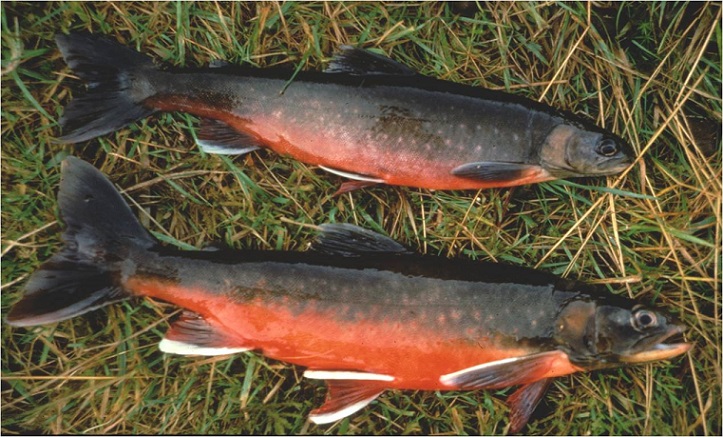
The Parallel Roads of Glen Roy attest the dynamic forces of glaciations and de-glaciation that set the mainframe of the Highland environment and, likewise, the great, deep fjord-like freshwater lochs of the Highlands and their fish populations. Both their physical nature and their fish fauna are as much part of our glacial heritage as the high tops of the Cairngorms. Just as our high hills were colonised by a relatively small number of northern species, so our Highland lochs were re-colonised after the Ice Age by a relatively small number of fish species tolerant of harsh boreal conditions and both marine and freshwater. Classic examples being Atlantic Salmon and Brown Trout/Seatrout, but, if there is one fish that epitomises our living glacial heritage, it is the relatively unknown Arctic Charr, probably one of our most beautiful native animals.
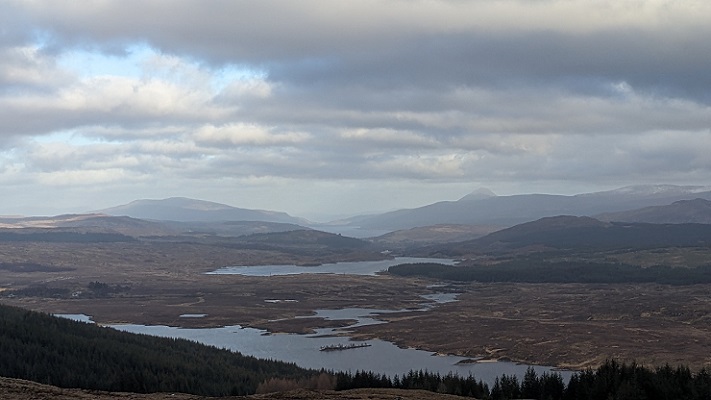
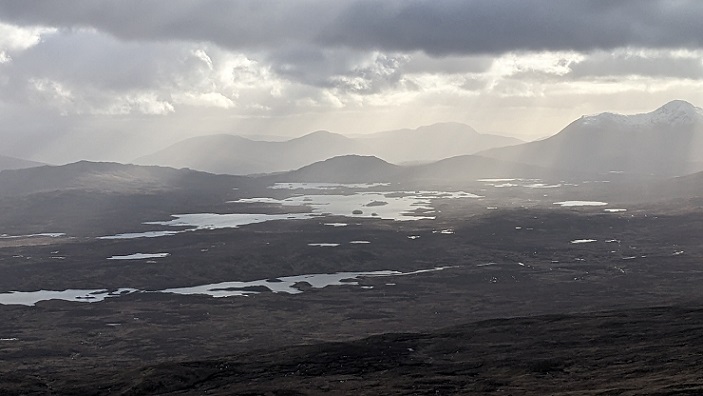
Few of these 30,000 lochs in Scotland have been surveyed in great detail, but as more investigation ensued in the latter half of the 20th century and the first decade of this one, a challenge arose to our concepts of the fish biodiversity they contained, to our understanding of the post glacial re-colonisation process and especially to our conservation priorities. This was strikingly highlighted in four lochs in the upper Tummel (Tay basin) catchment, namely Tummel, Rannoch, Ericht and Laidon, an archipelago of biological islands we thought of as just being ‘lochs’, but in the end, provided a similar intellectual ‘gobsmack’ to that Darwin may have felt on visiting the Galapagos.
Some 45 years ago, when I first began sampling lochs for Arctic Charr, we believed they were a very rare fish. My present estimate is 300 charr lochs with more to be discovered. Thus, Scotland is, excepting Fennoscandia, probably home to more natural Arctic Charr populations than any other country in Europe. Arctic Charr are the only member of the salmon family with a complete circumpolar distribution and within that vast area they exhibit a myriad of local forms and variants, not only from lake to lake, but within individual lakes.
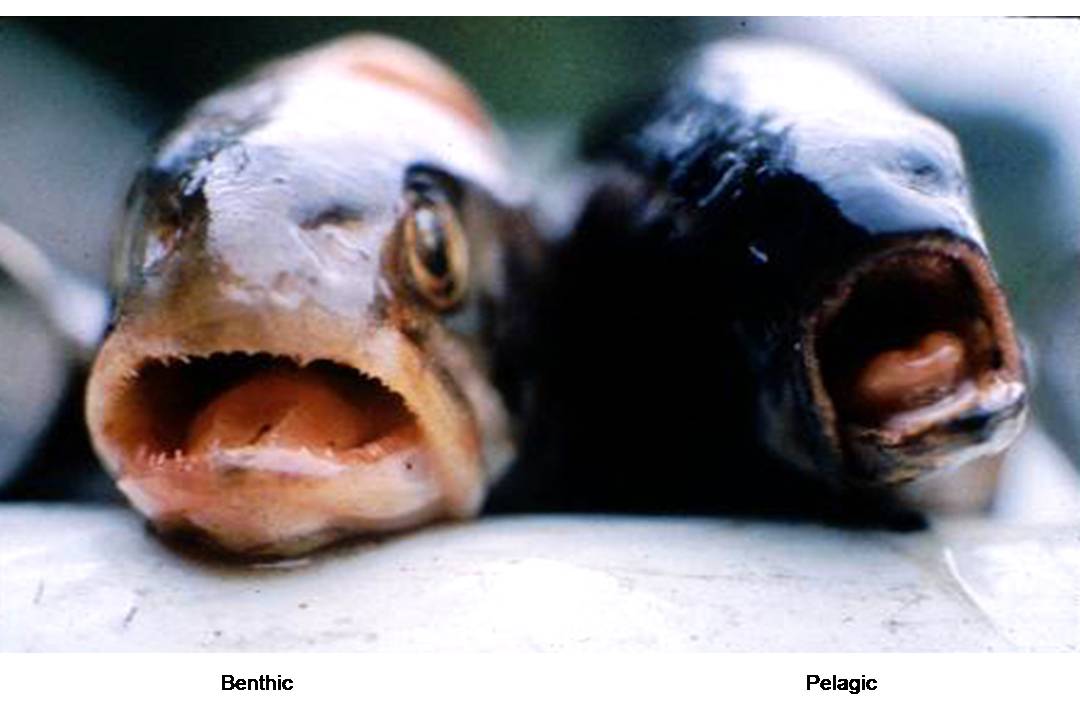
Scotland is no exception to that rule, and indeed has provided one of the most clear cut and internationally renowned examples of that phenomenon, via the chance discovery 40 years ago, by Prof Andy Walker of myself, of two distinct forms of charr (a benthic or deep water bottom-living form and a mid-water-living form) in Loch Rannoch exhibiting remarkable differences in body form, ecology and habitat preference. The differences in head and mouth structure alone, is right up there with the beak forms of Darwin’s finches.
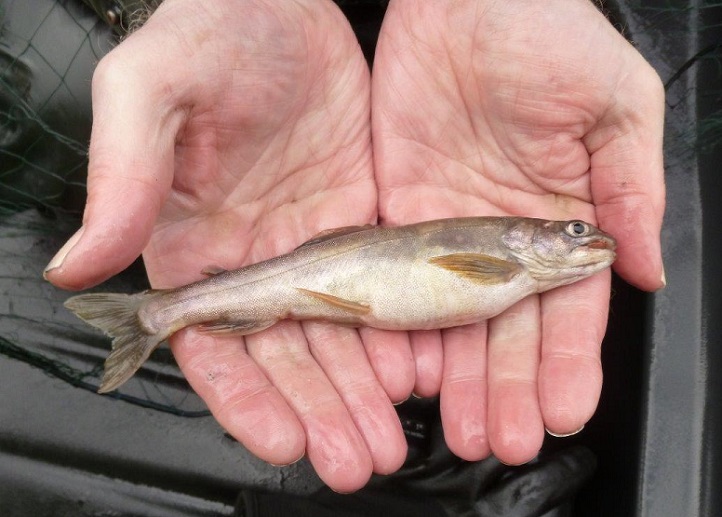
Subsequent research suggests that there at least 3 forms of charr and possibly 5 in Rannoch. However remarkable that may be in a world context, the story does not end there. In 1985, following up on an old reference, I set nets over 100ft down in Loch Ericht and caught charr very similar to the deep water charr of Rannoch and very different to the form of charr we were already familiar with in this loch. Follow on studies by and with my colleagues Prof. Eric Verspoor and Prof Colin Adams later confirmed close analogies with the two main forms of charr in Rannoch.
The presence of charr in Loch Tummel was only confirmed in the mid-1980s. Follow up studies in conjunction with colleagues Derek Pretswell (mid 1990s) and with Prof.Verspoor (early 2000s), revealed a bottom living form of charr remarkably similar in body form, colouration and ecology to one of the bottom living forms of Rannoch, but which however was not closely genetically similar, thus presenting a profound challenge to our then paradigm of the postglacial colonisation and evolutionary processes of the loch system.
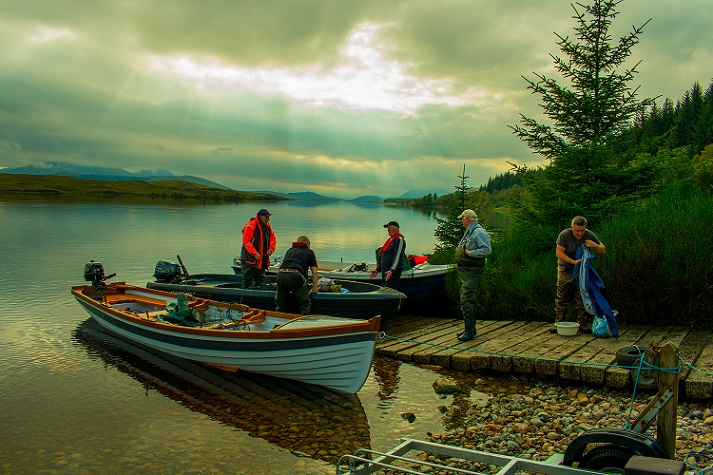
Stunning as this discovery was, it was dwarfed by the revelation of what Prof. Verspoor and I encountered during preliminary netting in 2006 of the deep-water zone of Loch Laidon, to see if an analogous deep water charr also existed here. No charr were captured, but we were astounded when we hauled up Brown Trout exhibiting similar physical characteristics to the deep water charr found elsewhere.
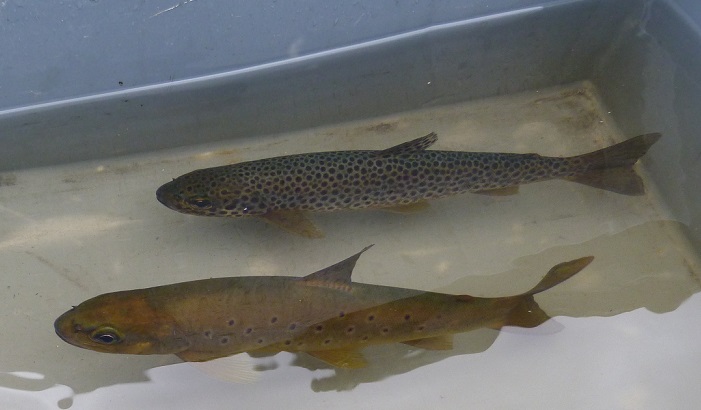
This astonishment reached new levels when more detailed surveys revealed four genetically distinct forms of trout, just as distinct from each other as the Rannoch charr, in body form, genetics and ecology. Loch Laidon is probably the most remarkable wild trout loch on Earth and is the only known one of its kind.
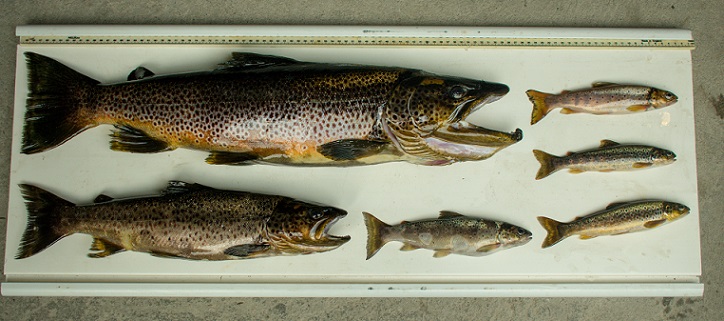
Having any individual loch with the fish biodiversity exhibited would be exceptional enough in itself, but to have 4 lochs in such proximity, in the same watershed, showing multiple distinct forms in two genera, is the stuff of textbooks and TV documentaries. This has as valid a conservation imperative as discovering 4 terrestrial islands showing equivalent bird or mammal biodiversity. Are we up to the challenge of the ‘Galapagos’ lochs in our own backyard?
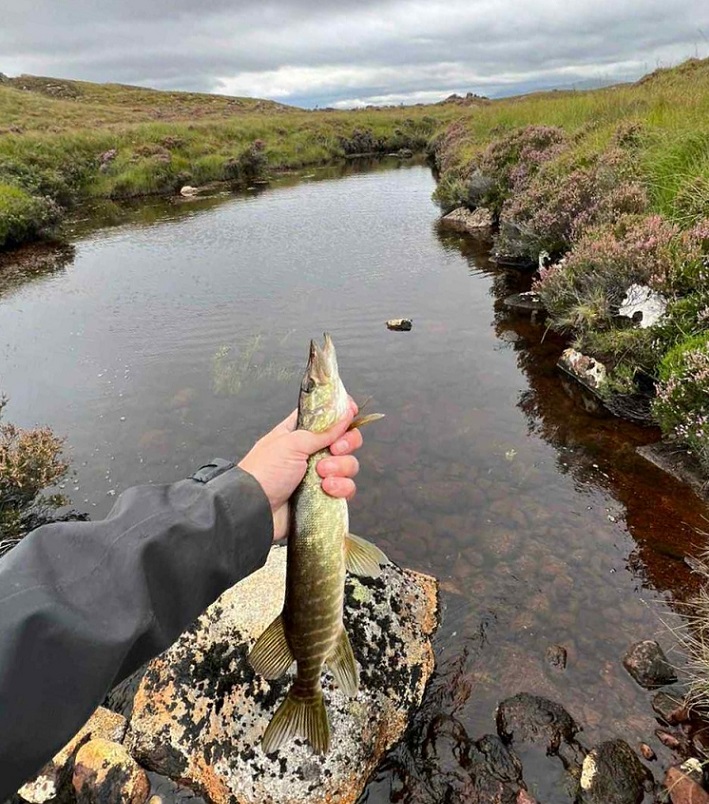
Pike were introduced to lochs afferent to the Laidon watershed on the Black Corries estate, at or just before 2020 and have now been physically caught in several parts of drainage system just above Laidon. Data released by the Scottish Environment Protection Agency in 2025 showed pike DNA in Laidon.
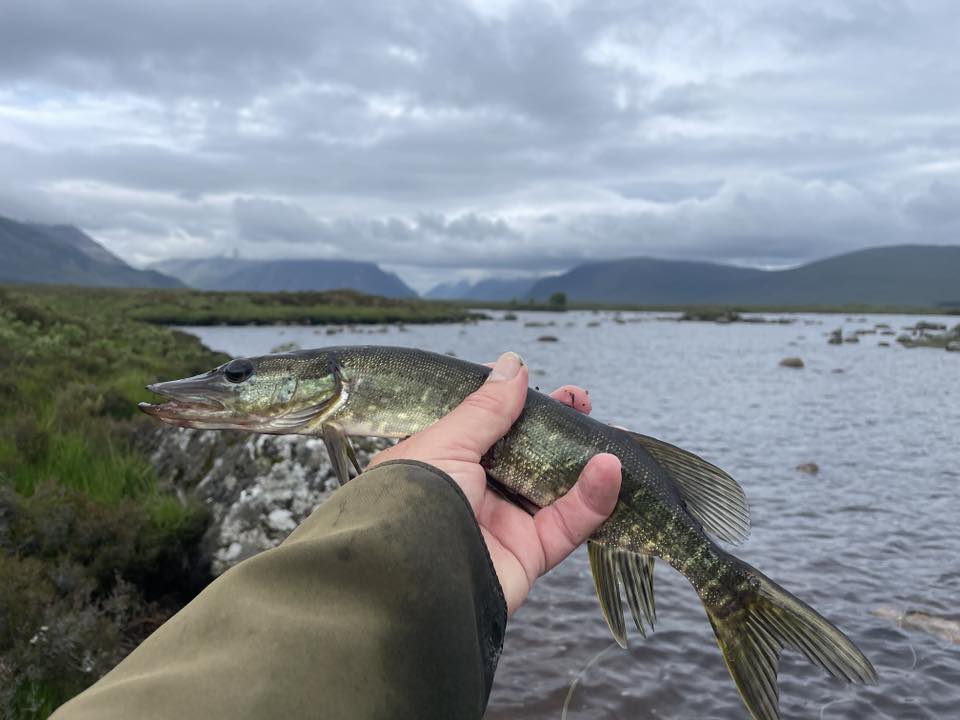
Well, after 20+ years of lobbying government ministers with appropriate portfolios and likewise, the bureaucrats of the NGO-Quangocracy, with the nominal remit and responsibility for the protection of native fish biodiversity, it is obvious that the politicians and the agencies are not up to that challenge and indeed are insouciant and obdurate in not being so. Introductions of exotic fish species in two of the loch systems now threaten the doom of some the last of our original Ice Age freshwater fish fauna. It is nothing short of a sheer, utter disgrace.
Note on author
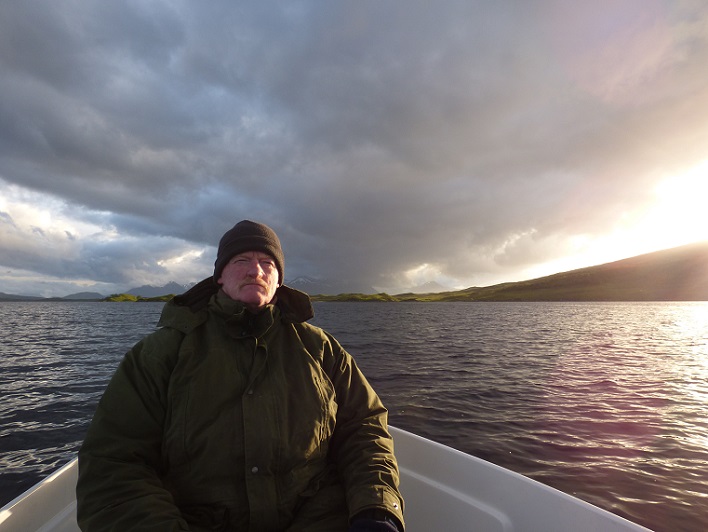
Some readers may recognise Ron from Lesley Riddoch’s film ‘Scotland’s Missing Forests – The Great Eco-Conspiracy’ which was launched at the last Revive Conference (see here) It has now been viewed over 195,000 times on You Tube.

Another aspect in the context of a locally non-native predator such as Pike being introduced into an environment which has not co-evolved with them for 12-15,000 years is the impact that they may have on other taxa such as amphibia and birds. In regards to the latter Pike will prey on juvenile aquatic birds (and thanks to John Smith we have photographic evidence) including Gavia species. Sadly, on contacting the RSPB, I got the same bureaucratic body swerve from them as from other sections of the NGO-Quangocracy cabal.
Excellent stuff as usual, Ron.
Thanks Stuart, but I daresay NatureScot and SEPA might not agree with you!!
Thanks to my list MSP, Murdo Fraser, the issue has now been raised in parliamentary questions at Holyrood, that and this article has forced NatureScot/SEPA into a rearguard/locking the stable door after the horse has bolted action——-totally useless in terms of Laidon, but Rannoch might yet be saved.
If locally non-native species and species not even native to the UK as a whole can be introduced into these environments with such a plethora of protective designations what then is the purpose of the
designations? Where is the policing of the designations. What arr the designators doing.?
Very intersting article Ron. With respect to introducing exotic species, I guess in modern Scotland it depends on who is doing the introducing?
Pheasants, pike and partridge …three peas in a pod . Routinely dumped into the countryside for rich man’s pleasure?
Aye, Douglas, it’s certainly not based on any approximation to ecological probity.
So if you can’t see it and it hasn’t got fur or feathers does that mean it doesn’t really matter? That would certainly seem to be the case. Just not exciting enough? Why aren’t NatureScot all over this? Aren’t they supposed to be the custodians of our natural assets?
Aye, and, worst of all Steve, fish don’t turn up at Chris Packham’s bird table on autumn watch!
Where are NatureScot on this? Well, I coined the term ‘thwartocracy’ to cover the obdurate way they refused to support further protective/remedial action to protect the fish.
Hi Ron – Long time no see.But a REALLY interesting article – and brilliantly illustrated. You show arctic char from Loch Bhrotain and I wondered if there had been any investigations into populations of it and trout etc in other lochs in the Cairngorms area. For example the deep lochs like Loch Muick.i recall that investigations into the depths of Loch Ness discovered a blind fish living at deeper depths (I confess the species name has slipped my ageing brain) and I wondered whether lochs like Loch Muik might conceal similar surprises? – Another neglected area of research?
It is a shame introductions of pike have eliminated trout in Loch Kinnord but is it the only introduction there? I recall taking scouts fishing in it when we were camping on the shoes and what they caught with great excitement was perch!
The most interesting loch I have encountered was Loch Neagh in northern Ireland. It not only had salmon and trout but an eel fishery, two species of trout unique to it AND a freshwater herring fishery.I think you later told me the herring’s nearest relative genetically was in Siberia. That must be a prime example of the sort of isolated populations you describe with trout and char. I hope I have remembered you right. Loch Neagh has since suffered from pollution.
Great to hear from you again, Drennan. We have a long shared pedigree on speaking out on such issues and indeed it was you and Adam that got me into this aspect of life.
LOCH NEAGH:
Aye, an extremely fascinating original biodiversity, now seriously compromised by agricultural/industrial pollution and the introduction of exotic cyprinid species. I’ve only fished it once, by angling, in pursuit of the giant trout, but no luck. Your memory of the Pollan’s status is correct, it is indeed more closely related to Siberian Coregonids than it is to the Powan, Gwyniad and Vendace this side of the Irish Sea.
LOCH MUICK:
I’ve net-surveyed it along with various colleagues over the last 30 years and we’ve never caught a charr. We’ve done the DNA of the trout and they are not remarkable. My professional gut feeling is that it was naturally fish-less apart from the occasional ingress of salmon. It would make an excellent refuge for the now threatened charr of Loch Insh after the reprehensible, clandestine introduction of perch and roach.
As far as other Cairngorm lochs are concerned we have surveyed a few of them 20 years apart and I’ll ask Nick to exchange our contact details so I can send you the publication.
I still have fond memories of the first Drumossie conference and our BBC filming in Norway where we both did brilliant pieces to camera only to have them ‘blandified’ by the director.
A very good article which makes sad reading – a parallel to the debacle of hedgehogs on the uists or stoats in Orkney but at least some interest was obtained in resolving those issues.
Thanks and that’s an excellent analogy you make with the hedgehogs and stoats: animals broadly native in Britain, but not universally distributed and locally non-native in some places; likewise the pike in the Laidon watershed.
Aye, your distinction about the resolution is an other moot point; all Scottish Government ministers with an environmental portfolio since the days of Roseanna Cunningham and their catamites in the NGO-Quangocracy, have resolutely refused to take remedial action to protect these unique fish assemblages.
Saddened and disappointed by: Roseanna Cunningham, Andrew Batchell, Francesca Osowska, Colin Bean, Lorna Slater, Richard Lochhead, John Swinney, Kate Forbes, RSPB
You forgot Mike Russell!
Well, yes and no. I do have other issues with Michael Russell eg.,in terms of the sheer utter stonewalling over land reform, but in terms of the fish his portfolio tenure was very short before Roseanna Cunningham took over and added more stones.