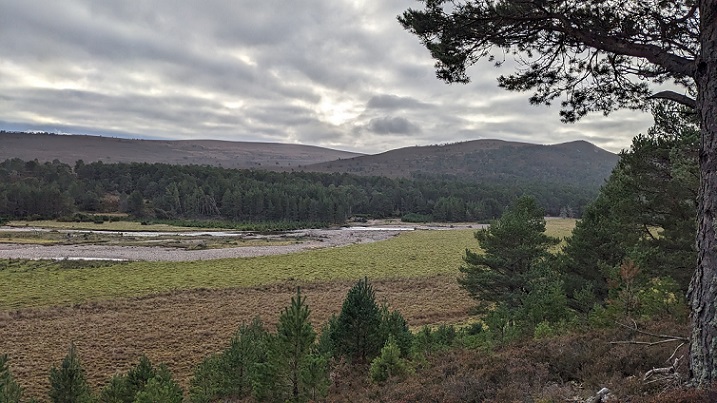
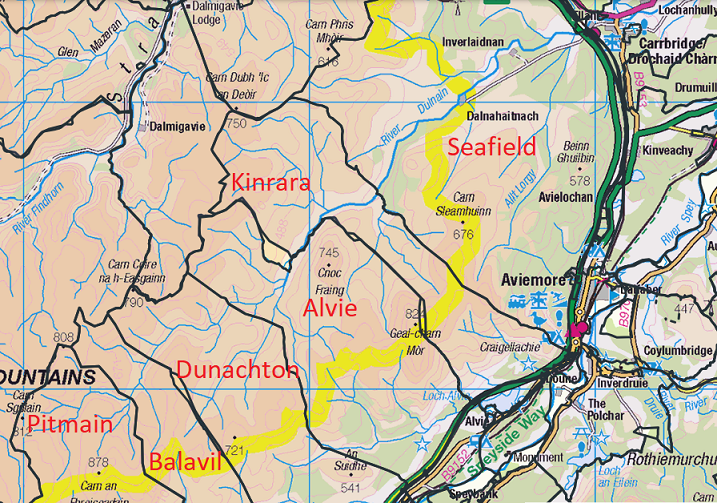
I have delayed this second post on the Lost Forest because I wanted to use what has happened at Kinrara to illustrate the arguments I and a number of others made in a paper published in the latest edition of Scottish Forestry: “Caledonian Pinewoods. A Conservation Framework” (Volume 79 No 3 Autumn/Winter 2025). Vicky Allan has given extensive coverage to our argument in the Herald (see here) citing Kinrara as an example of what has gone wrong. I also wanted to approach Kinrara through the Caledonian Pinewood along the strath of the River Dulnain, which forms part of the Kinveachy Site of Special Interest (SSSI), rather than biking in from Strathspey over the Burma Road as I did with my first post (see here).
That post showed how, contrary to the claims from BrewDog, Oxygen Conservation and Scottish Woodlands that the Lost Forest was an exemplary woodland creation project, it had only been half completed. This post will argue that because of its impact on the Caledonian Pinewood in the Dulnain, the rest of the Lost Forest project should have been abandoned in favour of restoring natural processes and the planted trees removed.
Caledonian Pinewood conservation along the River Dulnain to date
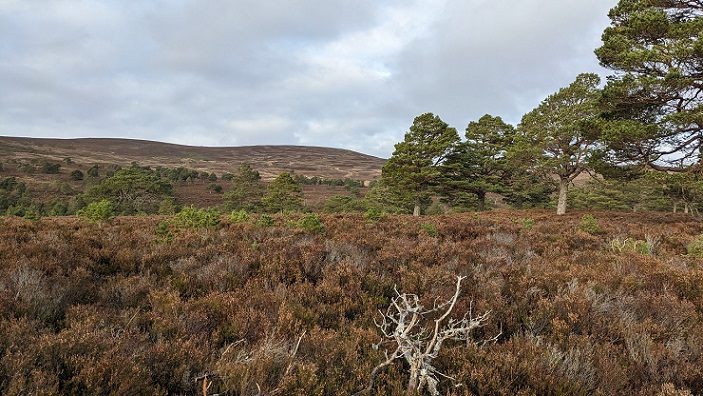
The Kinveachy SSSI was created to protect one of the largest areas of Caledonian Pinewood in Scotland and later also became a Special Area of Conservation. It has many fine old Scots Pine but for many years these failed to regenerate or only did so behind fencing. Seafield Estates, who own the land, have however reduced the deer population considerably and controlled their own sheep grazing following a deer control agreement and public funding to do so in 2005. A case study, published by Forest Research in 2022, outlines the recent history and reports that deer density reduced from an incredible 27 per square kilometre to three per square kilometre between 2005 and 2007 and browsing levels halved between 2006 and 2015.. The result has been that there is now extensive natural regeneration of the pinewood which has been progressing uphill and upstream.
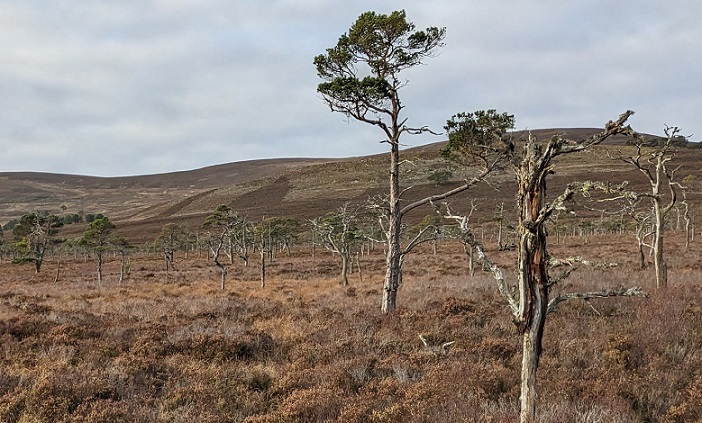
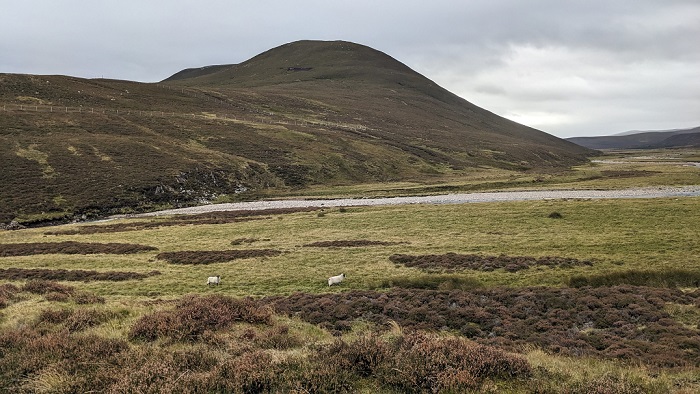
The natural regeneration of the pinewood at Kinveachy uphill is constrained on the western side by the continuation of muirburn as part of intensive grouse moor management in places. The SSSI Site Management Statement was last updated in 2010, so is badly out of date (see here), but aimed to “improve the condition of the Caledonian forest and bog woodland habitats by, for example ……. …………managing muirburn to avoid damage to woodland habitats”. Muirburn on the SSSI, however, is NOT an operation requiring consent from NatureScot so long as it is carried out according to the Muirburn Code (see here). Hence what you can see in the photo.
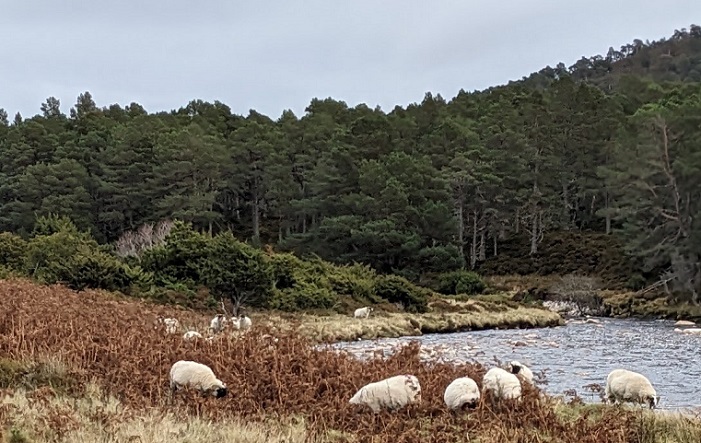
The greatest problem on the lower ground at Kinveachy, however, remains grazing animals. Cycling up the Dulnain we saw some sheep in a fenced field at Inverlaidnan, an example of good husbandry, but others free ranging around the pinewoods as above. It seems likely that these sheep are from other estates, like in 2022, when Seafield Estates told me (see here) that they had made arrangements for the sheep I saw then to be returned to their owner and stated that “there are occasionally sheep in the fields at Inverlaidnan but they are securely fenced on grass parks and outwith the regeneration zones”.
The invasive sheep point to the wider problem.
Since BrewDog made the shepherd who had worked at Kinrara redundant, it has become even easier for sheep from other estates further upstream to move down the river, graze anywhere on Kinrara and then get over or through the stock fence into the pinewoods at Kinveachy.
The herbivore challenge from red deer is even more significant. In the summer months the red deer tend to be concentrated on the high ground upstream around the headwaters of the River Dulnain but in the winter descend to the lower ground and may be driven downstream into the main surviving part of the Caledonian Pinewood by lack of food or the weather. That helps explains why, despite deer being reduced to 3 per square km on Kinveachy, natural regeneration has not been as fast as in places like Glen Feshie and the conservation half of Mar Lodge. It has taken wider culls in the Monadhliath as as whole, where deer density now appears to be c10 per square km, to reduce the impact of these short-term mainly seasonal influxes from other estates. That is still potentially a lot of deer given the size of the name strath through which the River Dulnain runs.
The impacts of these movements of sheep and deer on the Kinveachy SSSI appear to explain why the amount of obvious natural regeneration reduces the closer you get to the boundary with Kinrara.
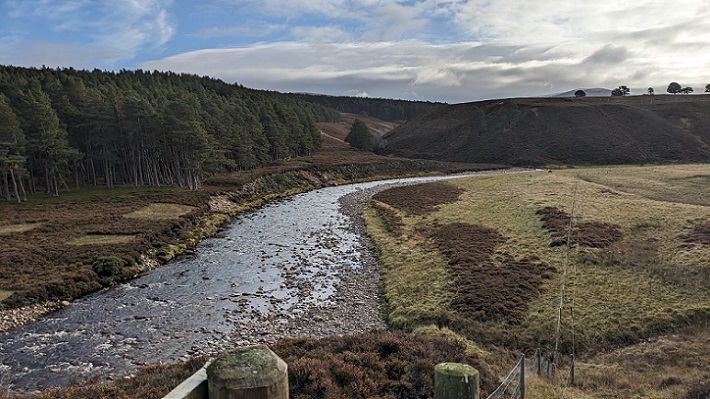
There is a large and dense block of Caledonian Pinewood on the north the Allt Ghuibhais (stream of the pines), a huge source of seed around which there is almost no visible sign of natural regeneration. The patches in the heather visible on the left could possibly be part of the experiment referred to by Forest Research “to break the surface mat” and intended to promote regeneration. The lack of natural regeneration, however, is more likely to result from deer numbers being too high.
The Caledonian Pinewood and the Lost Forest (Phase 2)
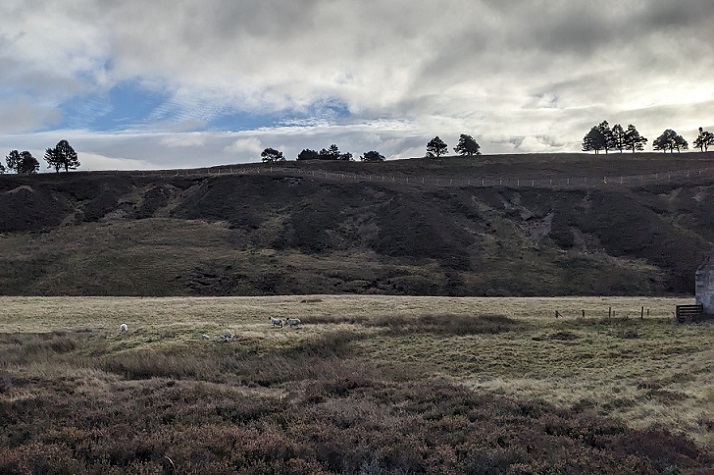
The Caledonian SSSI and Special Area of Conservation ends at the boundary between Kinveachy and Kinrara despite the obvious smattering of mature Scots Pine to the south. The explanation appears to be that protected areas are easier to manage if they follow estate boundaries rather than being defined by what is on the ground. BrewDog and Scottish Woodlands then fenced a substantial area of between on the River Dulnain and Allt Guibhais, including the high ground and trees visible in the photo, in 2023. This was the first and smaller of two enclosures planned for Phase 2 of the Lost Forest. The impact was immediate.
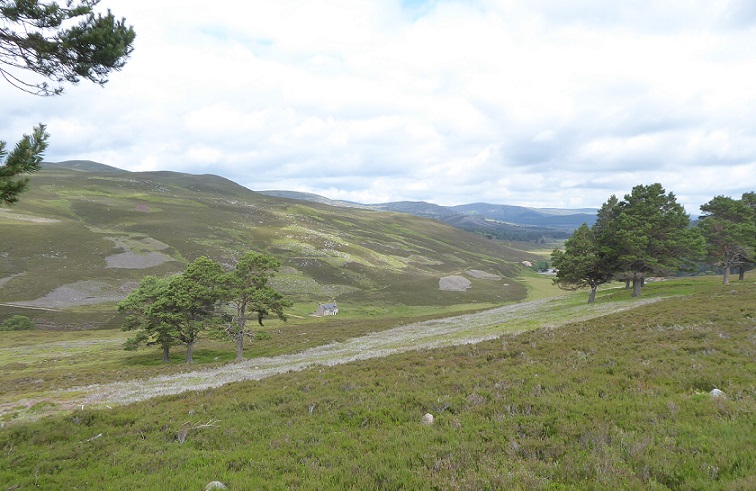
Kinrara, lying outside the SSSI and SAC, had been intensively managed for grouse until a few years before it was bought by BrewDog. Even the ground under the mature pines burned. In 2021 the only Scots Pine seedlings Dave Morris and I found wandering around this area trees were along the edge of the Burma Rd.
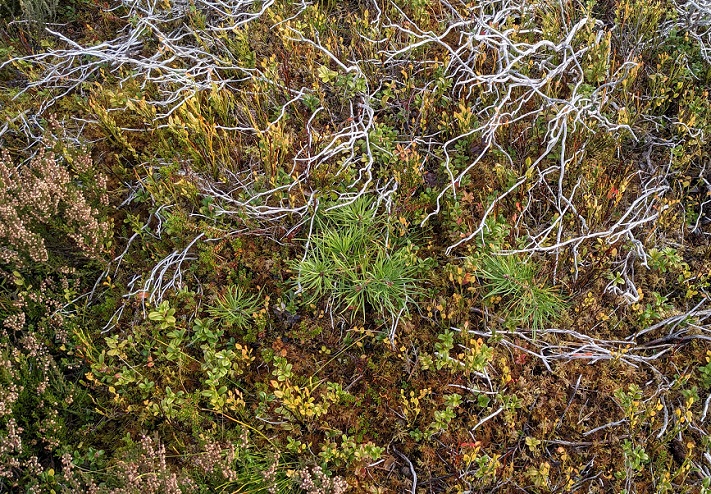
By October 2025 there were seedlings visible all around the mature Scots Pine and beyond, a vivid illustration of how deer had been preventing these trees from regenerating naturally. While muirburn destroys natural regeneration, it also creates areas where it is easier for seed to germinate and trees will quickly get established if not grazed. My observations suggest the density of new seedlings is greatest on the most recently burned patches. Reducing deer density over the whole of Kinrara to 2 per km or less would have had a similar impact without any need to create a fenced enclosure.
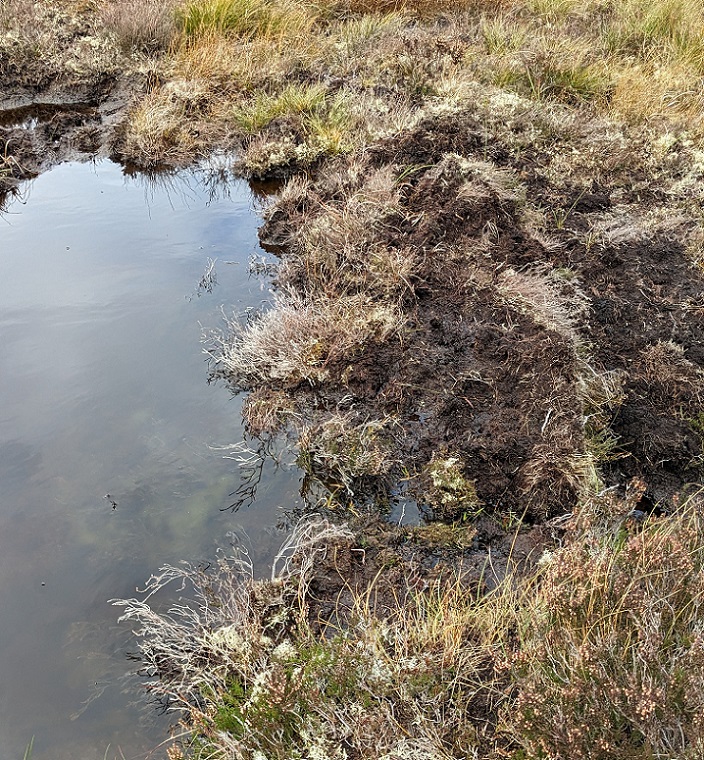
The creation of the enclosure has also had an impact on the ground outside the deer fence. BrewDog and Scottish Woodlands agreed a cull of 75 deer with Scottish Forestry to compensate for the loss of grazing land to the Lost Forest. Information about that and how many deer they shot through regular culls does not appear to be publicly available but the creation of the first enclosure has served to deflect and concentrate deer movements along the outside of the deer fence. On the eastern side of the enclosure this deer fence passes across an extensive area of peatbog restoration paid for by public money. The consequences (as viewed above) should have been quite predictable.
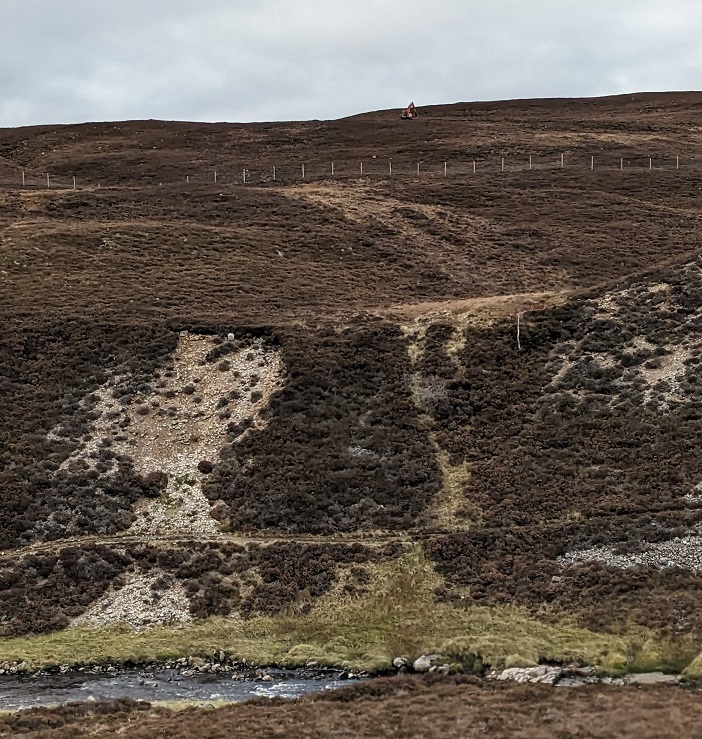
The impact of concentrated deer movements is likely to increase still further once the second and larger enclosure on the west side of the River Dulnain is completed. We heard fencing machines and saw diggers mounding in this area on our November visit and it appears that Oxygen Conservation are racing ahead to complete the existing plan for Phase 2 of the Lost Forest without any pause for a re-think. One the second enclosure is complete deer will be channeled between the two deer along the River Dulnain adding to the grazing pressure and the erosion of the banks.
BrewDog and Scottish Woodlands appeared to have no plan to deal with that but perhaps Oxygen Conservation will now employ a couple of stalkers/shepherds to deter deer and sheep from funneling through this new corridor?
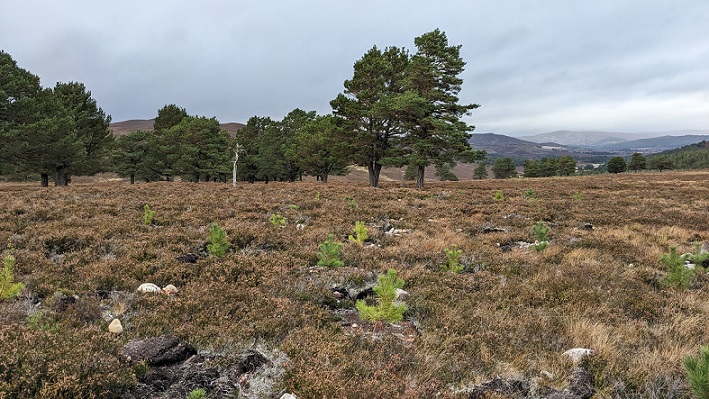
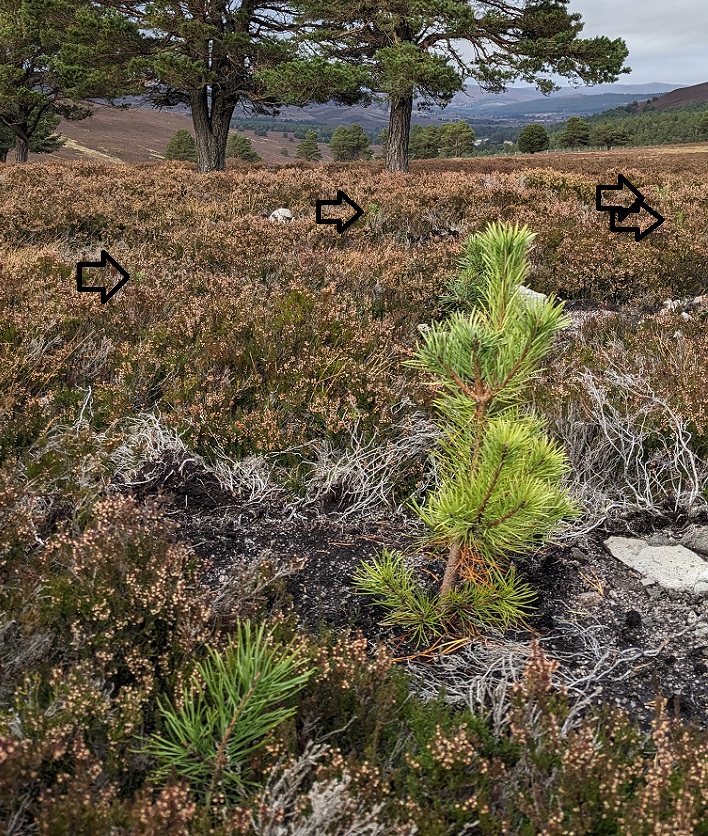
With the enclosure BrewDog and Scottish Woodlands then planted plant Scots Pine right up to these edge of these mature trees (in some cases less than 8m). In some cases this was right next to naturally regenerating Scots Pine!
The map in the Forest Plan agreed by Scottish Forestry did earmark a small area around the adults Scots Pine for natural regeneration (the grey in map below) and that birch should be planted around that (the brown in map below):
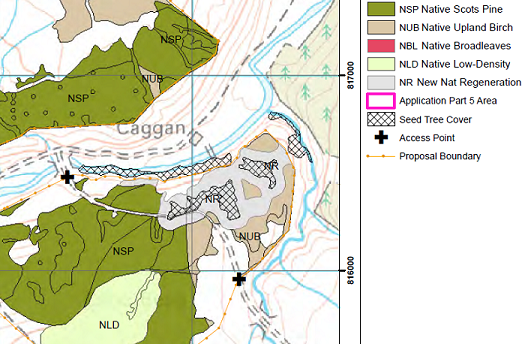
Instead of birch, Scots Pine has been planted and much closer to the mature trees than proposed – they should all now be removed as being in breach of contract. And where birch has been planted, as planned, along the edge of the enclosure near the gate (bottom black cross) my first post showed how almost all of it had died!
While these mature trees which have now been fenced lie outside the Kinveachy SSSI they are situated within the buffer zone for Kinveachy as shown on the Caledonian Pinewood Inventory (CPI):
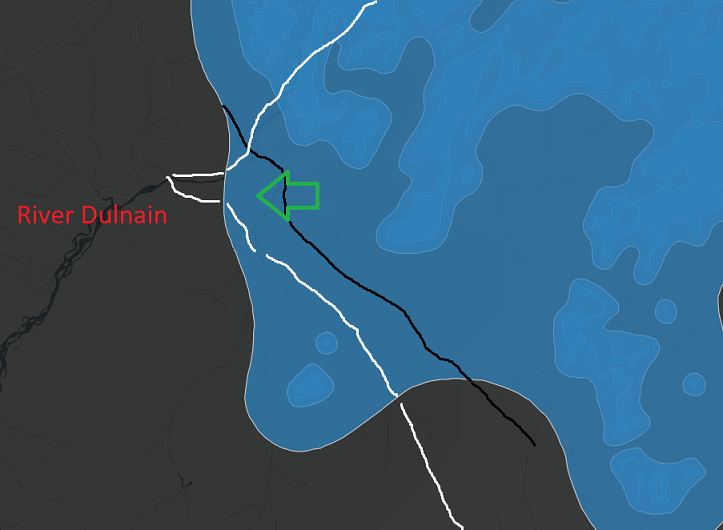
The CPI arose out of the classic work of Steven and Carlisle to map and describe the surviving fragments of Caledonian Pinewood in Scotland and the work that followed in the 1980s and 1990s to protect them. This resulted in the current system where “core” areas of pinewood are surrounded by a 100m natural regeneration zone and beyond that a 500m buffer zone in which non-native trees should not be planted. One advantage of this system is the boundaries of the various zones do not follow estate boundaries and in the case of the Kinveachy CPI cover part of Kinrara unlike the SSSI and SAC. Just why the adult Scots Pine in the photos, however, were not deemed to form part of the core zone when other isolated Scots Pine to the south and west of the Burma Rd were is unclear.
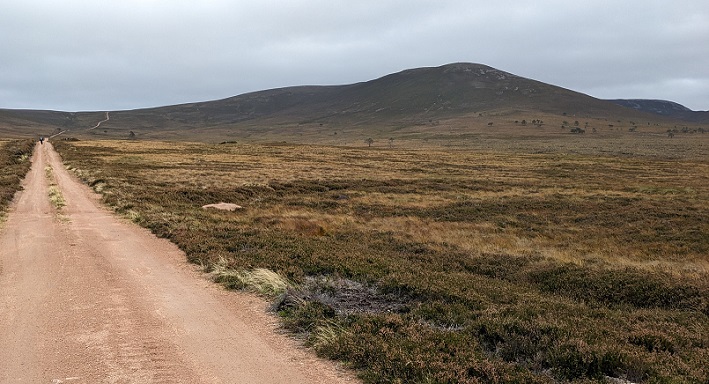
Nor can I explain why some of the Scots Pine to the south of west of the Burma Rd and visible in this photo are included in the core zone and others are not..
The criteria for an area to be included in the CPI is that “the balance of probability” indicates the Scots Pine “are genuinely native, that is, descended from one generation to another by natural seeding”. It is difficult to see why anyone would have planted the scattered trees in these photos so there is a strong case that on the balance of probability the whole of the middle section of Kinrara, from the River Dulnain up to the watershed with the River Spey, should have been included in the CPI.
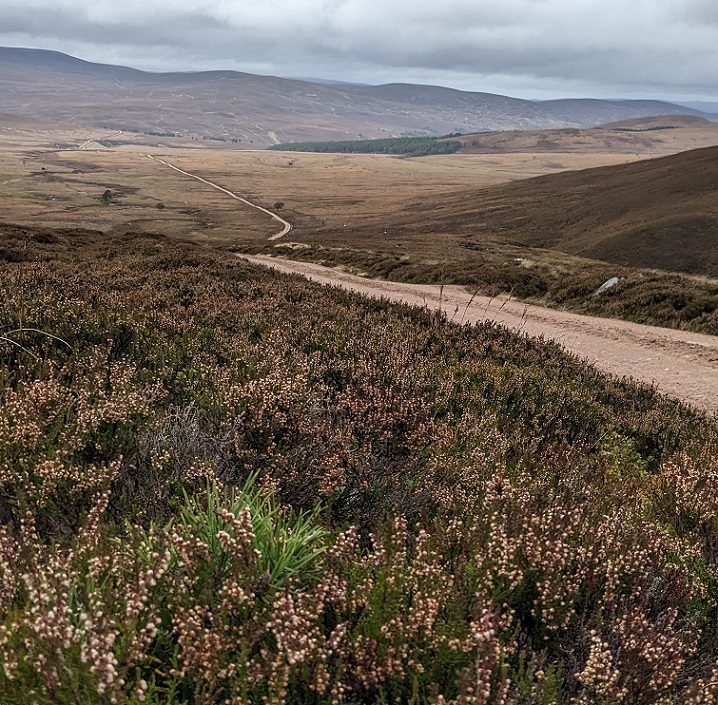
This illustrates the need to revise and expand the Caledonian Pinewood Inventory, which was last updated over 25 years ago, as Trees for Life’s recommended in their Caledonian Pinewood Project report of 2023 (see here). Our paper proposing a new conservation framework goes further and argues that the natural regeneration zone, instead of being confined to an area 100m around the existing core zones, is extended to the watershed and would include a presumption against all planting. If that was to happen all the land visible in this photo would become part of a Kinveachy/Kinrara Caledonian Pinewood Expansion zone.
BrewDog and Scottish Woodlands in their justification for Phase 2 of the Lost Forest made no reference to the Caledonian Pinewood Inventory and failed to acknowledge that the “small clumps of woodland present” were almost certainly remnants of the Caledonian Pinewood.
They also gave absolutely no consideration to the Scots Pine in their first enclosure being part of the buffer zone. While the Forestry Commission’s original policy was that planting of native (as opposed to non-native) trees was allowed in buffer zones, as long as they were from a local seed source, in 2017 they issued new advice on planting in CPI buffer zones aimed to prevent the spread of Dothistroma Needle Blight (see here)
“Planting pine presents the greatest potential risk of introducing new ‘strains’ of DNB to Caledonian pinewoods and should only be undertaken when it is deemed to be essential to the short term survival and longer term integrity of that pinewood’s ecosystem.”
Measures to prevent DNB are still in place and that advice never appears to have been repealed but but appears to have been ignored by both BrewDog/Scottish Woodlands and Scottish Forestry in this case.
The implications of the Lost Forest for Caledonian Pinewood conservation
Dave Morris has been thinking about the conservation of the Caledonian Pinewoods on the Dulnain since the 1970s, when he first visited, and he and I have now made multiple visits, both together and separately following BrewDog’s purchase of Kinrara and their announcement that they intended to create a Lost Forest.
What we have seen shows how the Caledonian Pinewood along the River Dulnain could regenerate naturally over much of Kinrara if give the chance. All it needed was for muirburn to stop but then sheep to be controlled and deer density to be reduced dramatically. If that happened then trees would come back where the ground was suitable, from areas close to existing seed sources all the way to the summit ridges.
Instead, BrewDog and Scottish Woodlands decided to plant trees in a new enclosure in the area where the Caledonian Pinewood was always likely to regenerate quickest. In doing so they disturbed and destroyed soils, created an unnatural even aged plantation, risked introducing disease and erected a deer fence which is damaging to wildlife. They have also created new problems that the new owners, Oxygen Conservation, will need to address. Its a disastrous legacy. The Caledonian Pinewood on the Dulnain would have been better off if BrewDog had done nothing.
Unfortunately, BrewDog and Scottish Woodlands were able to plant trees because Scottish Forestry and Scottish Ministers care far more about planting targets than nature. As a consequence BrewDog was awarded almost c£1.5m to plant the Lost Forest Phase 2. That money would have been far better used employing one professional stalker for 25 years (I am told £60k will cover a top notch ecologically aware stalker and equipment for a year).
The conservation framework for the Caledonian Pinewoods established by the CPI, though well intended, has failed to work. In the last 30 years the position of most of the pinewoods on the CPI has deteriorated, not improved. The Caledonian pinewood on the Dulnain is in much better position than most, it has been slowly regenerating and is not threatened by invasive species. While not fulfilling its potential it was in a good position position to do so until BrewDog came along with its proposal for new tree plantations, marketed as restoring a Lost Forest. While they failure to refer to the CPI was telling, sadly most of what they did and Scottish Forestry agreed would have been allowed under the existing CPI framework.
The Lost Forest provides a good example of why we need a new framework for the conservation of the Caledonian Pinewoods as proposed in our paper in the journal Scottish Forestry. I hope to write some further posts illustrating and substantiating the arguments and proposals we have made in that paper based on visits I have been making – usually as part of a hill day – to the CPI sites over the last couple of years inspired by Ron Summers (one of my co-authors) and others.
(Ron was on Out of Doors last Saturday between 23 and 29 minutes https://www.bbc.co.uk/sounds/play/m002myn0 after which Mark Stephen said at the end ‘I think a lot of that is really, really sensible… clever stuff.’)

The continued use of “ Caledonian Pinewoods” instead of “Caledonian Woods” is a serious flaw by conservationists/environmentalist’s. Whether it’s the general public or the decision makers they don’t necessarily understand what’s entailed.
Dave have you managed to access and read our article? It starts “The Scots pines Pinus sylvestris comprising Caledonian pinewoods are ‘lineal descendants of those of early post-glacial times’ that have ‘regenerated naturally from
ancestors of like origin’ (Steven & Carlisle, 1959). This rare habitat within the UK has affinities with boreal conifer woodland extending across the northern hemisphere, but is unusual in having an oceanic influence and a strong
east–west climatic gradient (Rodwell & Cooper, 1995). In addition, a semi-natural soil profile characterises Caledonian pinewoods (Tuley, 1994).” What do you believe is wrong with that?
Hi Nick, the point I’m trying to make is that Caledonian woods/ forests do not necessarily comprised of only one species of tree, namely S pine, but continuously referring to Caledonian pine woods implies that they were 100% Scots pine.
Hi Dave, do you think then the term heather moorland means people think that habitat consists only of heather or the Loch Lomond Oaks Woods means they only consist of oak? To me the point is to educate rather than stop using these terms and they have a point, naming the habitat after the dominant species. Nick
Yes many, too many will think just that.
Deer and habitat dynamics in the upper Dulnain may change significantly in the next decade should either of the proposed large wind farms and BESS – Battery Energy Storage Systems – immediately to the north and south of Kinrara currently in the planning system, be consented and constructed. Both have biodiversity enhancement in their EIAs.
Clune is to the north https://www.clune-windfarm.co.uk/. Highland is to the south https://www.highlandwindfarm.co.uk/.
Kinrara’s new owners Oxygen Conservation, are familiar with renewable energy. It is belived, they are proposing wind farms for Invergeldie and Blackburn & Hartsgarth – two of their other Scottish properties. Levels of finance involved are considerable.