Introduction
Two weeks ago (see here), I made the case that BrewDog’s 2020 PR shot of their soon- to- be Lost Forest was not on Speyside at all, but had a much more west coast feel about it. Feedback to the post suggested that the location was Craig Farm in Glen Orchy, and some internet research backed this up 99%. Having now been to visit, we can say 100% that the original and intended Lost Forest was to have been situated near Dalmally in Argyll. At the time, the location was given as “to the north of Loch Lomond”, but Dalmally is well to the north west of there, and not actually in the other national park at all.
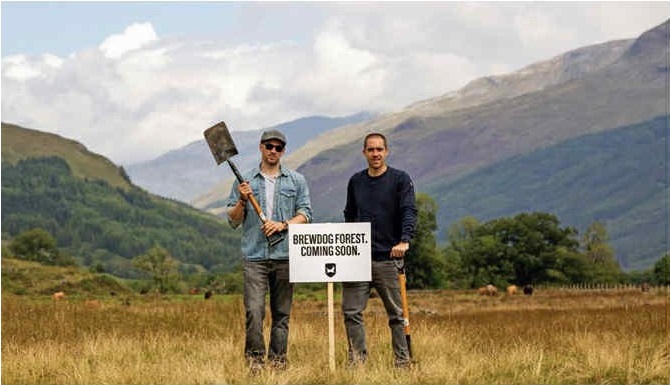
The background is that BrewDog said they had bought this site, did some PR photos, the sale fell through, and a year later they bought Kinrara on Speyside. But the Craig Farm PR photos continued to be used, and these are the ones we are all familiar with.
Craig Farm
I have made a short video about Craig Farm and the reason for my visit (see here). It is mostly hill ground, with a small proportion of better in- bye fields.
It looks like a good quality grazing ground probably much better than average for hill grazings in this area. Brewdog did not buy the site (we do not know why), but the site has since been sold to Craig Woodlands Ltd, and about half of it (350-400 ha) has been planted out as a woodland creation scheme.
You can see the detail of this below:
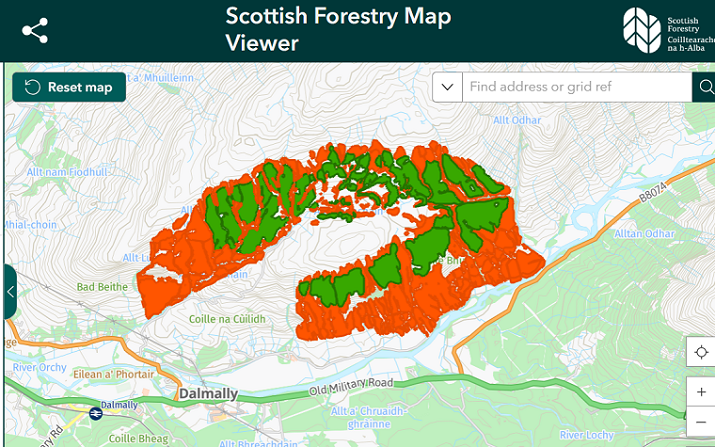
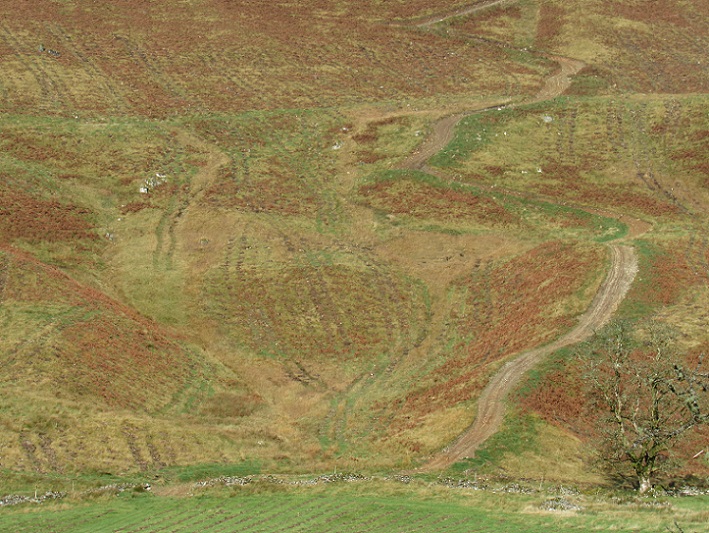
The scheme is a mixture of commercial conifers and native broadleaves, and you would have to say that this would be in keeping with a fertile hill site in Argyll. It looks like there is a scattering of native woodland remnants within the area, and these should have the opportunity to regenerate now as well. The site has been planted in the last couple of years.
Compare & contrast
We do not know why BrewDog did not buy this site, and ultimately, that is not really any of our business, but it is interesting to compare and contrast.
This was a fertile upland hill farm in Argyll. A native forest here would be oak/ hazel/ birch etc, not the pinewoods you might plant on Speyside, although a scattering of Scots Pine on some of the knolls would be in keeping with the area. It is on the wetter side of the country, with deeper soils, and this might have avoided the reported 50% mortality the Speyside site suffered in 2023.
So, a Lost Forest in this location would have been of a different type, able to sustain a range of tree species, and would probably have been lower risk in terms of getting the trees to grow. It would have been a rainforest-type oak woodland, not a pine forest.
We don’t know if BrewDog had a particular type of woodland in mind, but there are two things about this site which they may not have liked.
One is that about 400 ha maximum of the site has been planted, probably with little scope for much more than this. That is a decent size of woodland creation scheme, but probably not on the scale that BrewDog might have wanted to demonstrate their CO2 mitigation ambitions. It is easy to look at this site and speculate that although it is a nice site for planting, it was probably not big enough for the purpose intended by BrewDog.
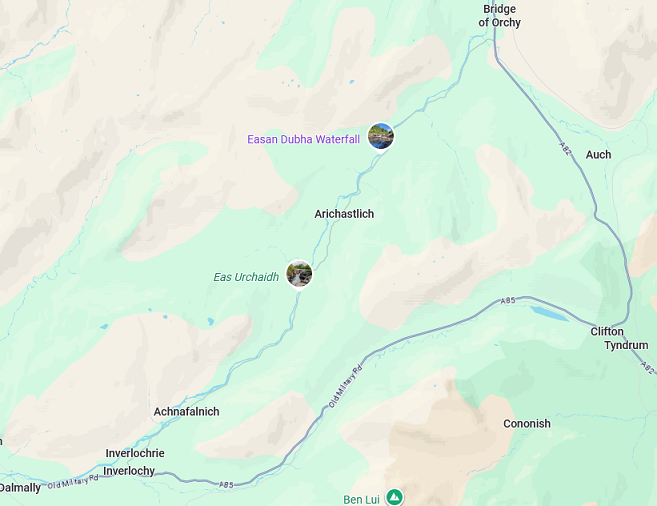
The other factor is that Glen Orchy is already forested, pretty much from one end to the other, on both flanks. It is a very heavily wooded catchment, and another 350-400 ha would not have been a significant percentage increase. It would be difficult to make a big play about a new wood in this location, there being so many other trees there already. You could have a nice wood there, but it would not have stood out in such a heavily wooded landscape.
You can see the woodland extent in this frame from Google maps, the Craig farm planting lying to the north of Inverlochrie (bottom left)
We don’t know if Kinrara came on the radar before this sale fell through, but that site would have given scope for a much bigger planting area, and had options for peatland restoration as well. It would be much more prominent in the landscape, and you can see how it could have been promoted more. There may well have been greater prestige value as it is located in the heart of the Cairngorms National Park. Dalmally does not quite have the same attraction about it, good and all as it is, I am sure.
If BrewDog had the choice, you can see why they might have opted for Speyside. I think I would have done that too if I wanted to make a big impact at scale. The Dalmally site would have been safer and more versatile, but did not have the potential X- factor that a site in central Speyside would.
The photo
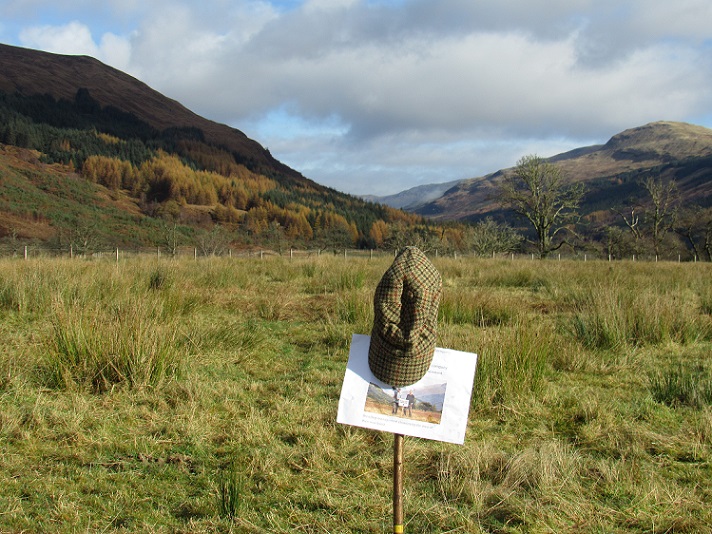
There is no doubt from the background hills and forestry that this is the place in the Brewdog PR photos, but getting the exact spot is more difficult. There are a lot more fences there now than there would have been in 2020, and I might have been on the wrong side of the river, so the picture at the top of this blog is the best I can do. You can see a bit better in this video what fits, and what does not (see here) (I did not get round to the other side of the river) Wherever the spot was, it is not far away.
Conclusion
So, is any of this important? Well, not really, but for a woodland advisor, it is interesting just to close off this chapter and satisfy my curiosity.
The original Lost Forest has been planted, and it should be a good one in time. It will be a mixture of production and environment in nature, and that is good. It will benefit from having a lower profile. It is possible that the new owners at Kinrara might drop the “Lost Forest” name to make a break with the past. I know I would. In that scenario, I think it would be fitting that the original forest is not lost, and that we know where it is. I am pretty sure it was not what BrewDog might have been looking for, and they were probably right in making the decision that they did. That could have worked out better for them, but if they ever were tempted to try again, there is a lot to be said for buying something manageable, doing the job quietly and discreetly, and not blowing your trumpet too loudly until the trees are well established and you can see them.
As part of a wider and more balanced portfolio, the Craig Farm site would have worked just fine. As a potential planting site, it is ideal in many ways, and it will be interesting to see how it develops.
Victor Clements is a woodland advisor working in Highland Perthshire.
