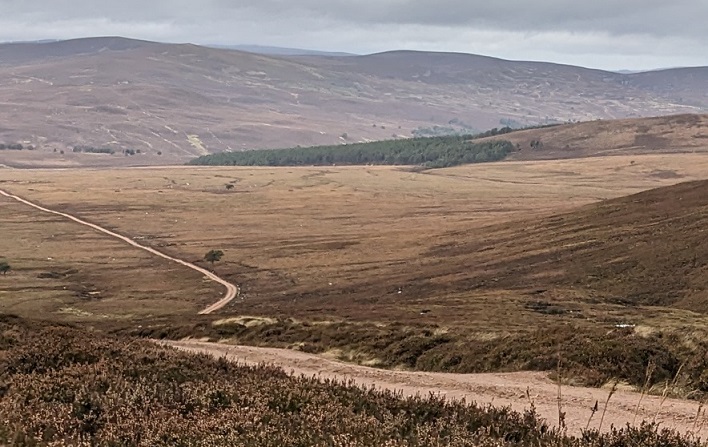
A couple of weeks ago I e-biked with Dave Morris over to look at Phase 2 of BrewDog’s Lost Forest which I had not visited since planting started there in 2024 – the year after over 50% of the trees planted in Phase I had died. Having shown that Oxygen Conservation’s claims that the Lost Forest was “one of Scotland’s most ambitious woodland creation projects” and BrewDog had “delivered it to a high standard” were complete rubbish for Phase 1 of the Lost Forest in Strathspey (see here), I wanted to check what had been happening over on the Dulnain. A further reason for doing so was the video (see below) from Scottish Woodlands, the consultants who BrewDog appointed to design and deliver its Lost Forest Project, in which their investment management David Robertson had claimed (see here):
“THE Kinara Estate – better known as Brewdog’s Lost Forest – has been left in an “exceptional” condition by one of the UK’s largest forestry companies”.
A number of people have challenged this claim on the Forestry Journal’s Facebook Page (see here) and the comment from Martin Holmes is worth reading in full. It starts:
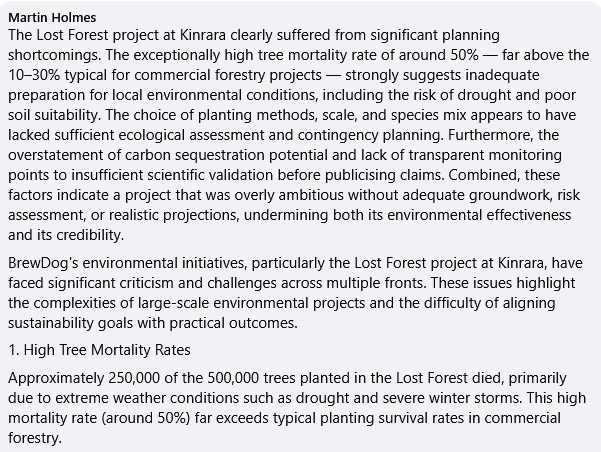
What Scottish Woodlands cannot hide from is that Oxygen Conservation decided to have nothing more to do with them and almost immediately put their own consultants, a spin-off fromTrees for Life, on site to sort out their legacy.:
While cycling up the Burma Rd we noted signs of what leaving the forest in “exceptional condition” meant to Scottish Woodlands’ senior management:
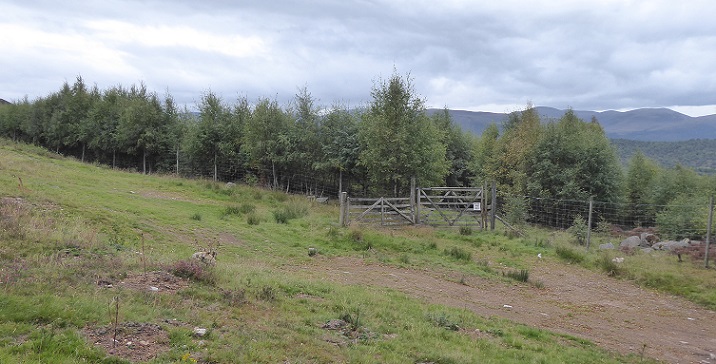
In return for the public paying for a new deer fence round the whole of the Lost Forest Phase I area (see here), Scottish Woodlands and Brewdog had agreed to remove all but one internal deer fence from the site:
“Existing fencing within the new enclosure which will be made redundant has been prioritised for removal. Priority for removal of redundant fencing is based on risk of bird strike, public access, and visual sensitivities. Removal will include stripping of wire while posts/strainers will be retained where these do not pose a significant visual impact. Removal of high priority redundant fences will occur within two years of planting”
Unfortunately to senior managers in companies like Scottish Woodlands removing redundant deer fences like this, even though they kill birds, block access etc is never a priority. They are far more interested in erecting new deer fences, funded by the public, because that is how they make money. Fencing also avoids them having to reduce deer numbers which would allow woodland to develop naturally:
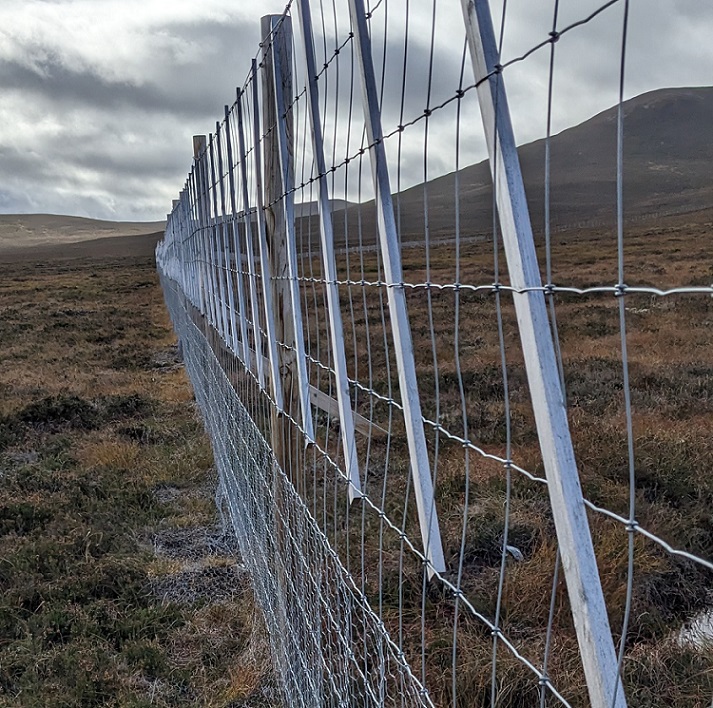
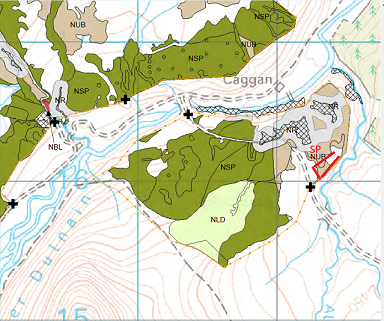
The section of deer fence in the photo cuts across an area of bog which had been formerly drained and has now been restored with public funds. The Scottish Woodlands video mentions peat bog restoration at Kinrara as having been a success story, giving the impression that they were responsible, before stating Strath Caulidh, which is responsible for all the peatland restoration projects in the Monadhliath,was the Project Developer. While Scottish Woodlands had not planted on the restored bog (the uncoloured area to the left of the Burma Rd on the map) they had planted the area to the right which was also boggy.
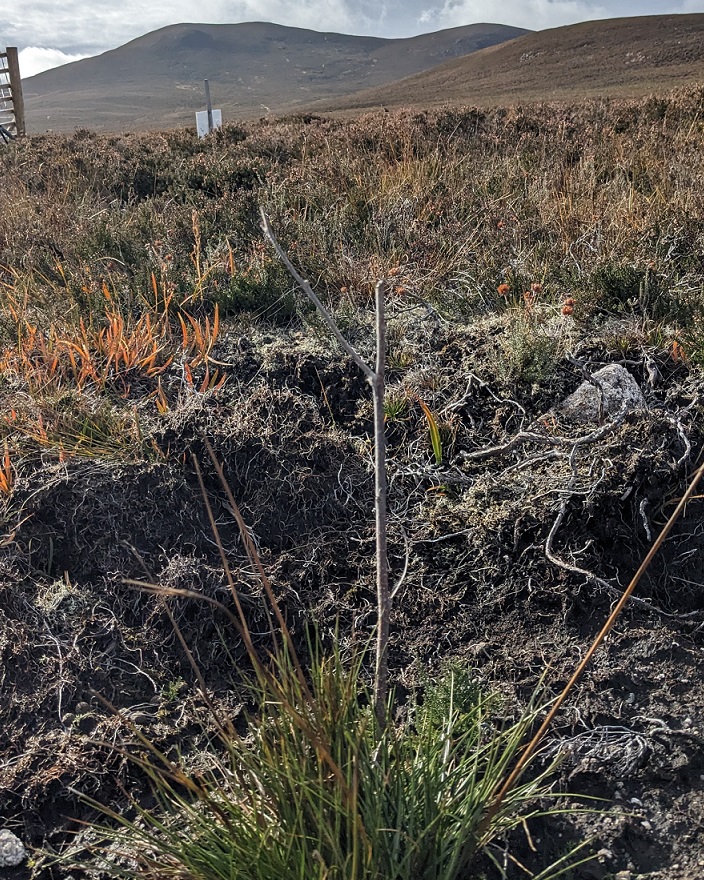
All but one of the broadleaved trees planted in a strip along the inside of the fence were dead. At first I wondered if I had stumbled across another Dead Forest but a short way beyond the broadleaves were replaced by Scots Pine. These had survived – albeit they appeared to have been browsed into topiary!:
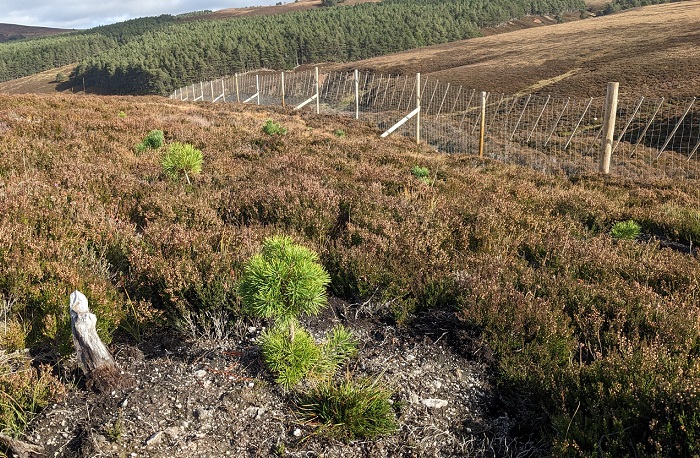
Enough said about David Robertson’s claims in the video that the “outcomes are exceptional” and the new planting is “really, really developing well”.
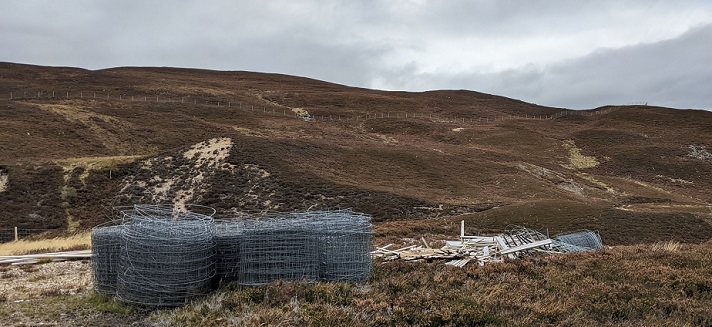
What we didn’t appreciate until over on the far side of the first enclosure was that Oxygen Conservation, BrewDog and Scottish Woodlands had omitted to tell half the story.
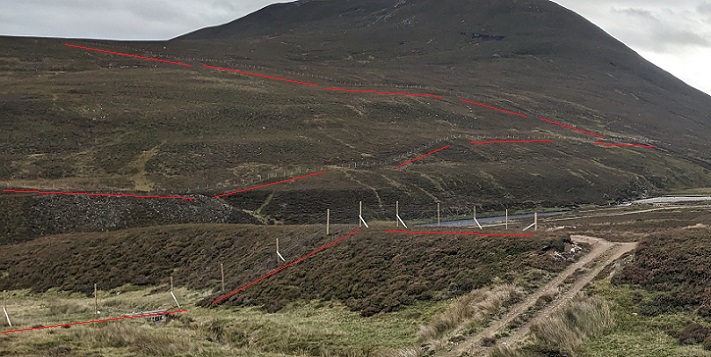
Rather then developing well, the larger part of Phase 2 of the Lost Forest appears to have hardly started. The deer fencing for the two enclosures on the north side of the River Dulnain, the larger part of Phase 2, was incomplete and there had as a consequence been no planting
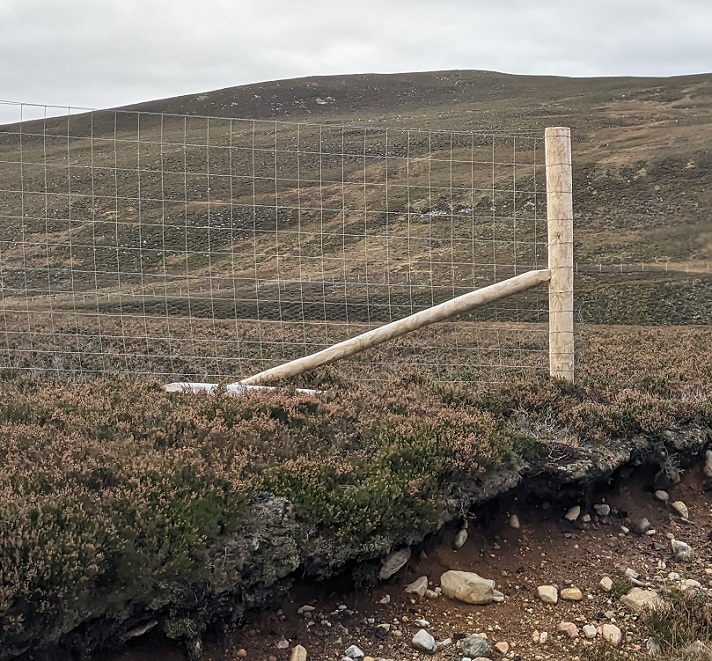
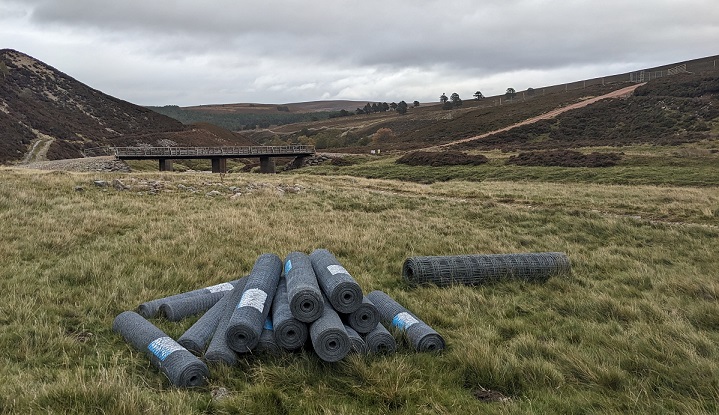
So why haven’t Oxygen Conservation, BrewDog or Scottish Woodlands admitted to the public that the Lost Forest project had in fact stalled?
What’s gone wrong
On 22nd April 2025 I obtained through a Freedom of Information request a copy of Scottish Forestry’s contract with BrewDog/Scottish Woodlands together with subsequent amendments. The original, dated 18th October 2023, showed that most of the work to create Phase 2 of the Lost Forest, including the erection of deer fences and planting, would take place in 2024 and 2025. For example, an extract from the contract shows the original intention was all the gates would be in place in 2024:

Associated with the various tables for specific items was a summary schedule of works. The original shows that out of a total grant of £1,458,554 that Scottish Forestry agreed to pay BrewDog for Phase 2 of the Lost Forest, the majority of the capital expenditure would take place in 2024 (£331868) and 2025 (£613,896): 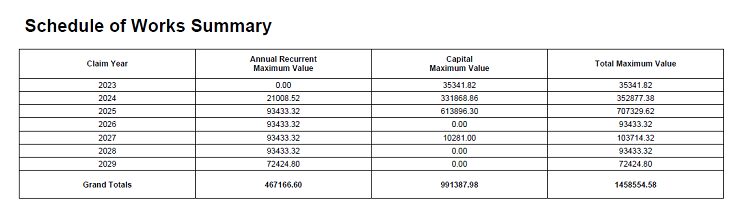
Scottish Forestry’s FOI response April also stated “Grants paid to date total £1,107,420.88. £881,565.16 for Phase 1 and £225,855.72 for phase 2. No grant has been withheld from Phase 1.” That is not much more than half the c£382k which was due to be paid by the end of 2024.
This shows there were significant issues with Scottish Woodlands delivering the contract and that is reinforced by the fact it was varied three times in 2024 in January, March and August: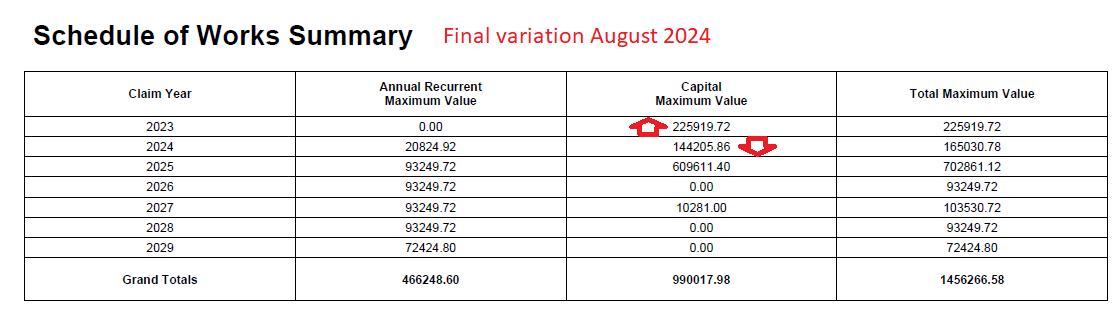
The original schedule was for Scottish Woodlands to undertake £35,341 of capital works in 2023, which was probably realistic for a contract signed on 18th October of that year. This figure was unchanged in the January contract variation but by March had been retrospectively increased to £225,919.72 for 2023. Scottish Forestry should explain how that much work could be done in such a short time in the middle of winter.
While Scottish Forestry’s variations to the contract does not explain the reasons for the changes, the capital value figure for 2024 has been reduced significantly. This strongly suggests that a significant proportion of the works scheduled for 2024 were somehow squeezed into the final 9 weeks of 2023. That capital value for 2023 also practically equates with the £255,855 Scottish Forestry said they had paid towards Phase 2 this April. This begs two questions. How much if any of £144,205 in capital works that Scottish Woodlands had agreed to undertake in 2024 were completed that year? And, if some were, why had Scottish Forestry not paid for these by this April?
Setting aside what was done in 2024, it is clear that the vast majority of Phase 2 works scheduled for 2025 had not taken place by the time of my visit in early October.
Why did Scottish Woodlands and BrewDog fail to deliver?
The explanation for why Scottish Woodlands discontinued a forestry creation project which was effectively being fully funded by the public through Scottish Forestry deserves to be made public.
While having to replant over 50% of the trees that had died in Phase I could have diverted some of Scottish Woodlands resources and caused some delays, it doesn’t explain what appears to be a 15 month or longer break in Phase 2.
One possibility is that Scottish Woodlands paused the work because they were owed money by BrewDog, who by then were known to be in financial difficulties, or feared they might not be paid for Phase 2. (Scottish Forestry’s FOI response confirms that their grant payments were sent to the Lost Forest Ltd, i.e Scottish Woodlands were not paid directly). Please use the comments facility to suggest others.
Whatever the explanation, it would appear that Oxygen Conservation, BrewDog and Scottish Woodlands must have come to some sort of settlement as part of the sale of Kinrara in which all three parties agreed to cover up what had happened. Hence why Lauren Carrol, Chief Operating Officer of BrewDog, was allowed to brag in Oxygen Conservation’s news release about the 375ha of new woodland which had been “created”. What she failed to explain was that it should have been almost twice that amount! None of the three parties’ backslapping publicity bears much resemblance to the reality on the ground and now you have been suitably briefed this video from senior management at Scottish Woodlands (also available here) is worth watching:
Further to the issues raised here are the questions of whether Scottish Forestry, which is driven mainly by tree planting targets, has explained the delays in the Lost Forest project to the Scottish Government or has already agreed a new deal/revised contract with Oxygen Conservation for what happens next.
Oxygen Conservation now appears to be on a catch up mission
While the Lost Forest Phase 2 delays should have provided the opportunity for a complete re-think of the remaining work, the indications are that Oxygen Conservation wants to get the existing plan for Phase 2 finished as quickly as possible:
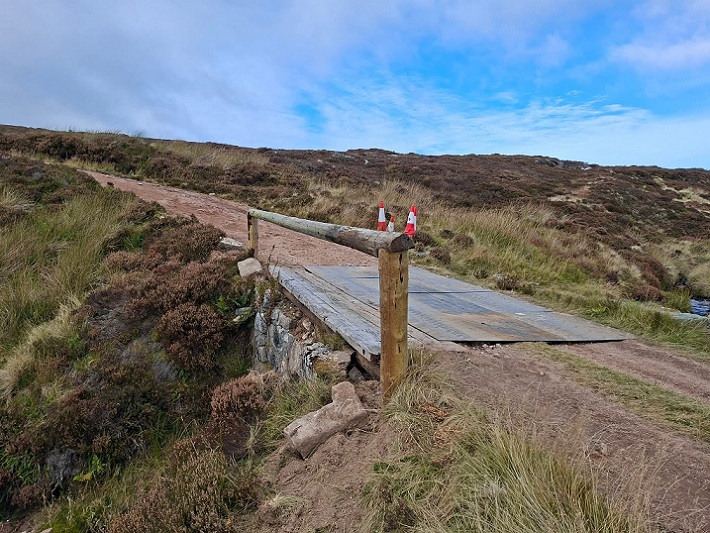
A few days ago the wee bridge over the Allt Dubh, which had been in a state of disrepair was all patched up.
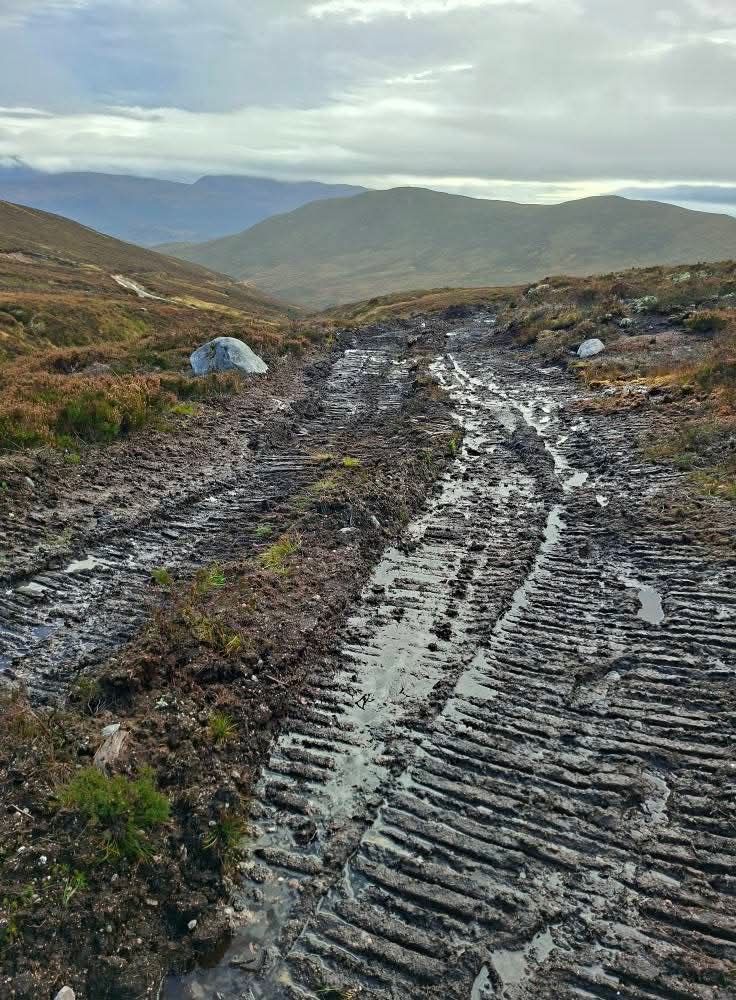
Further investigation of the two new tracks on either side of the Allt Dubh, which I had used as further evidence of BrewDog’s legacy at Kinrara (see here), showed they were in fact one track. It appears that as a consequence of BrewDog’s failure to repair the wee bridge over the Allt Dubh it became unsafe to use. This forced McGowan’s diggers, which were being used to restore peatbog in the catchment of the River Dulnain, up one side of the burn to a crossing point and then back down the other.
Unfortunately the repair does not appear to have been prompted by Oxygen Conservation caring about the cultural heritage but rather by the urgent need to get vehicles over the hill to catch up on all the work BrewDog and Scottish Woodlands had failed to complete:
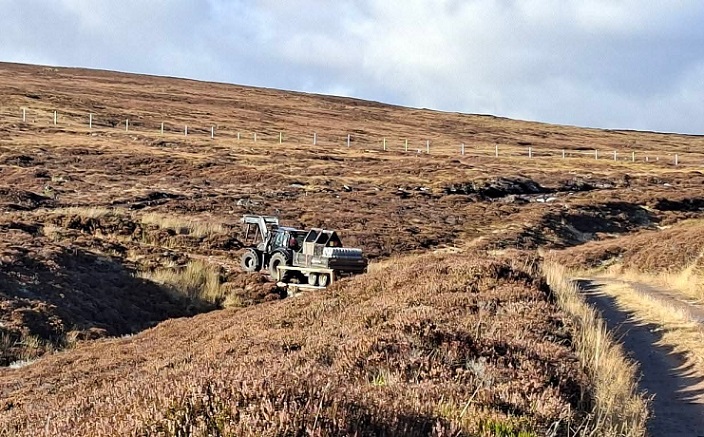
Local people have informed me that there has been lots of vehicles driving over to the Dulnain, mainly 4 Wheel Drives and argocats, but some carrying heavier materials too. All this must have taken time to organise and provides further evidence that Oxygen Conservation must have known when they claimed BrewDog had delivered the project to a high standard this was a load of tosh.
What Scottish Forestry and Oxygen Conservation now need to clarify as a matter of urgency is whether they have agreed to proceed with BrewDog and Scottish Woodlands plans for Phase 2. These, as I will explain in my next post, are a disaster for Caledonian Pinewood expansion up the Dulnain. If not and they intend to revise those plans there needs to be a new public consultation.

Spare a thought for the folk who put up these miles of deer fences. It’s brutal, energy sapping work in often dreadful weather. My daughter’s partner is a fencer. He often questions the logic of what they’re asked to do.
I agree Anne – people I have talked to working on the ground often disagree with the logic of what are being paid to do but people to work and those people are never consulted by government about whether there is a better way to do things which would provide employment. Tree planting work can also be brutal and low paid.