My thanks to the reader who, commenting on an old post, alerted me to Abrdn Property Income Trust (APIT)’s interim report and results for the half year to 30th June 2025, published on 30th September (see here). This confirms that APIT, which shareholders voted to wind up last year, has had difficultly selling off their land at Far Ralia in the Cairngorms, their one remaining asset (see here). Having bought the land for a reported £7.5m in 2021 and contracted with AKRE, whose owners were relatives of the previous owners, to plant trees last year APIT put the land on the market at offers over £12m (see here).
The interim report and accounts show that the claimed value of the land has plummeted since then:
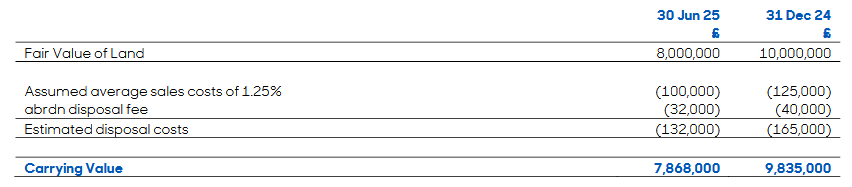
£7,868,000 is little more than it cost APIT to buy the land and, taking account of the £1.65m in grants, payable by Scottish Forestry to date, suggests that the tree planting has reduced the value of the land rather than adding to it. That would fit with Abrdn’s admission last December that it had made mistakes in its approach to “natural capital” (see here) and what I observed in July (see here). Far Ralia is now an environmental liability, not an asset.
Judging by the UK Carbon Registry (see here) – admittedly a far from reliable source of information – Abrdn and AKRE’s attempt to use the publicly funded tree planting to offset their own carbon emission or to profit by selling credits on the woodland carbon market has also got nowhere:

There is no reference in the interim report or accounts to Far Ralia having any value for carbon offsetting purposes or for “biodiversity intactness” which, it had been claimed, would increase to 94% in the long-term because of the tree planting (see here).
The Interim Report’s explanation for the fall in financial value of Far Ralia is interesting: “a disposal hadn’t been anticipated at this point in the asset life cycle. Forestry or natural capital buyers tend to prefer to acquire assets where the trees are more established as the risk of failure is reduced”. Drought, wind, fire and disease all pose major risk to trees and thus to financial asset managers who were considering buying “Pending Issuance Units” or full Carbon Credits on the woodland carbon market. What this fails to mention is the amount of carbon that is being released into the atmosphere at places like Far Ralia through the planting trees on peaty soils and the failure of the Woodland Carbon Code to take proper account of this.

The Interim Report also explains that:
“the increased cost of capital, driven by higher, longer-term risk-free rates, has resulted in some buyers, particularly institutional investors, postponing purchases or not bidding with as much conviction as they might have 2 or 3 years ago. This, in addition to the early-stage nature of the investment, has meant that interest from potential buyers has been limited. The fall in the value of Far Ralia reflects these factors as well as the reduction over the period in carbon pricing”.
In other words, more sensible/risk averse “investors” are already getting out of carbon markets, before they were even half-developed, and are no longer prepared to pay exorbitant land prices. That begs the question why Greshams, with funding from the Scottish National Investment Bank, paid so much for Todrig in the Borders and what Oxygen Conservation paid for BrewDog’s Lost Forest at Kinrara (see here)?
Enter Oxygen Conservation?
While other organisations are getting out of carbon offsetting schemes, Oxygen Conservation is getting in. They are currently on a buying spree to develop a £1bn portfolio in “natural assets” which their Chief Executive has stated they intend to sell off in five years time (see link above).
I have heard that Oxygen Conservation have been in negotiations with Abrdn to buy Far Ralia. If this is correct, Oxygen won’t want to pay too much for the land given the state its in. But at the same time they won’t want to pay too little as this would give the “markets” all the wrong signals about the value of carbon offsetting schemes. We will see.
Unconstrained by any checks by the Cairngorms National Park Authority, if successful this would be the third large chunk of land Oxygen Conservation have bought in the Spey catchment in the last year (after Kinrara and Dorback). Whether that is in the public interest should be at the heart of the debate on the anaemic Land Reform (Scotland) Bill due to be debated in the Scottish Parliament next week.
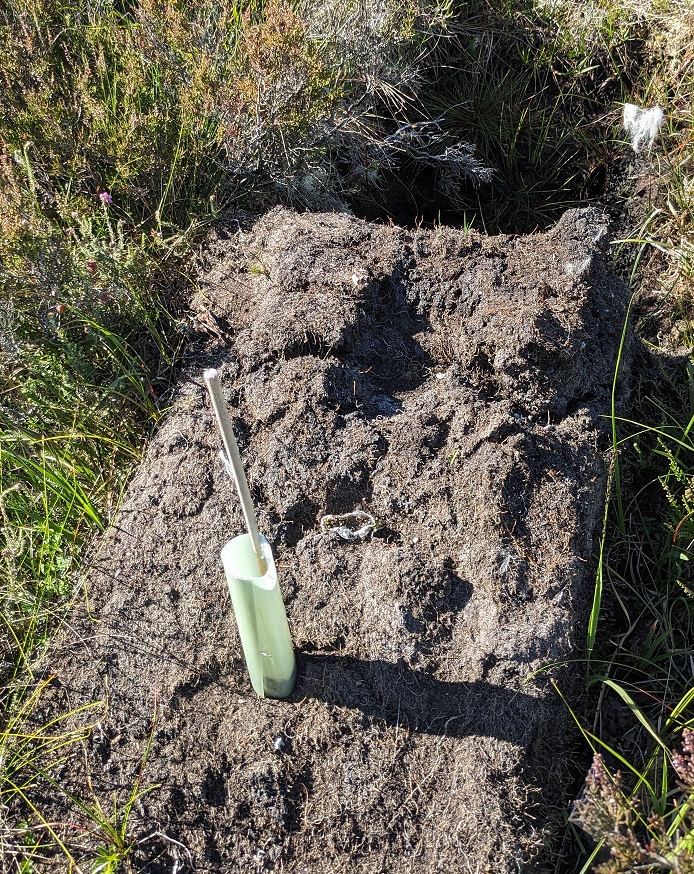
When I visited Far Ralia in July I saw far fewer dead trees than I had spotted at BrewDog’s Lost Forest two years earlier. Given the drought at the time I had half-expected to see more, the explanation perhaps being that the saplings had had time to put down deeper roots before the surface of the ground had dried out. Abrdn’s Interim report, which covers some of the period following 30th June, explicitly states that “failed saplings were replaced” in August and that “despite unfavourable weather conditions during the year, the failure rate was below expectations”. This suggests most of the trees which had been planted in 2024, a wetter year, survived the drought this Spring and fits with what I observed.
The report adds that the tree planting and associated works are now complete, a contrast with BrewDog’s Lost Forest where, as I will show in a further post, much of the promised tree planting was incomplete when Oxygen Conservation announced they had purchased a quality scheme last month (see here).
The Interim Report is also interesting because it shows that Scottish Forestry has withheld c£1.65m of grant funding until “the process to transfer the funding contracts following the sale of aPH was complete”. (APIT had held all their properties, including Far Ralia, in abrdn property holdings so when this and all the other properties were sold off special arrangements needed to be put in place for the estate). While the Interim Report moans about the slowness of the process, Scottish Forestry is absolutely right to carry out appropriate checks before re-assigning contracts and handing out grant money. It will be interesting to see if they have checked whether Abrdn have now replaced the 160,000 trees from the wrong seed source and the sycamore apparently imported from Akre’s tree nursery which were highlighted by Scottish Forestry inspectors last year (see here). There is no mention of that in the Interim Report.
Whatever happens corporate interests, both those of Abrdn and Oxygen Conservation, will come first and before any questions of who should own land or what is in the public interest. As the Interim Report explains:
“The Board will endeavour to keep shareholders updated on progress with the sale. However, given the sensitivity and confidentiality that usually surrounds corporate property transactions, the Board may be restricted on what can be announced and when.”
In this world of wheeling and dealing, where the Oxygen Conservation ownership model is particularly vulnerable is that there is increasing scientific consensus in Scotland that preserving peaty soils is far more important for carbon offsetting than planting trees. Unless, therefore, Oxygen Conservation commits to flipping all the peaty mounds back into their holes, like Abrdn they risk the value of Far Ralia falling over the next five years.

1 Comment on “Abrdn’s sale of Far Ralia is in trouble but will Oxygen Conservation hoover it up?”