Introduction – Nick Kempe
One of the comments on Felicity Martin’s post about the proposed Glen Lednock Windfarm (see here) claimed that objections to windfarms are all the same and represent NIMBYism. Scottish Planning policy, however,emphasises the importance of “local place” to people’s lives and a third of the policies in National Planning Framework 4 are about “liveable places”. I am pleased to publish the objection Kev Howett submitted to the planning application which I believes illustrates that very well. Caring about the natural environment locally is not NIMBYism but essential if we are to restore nature.
I have known Kev since I became involved in the Mountaineering Council of Scotland thirty years ago and while the points he make about the impact of the windfarm on rock climbing may appear of interest only to a minority, if you added all the other minority concerns (fishing, butterfly watching, a tree that people picnic by, etc etc) you would start to get a sense of why Glen Lednock is so valued and why there is so much opposition in local communities to developments that desecrate the, and their, landscape. The objection, like several others, is long and detailed but that is also the point: people care about their local area very deeply.
You can view the planning application here. While the official deadline for objecting was 21st July, there is nothing to prevent people sending further comments or objections to the Energy Consents Unit at representations@gov.scot and copying in their MSP/s.]
Kev Howett’s letter of objection
My objection is based primarily on the following grounds:
- Landscape and visual impact;
- The negative impact on rock climbing;
- The negative impact on walking and mountain biking:
- The negative impact on the ornithology of the glen.
Landscape and visual impact
I have lived in Crieff for 35 years and had walked and climbed in Glen Lednock from 5 years prior to moving here. I moved here because of the beauty of Strathearn and the hills of the Highland Boundary Fault, in particular for the beauty, tranquillity and lack of any modern industrial footprint in Glen Lednock and the other associated radiating glens of Strathearn.
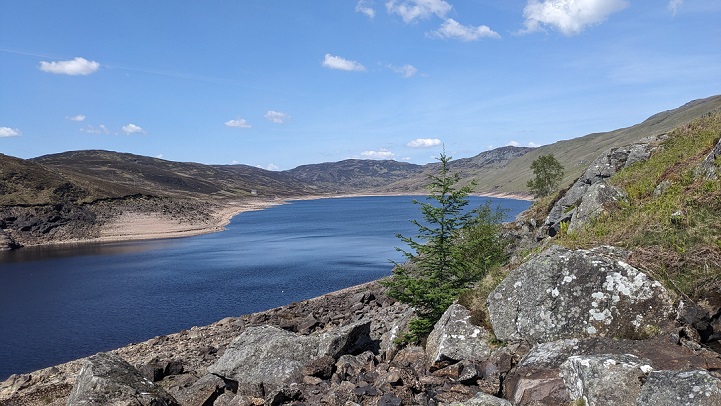
The visual amenity of Glen Lednock is unique along the highland boundary line. The fact that there is no through route but a dead-end single track road, gives the glen a feeling of remoteness not found in the Highland hills within easy reach of the central belt of Perthshire and Stirlingshire. The visual amenity of the glen was threatened thirty years ago with a plan to cover most of its lower stretches in commercial plantations. This was thwarted and instead the estate has, in the past decade, planted large areas of native trees in the lower reaches of the glen and these have increased the visual amenity and further enhanced the remote character, key qualities that attract people to visit the glen to walk, climb, mountain bike and simply enjoy.
The building of a large new access road would utterly alter the character of the whole glen for the worse, as well as passing through two SSSI’s [Sites of Special Scientific Interest]. The proposal does not in my mind mitigate the damage to these SSSI’s. The building of 19 mega-turbines – three up to 180m high, and 16 up to 200 metres high in the upper part of Glen Lednock (Gleann Mathaig) is an unacceptable industrialisation of a glen that was being de-industrialised, with areas taken out of intensive sheep farming; a development that is now seen as essential to meet the problems of biodiversity loss and climate change.
The new owners of the estate held a community meeting that I attended last year to talk about the planting of native tree species along the sides of the reservoir in the upper part of the glen. This was being touted as a positive landscape and environmental gain and most attendees would agree it is a good development. But when asked about the possibility of a wind farm which was not detailed but indicated on their initial maps, they told us that this was not being considered at the present time. Clearly this has changed. I cannot accept that the proposal to increase the biodiversity and landscape value of the upper glen by tree planting, rewilding, reducing grazing pressure and reverting to regenerative farming can sit alongside the industrialisation of the immediate area by this wind farm proposal with its massive visual intrusion, built structures and bulldozed access roads. I feel the owners (who are absentee) have only bought this estate to capitalise on nature credits and energy subsidies with little to no consideration for local views.
Regarding the wider landscape qualities of this area as a whole, I also have concerns that this proposal, alongside the neighbouring Glen Tarken wind farm proposal, is far too close to the Loch Lomond and Trossachs National Park (only 10km away), the River Earn National Scenic Area (3km away) and the Glen Lyon National Scenic Area to the north. The scale, height and siting of the turbines at an elevated altitude of 500-700m means they will directly intrude on all these designated sites. The fact that the two proposed wind farms are just outside the designated areas does not diminish their landscape and heritage importance, indeed I contest that Glen Lednock is an equal to all these neighbouring areas which have these designations.
The proposed wind farm also lies within the Upper Strathearn Local Landscape Area designated by Perth and Kinross Council. The aims of an LLA are to “conserve and enhance the diversity and quality of the area’s landscapes” and are built into the Council’s planning policy framework. Upper Strathearn LLA comprises 60,000 hectares and their guidance is there to prevent the erosion of the special character of the area. The LLA defines ‘Landscape’ as the “relationship between people, place and nature”.
The Council’s Policy approach relating to the Upper Strathearn LLA is to: safeguard views, viewpoints, and landmarks from development that would detract from their visual integrity or scenic quality… safeguard the tranquil qualities of the area’s landscapes… and developments should only be permitted where it will not have a significant adverse impact on their special character or qualities or where the impacts are clearly outweighed by social and economic benefits that are more than of local significance.
The Highland Boundary Fault is the demarcation from lowland to highland and is most striking in the hills between Crieff and St Fillans. The view of this boundary visitors gain when approaching from the various roads from the south is stunning but would be utterly destroyed by this wind farm scheme, imposing a ‘development that will detract from the visual integrity and scenic quality of the area’.
Tourism is extremely important to the Strathearn catchment area and outdoor activities are central to this. Outdoor recreation whether it be walking through lower-lying woodlands and glens, hill walking on the higher summits, mountain biking or climbing, it is an integral part of that tourism income and it is the quality of the outdoor experience that is important and the ‘nature based’ landscapes are what define it.
This is personified by the annual historic walking festival held in Crieff called The Crieff and Strathearn Drover’s Tryst. It celebrates the ancient droving of cattle that took place in the 1700’s and early 1800’s when Crieff was the main cattle market serving the north east (Aberdeenshire) and the west (Argyll and the islands). Mackey’s ‘Journey through Scotland’ published in 1723 recalls that 30,000 beasts were sold at the Crieff Tryst. The western drove route was immortalised in Irvine Butterfield’s book ‘The Famous Highland Drove Walk’, published in 1996, which was re-enacted by some modern drovers who brought their highland cattle from Skye. They passed through Rannoch Moor, Glen Dochart and swam them across Loch Tay, and hence through Glen Lednock to Crieff. The same route was also travelled by students of Crieff High School on mountain bikes to celebrate the start of the Tryst.
As a result, the modern-day Tryst incorporates a range of mountain walks across the hills of the Southern Highlands, especially in the region of Glen Lednock. This celebration very much encapsulates the LLA definition of the “relationship between people, place and nature”. This wind farm proposal will have a devastating effect on the attractiveness of the walks of the Tryst and to the strath as a whole to tourism.
Both Nature Scotland and the Loch Lomond and Trossachs National Park made objections to the Glen Tarken planning application (which included the Glen Lednock scoping proposal in their advice) on the basis of visual impact on these designated areas. I would contest that the size of the Glen Lednock scheme and its position is more damaging to the visual impact of the area as a whole and damaging to the social importance of Glen Lednock and its surrounding hills to local history and communities and should not go ahead.
Rock Climbing
The climbing in Glen Lednock has been detailed since the early 1960s and is a popular venue, not just for local people but for many others who travel to it because :
- Its ease of access from the central belt conurbations where the majority of climbers reside.
- The ease of access to the crags from the tarmacked road.
- The base of the glen, even deep into the hills, is essentially low-lying. This feature and the fact that many of the climbing crags face south or west means there is often favourable climbing conditions year-round. This is even the case at the height elevation of the dam at 350m where the bulk of the bouldering is to be found.
- The quality of the climbing is exceptional with clean sound rock and distinctive lines, something lacking in most other climbing venues close to the central belt.
- The range of climbing disciplines includes sport climbing, traditional climbing and bouldering. There is also an attendant range of standards of difficulty in each discipline making the glen an attractive venue for young people, beginners, and dedicated experienced climbers.
- The visual amenity of the glen which is unique along the highland boundary line. The dead-end single track road is a reason for visiting as it gives the glen a feeling of remoteness and quietness rarely found in climbing areas in Perthshire and Stirlingshire; key qualities that attract climbers to the glen. For instance, it is worth highlighting as it is stated in guides and on the internet that the boulders lie “in a perfect situation”, referring to the position looking down the green and wooded glen and up to the higher, wilder hills.
The rock climbing is detailed in the Scottish Mountaineering Club ‘Highland Outcrops South’ guidebook (the most recent edition was published in 2016). The bouldering is a relatively new development over the past twenty years as this discipline has increased in popularity. It is detailed in ‘Boulder Scotland’ by John Watson published by Stone Country Press 2017 and will be in a forthcoming SMC guidebook detailing the best bouldering areas in the country.
The climbing:
- The crag named Creag nan Eun at NN 7230 2868 is the closest to the proposed wind farm site being 1.2km from the first turbine. The main section of rock where the climbing is located has been named as ‘The Hideaway Crag’ in the guidebook. It contains eight climbs that are amongst the hardest in the glen and therefore sought-after. This crag has uninterrupted views into the upper part of Gleann Mathaig and all the turbines will be visible from it. Indeed, they are so close that they will over shadow the crag completely.
- The Lednock Dam Bouldering is a series of individual free-standing boulders spread over the hillside either side of and below the dam (between NN 7270 2870 and NN 7297 2894). They are between 1.3km and 1.8km from the first turbine. There are over 200 individual climbing ‘problems’ recorded ranging in scale and difficulty that caters for all age groups and abilities. The bouldering is renowned as one of the best such venues in Scotland. It is also one of very few venues in Scotland that is suitable for young children to experience the sport, indeed, many of the problems were first climbed by local children from the age of 7 years and Mountaineering Scotland has regularly held coaching meets there for members of the Scottish Youth Climbing Team. All the turbines will be visible from the bouldering; the scale and location means they will over-power the bouldering venue.
- The next closest crag is Creag na H-Iolaire at NN 7467 2714) just south of Corishavachan. Again, the turbines will be clearly visible from the crag as they are only 4km distant and they will project higher than the hillside between.
- Other climbing areas are on the east side of the glen opposite Creag na H-Iolaire on Creag na h-Arairidh and Creag Bhuide. Although the turbines will not be visit from the crags themselves, the upgraded access road will be.
The attraction of the climbing and particularly the bouldering in Glen Lednock is its situation and landscape quality. It is a fantastic sporting resource for locals and visitors alike and the proposed scheme will significantly change its character from a semi-wild natural landscape to an industrial landscape that will adversely impact on the special character and quality of that resource, and the impacts clearly outweigh the social and economic benefits the climbing gives to locals and visitors from afar.
Hill walking and mountain biking tourism
Although the Highland Boundary of the Southern Uplands does not contain the concentration of sought-after hills by walkers (Munros, Corbett’s and others) as other areas to the north, it does have one of the most popular Munros, that of Ben Chonzie (or Beinn na Coinnich); it is one of the closest Munros to the Central Belt and, as such, is extremely popular.
Almost from the car park at Invergeldie to the summit, the classic view to the west across to Ben Vorlich, Ben More and Stob Binnein would be overwhelmed by the turbines. The ascent of Beinn na Coinnich via its satellite hill Carn Chois from Glen Turret is equally affected; these are the two most popular routes up the mountain and they would be scenically compromised which will negate the enjoyment of ascending Beinn na Coinnich, and, for many hill- walkers, this is likely to be one of the first Munros that they climb. It is unlikely that they would come back to explore the area further.
In a wider context, the blades of the turbines would have a significant visual impact from most of the surrounding major Munro hills that hill walkers aspire to such as Ben Vorlich, Ben Ledi, Ben More, Schiehallion, Ben Lawers and even distant Ben Lomond because their positioning and size overwhelms the generally lower heights of the surrounding hill-tops in most directions. Hence, their impact would not be ‘localised’. They (and the Glen Tarken proposal at a similar height and altitude) would present a major visual intrusion into an otherwise unblemished mountainous vista.
Mountaineering Scotland, the representative body for mountaineers walkers and climbers, has also objected to the Glen Lednock scheme for similar reasons of ‘significant adverse visual impact’. Their research shows that 20% of hillwalkers would avoid an area with wind farms and go elsewhere while 42% would still go to an area with a wind farm but experience diminished enjoyment and may not return. In contrast, only 2% would go to such an area more often.
For local residents such as myself, this ‘significant adverse visual impact’ will be with us all the time, reducing our enjoyment of the mountain environment that we love on our doorstep. I have walked up most of the summits in the areas surrounding the Turret, Lednock and Glen Almond glens, I have mountain biked all the tracks and paths including those from the south shore of Loch Tay. I helped set up the Strathearn Mountain Biking Club based at Comrie Croft and the biking trails we built there attract visitors from across the UK and even Europe. A biking club was then set up at Crieff High School and many local families use the biking trails at Comrie Croft on a regular basis.
The biking club itself holds regular Thursday morning rides in the dark to watch the sunrise from the stone circle at NN 7836 2515 which sits at an elevation of 352m and has expansive views west to the distant hills above Glen Dochart. The area of the proposed wind farm will stand out as an intrusion into this mountain vista.
Comrie Croft and most of the local mountain bikers encourage biking visitors to explore beyond the trail centre and many do, enjoying the open high mountain vistas, as do many of the local young riders who are also now venturing further afield into the local hills. All these mountain routes, equally enjoyed by walkers and bikers, will be subject to ‘significant adverse visual impact’.
The popularity of the local area for visitors is indicated by the fact that it has three times the Scottish average employment in accommodation and food services (this was highlighted in the Glen Tarken wind farm EIAR). The popularity of Comrie Croft camping indicates that many of these visitors are wishing to experience outdoor recreation. And it must be emphasised that tourism cannot simply rely on a single visit economy but does rely on repeat visits. And I doubt visitors will make return visits to experience the area if that experience is marred by industrial scale wind farms.
Impact on the ornithology of the glen
In the past I have spoken with older residents of Comrie who were born and grew up in the glen, who described their childhood memories of bountiful wildlife and birdlife. They decried the modern farming techniques which led to the demise of such birds as corncrakes and eagles which they regularly heard and saw. In my professional work as National Officer for Mountaineering Scotland I worked with RSPB Scotland and the Raptor Study Groups, in helping protect Schedule 1 Birds, particularly on my local crags in Glen Lednock. Many crags and cliffs that are climbed on also contain nesting birds. Some have schedule 1 species. I was responsible for writing a voluntary code of conduct that ensures the birds are not disturbed during the nesting season and the information regarding any nesting activity is given to Mountaineering Scotland from the Raptor Study Groups and posted on the Mountaineering Scotland website (https://www.mountaineering.scot/access/birds-and-nesting) and general details are included in any guidebook.
In Glen Lednock there are the following nest sites that we have regularly monitored:
A peregrine’s nest on Creag na h-Arairidh at NN 7351 2705.
A peregrine’s nest on Carcase Wall at NN 7339 2624.
Golden eagles currently breed in the area of the upper glen
Eagles, both golden and white-tailed, have been sighted over the higher elevations where the wind farm is proposed.
A raven’s nest on Creag nan Eun at NN 7230 2868.
I am dismayed at the poor assessment of the effects on ‘Important Ornithological Features’ in the proposal documents. Their conclusion that no ‘breeding’ of raptors has been recorded within the site of the windfarm (presumably the area limited to where the turbines are?) means that there is no issue is a nonsense. There are significant numbers of nesting and feeding raptors using the entire area – I have personally watched golden and white-tailed eagles across the Lednock reservoir and Gleann Mathaig over the past 15 years as well as watched the peregrine’s for even longer – that it will be inevitable that bird strikes will occur.
In an area of Scotland that was described as the worst for the illegal killing of protected species in Scotland by the renowned Police Wildlife Liaison Officer, Alan Stewart, it has been heartening that these species have been thriving in Glen Lednock in recent decades.
The proposal concludes that collision mortality risks are ‘not significant’ for any species, but the assessment does not take account of the distribution and expansion of birds to take up new territories and nest sites. As both species of eagles are particularly susceptible then the emphasis of assessment of impacts should be on a precautionary principle; this recovery of important species in the area should not be jeopardised. In light of the hoped continued expansion of species across an area that was, and to some degree still is, devoid of these raptor species, I do not accept that the collision risk during operation (estimated at 25 years?) for peregrine and golden eagle is ‘minor’, and white-tailed eagle is ‘negligible’. I consider the threat to the recovery of these species in the area as being highly significant and has been ignored by the developer.
In conclusion
I object to the proposed windfarm in Glen Lednock for the above detailed reasons. I believe it would have significant landscape and environmental impacts on a much larger area than the developers indicate affecting the nearby National Park (it would be visible from Ben Lomond 25 miles distant) and two National Scenic Areas, it would have a detrimental effect on outdoor recreation (walking, climbing, biking and the general enjoyment of a beautiful area) and the attendant tourism income to Strathearn these activities bring, and it would irreparably damage the ‘Landscape’ of the glen as defined in the Upper Strathearn Local Landscape Area designated by Perth and Kinross Council as the “relationship between people, place and nature”; the glen as ‘place’ has witnessed exceptional ‘nature’ recovery in the forty years I have been visiting (and which it was hoped any new owner would continue), and is a vital venue for the wellbeing of many thousands of ‘people’, both visitors and locals, because of its beauty, tranquillity and being devoid of modern industrial intrusions.

Scotland desperately needs far more constraints on renewables planning, for the simple reason that windfarms, and other renewables, represent a fundamental, long term, change in land use, which will affect us as a nation for multiple generations. But in that context the only objection of any meaningful weight in the above is the ornitology one, the rest is just aesthetics. I understand where Kev is coming from, but until such time we are prepared to give up on the never ending flow of new gear, gadgets, campers and instagram accounts, the energy to power our lifestyle expectations has to come from somewhere, and that makes *every* argument that it should come from somewhere else than ‘here’ because of how it looks a form of nimbism; we all care about somewhere. To decarbonise Scotland’s present energy consumption would require five fold increase in our renewable capacity, so unless we are prepared to cut our energy consumption five fold, we will have to learn to live with the sight of the wind mills (or nuclear); there are no other options available to us, we are decades past the point where we had enough wiggle room to save the views.
Hello,
I think you should redact the grid references given for peregrine nests. They are sensitive.
Best
Tom
I agree completely with this objection. As stated these wind farms with their giant structures will destroy the landscape of Innergeldie. The detrimental effects are now to be seen all over our country and locally these are on hills around Stirling and even on the Langside road between Comrie and Braco. Should this scheme go ahead it will destroy the view from this road on the approahes to Comrie. I have recently travelled by train to Worcester and not one turbine was seen south of the Border. The countryside remained pristine with cattle and sheep grazing peacefully on lush pastures.
The destruction to bird life will be catastrophic as already mentioned by Kev Howett. Already 10,000 to 100,000 are being killed by these turbines, not to mention the destruction of habitates.
Finally what about the remuneration paid to landowners and businesses during periods very high winds or no winds at all? Currently they are receiving £1.5 bn annually from tax payers for zero power.
Apologies for late approval this and other comments. Walking GTA onAlps and no internet
The hills of home.
Sense of place.
And why the place-names and archaeology are precious. Named by our ancestors for purpose, place and productivity.