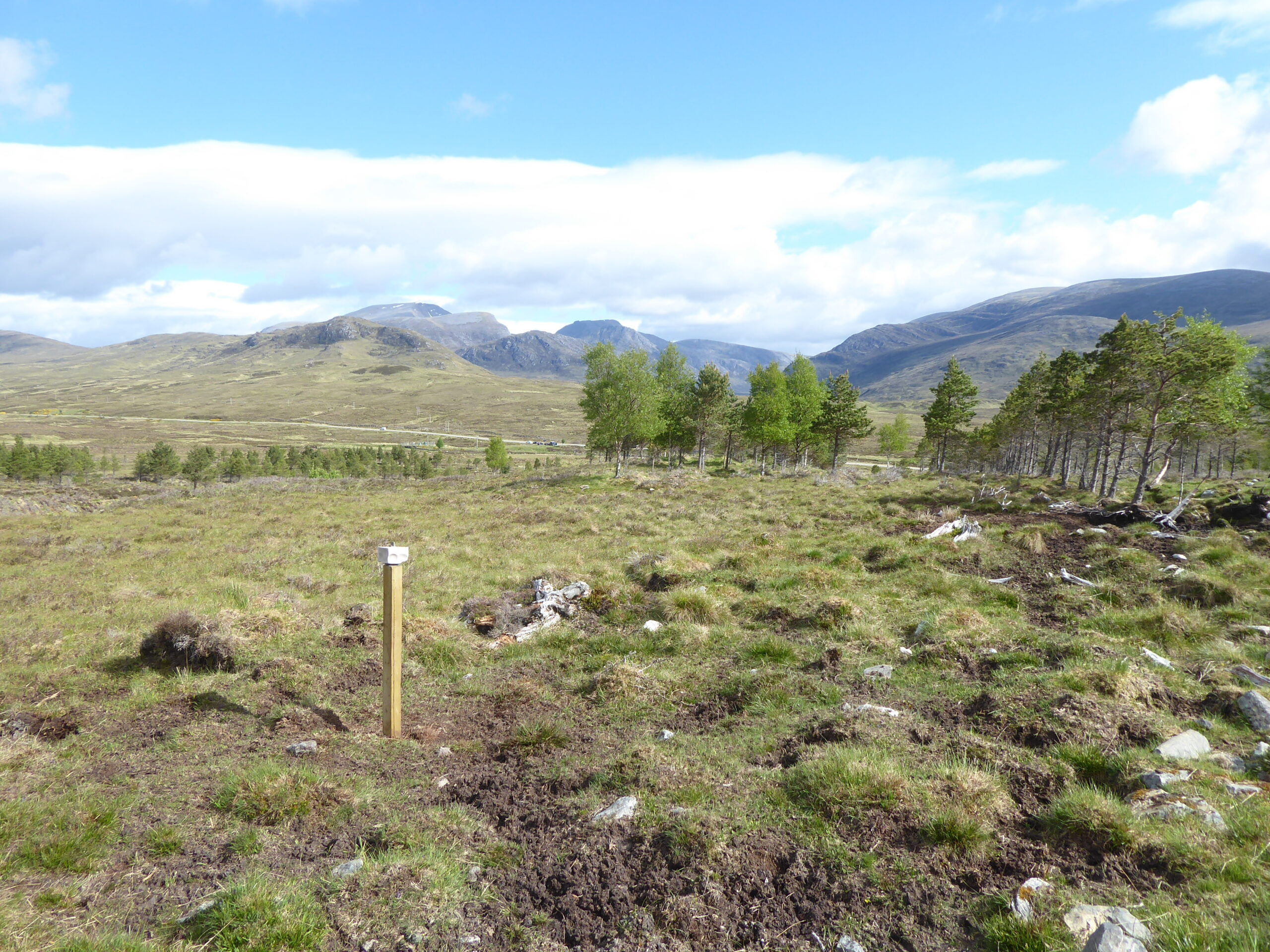
I have been meaning to write about the Altan native woodland scheme, just to the south west of Loch Glascarnoch, since I through it in 2018 and 2021. Many hillwalkers will have used the track through the scheme which provides the quickest access to the eastern end of the Fannichs and the Corbett, Beinn Liath Mor a Ghuibhais Li (the big grey hill of the coloured pines). But its also possible to view from the road and an easy walk for anyone who wishes to see for themselves the fate of many of Scotland’s native woodlands planted in the 1990s.
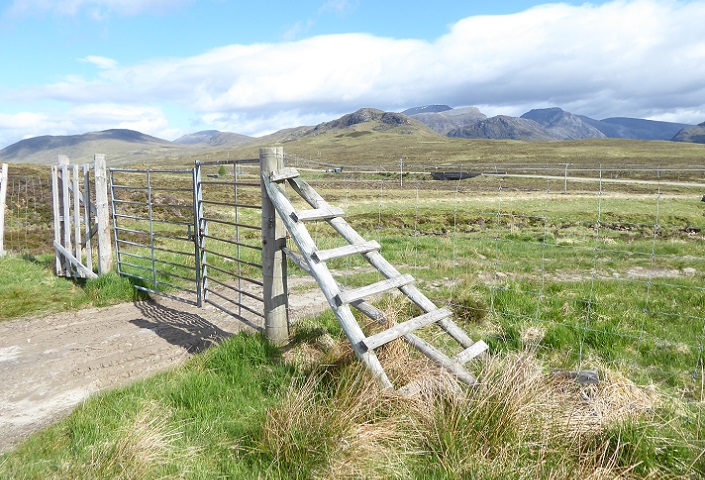
The entrance to the plantation from the A835 is misleading. The gate and section of fence at the southern end of the track were removed long ago (see below). One reason for retaining the gate and fence on the north side may have been to make it harder for red deer to wander onto the road. An estimated average 1,850 collisions between vehicles and deer have taken place in Scotland every year since 2016 (see here).
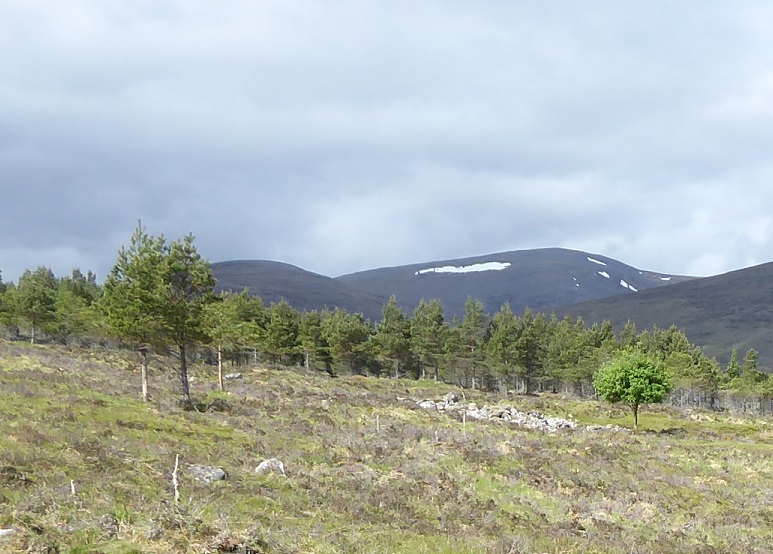
Walking up the track it soon became apparent that many of the planted trees had died.
The Scottish Forestry map viewer shows there were five separate “woodlands” planted along the south shore of Loch Glascarnoch and, funded by the Woodland Grant Schemes (WGS) (see here)1998-2004:
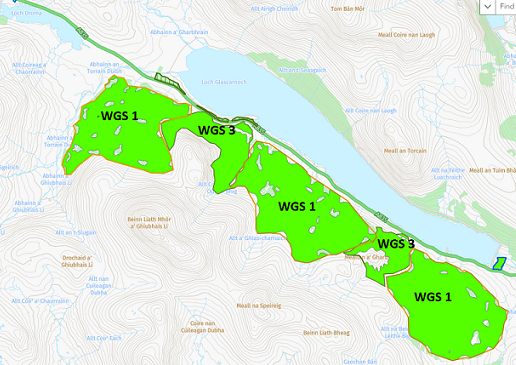
I can find little trace of the two WGS 3 schemes, which appear intended to fill in the “gaps” between the earlier WGS 1 schemes, on more recent maps.
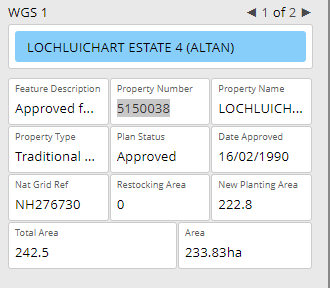
Scottish Forestry’s Map Viewer shows the Altan WGS was approved in 1990, covered a total area of 242.5 ha of which 222.8 ha was planted:
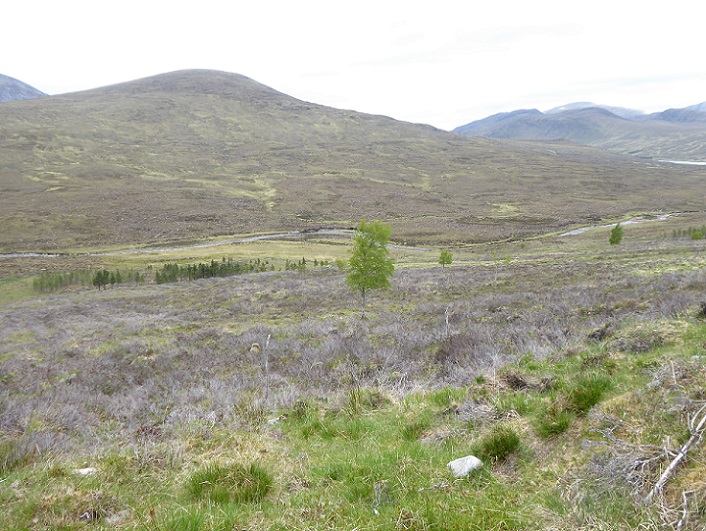
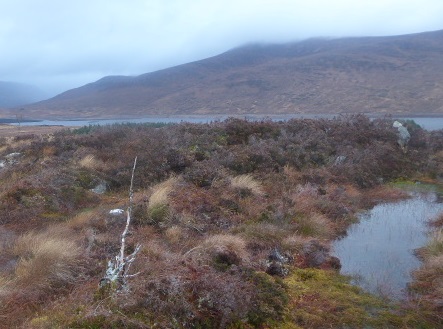
Had the Altan WGS been successful, most of the bare ground in the photos above would now be covered not only by trees but by further species forming a woodland understorey.
Some of the planted trees appear to have died because they were planted in the wrong place.
As several photos in this post show, however, a significant proportion of the area is grassy, an indication of better drained and mineral soils more suitable for trees.
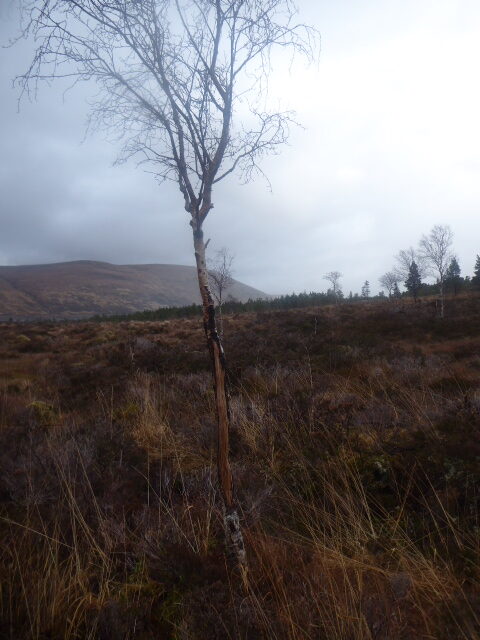
The main reason so many of the planted trees had died was obvious from the ones that still survived – too many deer.
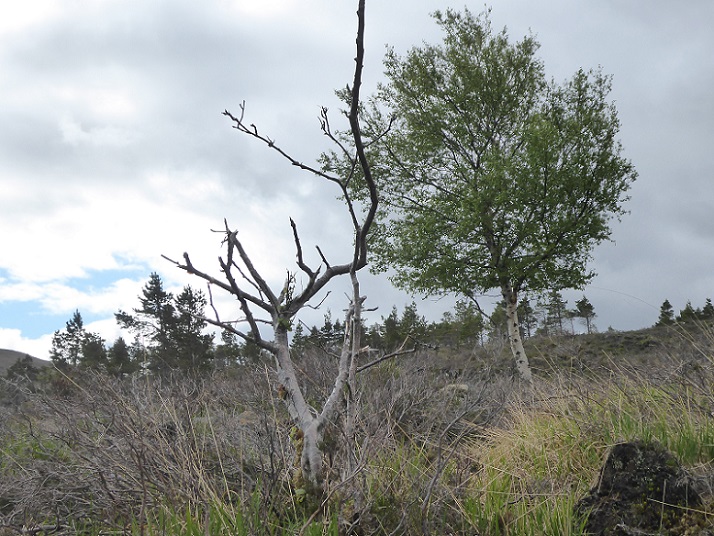
This process, in which the Altan WGS has been gradually destroyed by deer, continues. There were at the time of my last visit very few deciduous trees left for them to eat (I would expect more to have died since then).
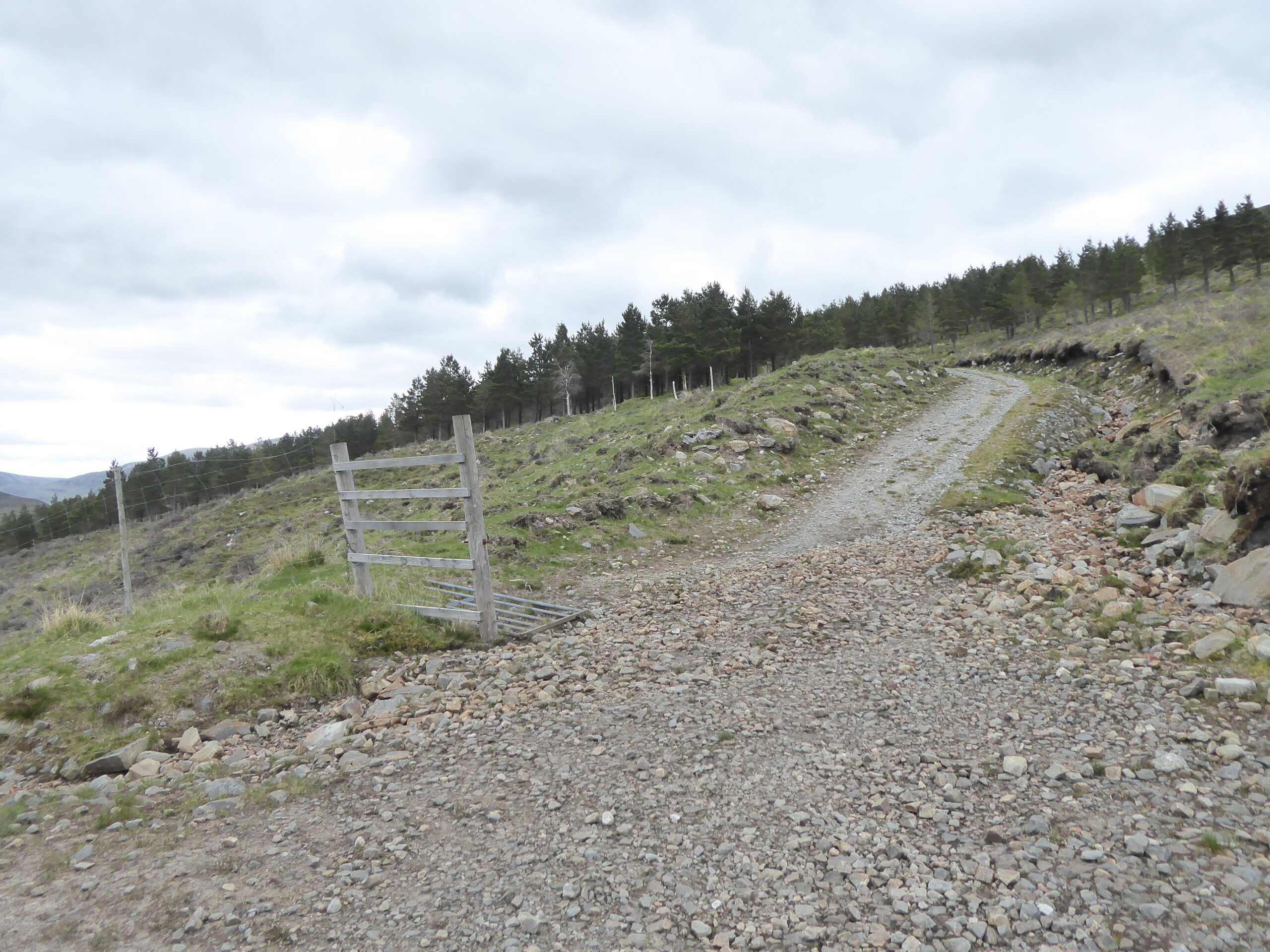
The reason deer got into the enclosure does not appear to have been an “accident” or a failure to maintain fences but a deliberate decision. The Altan WGS appears to be another example, like Glen Shiel,(see here), where the landowner decided to open up this native woodland, funded by the public, to provide food and shelter for deer.
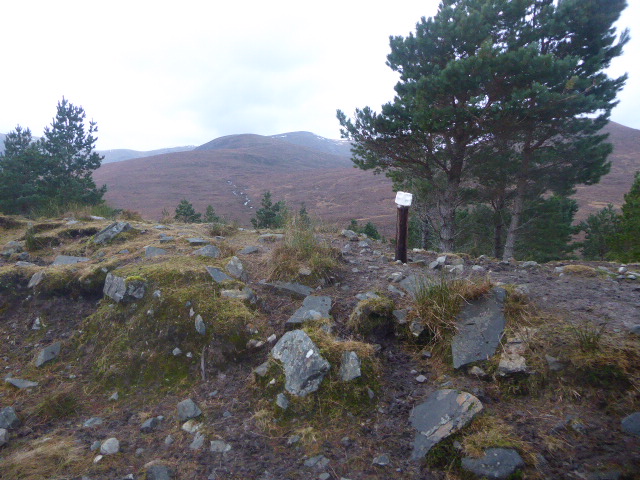
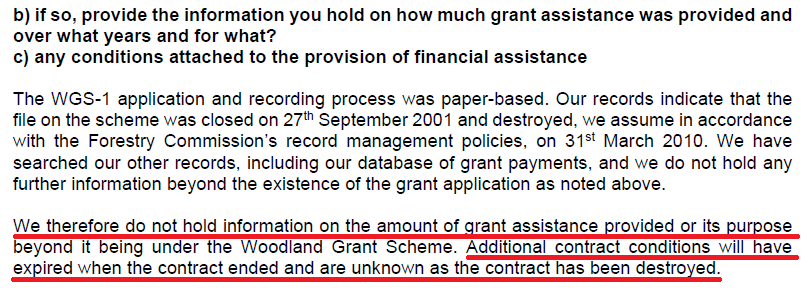
The deer licks show the landowner/manager was deliberately encouraging into the plantation. An interesting question is whether that was always their intention and whether the Altan native woodland planted, funded by public money, was doomed from the start. In order to try and ascertain further how far the landowner had been using the WGS for its own purposes, I submitted a Freedom of Information request on 4th June 2023 to Scottish Forestry asking for the documentation they held about the purpose of the scheme, how much it cost and the contractual obligations of the landowner. Scottish Forestry replied promptly on 8th June saying they did not hold any of the information:
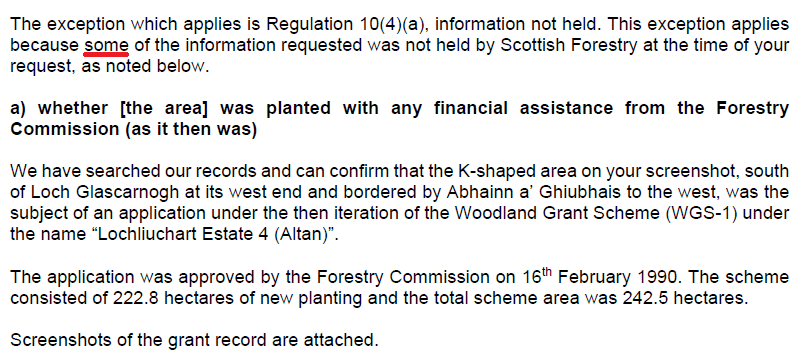
Scottish Forestry’s response goes on to explain why they did not hold the information – all the documentation about this WGS scheme has been destroyed:
As I found out accidentally afterwards, the Scottish Government published this FOI response nine months later (see here). I have been meaning to submit another FOI asking Scottish Forestry if they hold this information about ANY of the WGS schemes 1998-2004 – I suspect not and that the Forestry Commission destroyed all their records.
Without the documentary evidence, no-one, whether politician, civil servant, researcher, local resident or interested member of the public, can find out the ostensible purpose of individual woodlands “created” under the WGS schemes or show whether this was wise use of public money. What is particularly alarming is that Scottish Forestry and its predecessors appear to have no interest in finding out whether historic woodland grant schemes (which they describe as “legacy schemes”) made any difference, let alone what they should learn from their past mistakes.
Instead, Scottish Forestry continues to fork out public money to large and often very rich landowners to meet Scottish Government planting targets, claiming that this helps nature and help offset carbon emissions. Whether those trees survive or whether proper woodland – where trees and shrubs regenerate naturally – develops appears of no concern to Scottish Forestry.
That raises the political question whether using forestry grants to plant native trees has done anything to restore nature in the last 30 years or whether, because landowners have used the public money to provide food and shelter for deer, it has contributed to the continued decline in the state of nature in Scotland (see here)?
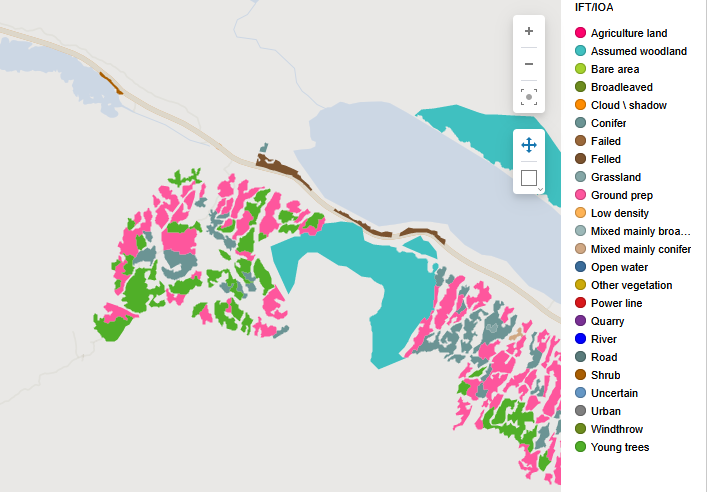
While Scottish Forestry claim that all their records have been destroyed, Scotland’s Environment Viewer provides some further details about the Altan Scheme and its neighbouring WGS 3 scheme. The neighbouring scheme is described as “Assumed Woodland” which begs a number of questions. The pink shows “ground prep”,potentially areas where it was intended to plant on deep peat, the light green areas where broadleaves were planted and the dark green areas where conifers were planted.
This raises more questions about the value of the legacy WGS schemes. For example could the data behind the Environment Viewer be used to calculate how much of the native woodland planting in the 1990s was on deep peat which was then dug up to help the trees grow?
The first thing the Scottish Government needs to do, however, is to instruct Scottish Forestry that it is no to destroy any more records about historic forestry grants schemes so their impacts can be properly assessed by researchers.

Looks like that data on Environment view is just the National Forest Inventory dataset – published each year by Forest Research. “The digital woodland map is updated annually using more recent aerial photography, interpretation of satellite imagery and administrative records of newly planted areas covered by government grant schemes. The revised data for each year is available on our open data page.”
Thanks Bob, I will ask Forest Research to clarify what data they hold, Nick
perhaps the minutes of the meetings where general grant conditions were agreed are available?
A significant proportion of schemes planted in the 1990’s have either done very poorly, or have been partial or total failures. I would say that the main reason was a feeling of over- optimism at the time, encouraged by people who wanted to see more trees, and a lot of sites would have been given the benefit of the doubt that would not get planting permission today. There are a lot of partially failed schemes which are probably better in conservation and landscape terms than they would have been had they grown properly, simply because the outcome has been a more open mixed woodland, and not the plantation they were planted as. At the time of planting, there would have been an expectation that the fences would have lasted 25 years, enough to get the trees away. But marginal sites were planted, and fencing materials have got worse, and the outcome in many cases has been poor. You can argue that deer have simply sorted out schemes that should maybe have never been planted anyway. In my experience, (before carbon considerations), estates planted these big schemes to diversify their properties. They would have expected the trees to grow on, for the fences to come down eventually, and for deer one year to get access again. A lot of schemes have grown on OK, and there has been little problem with this. Where you do have problems, you have to think that it should probably not have been planted at all. Knowing what we do now about the carbon value of even shallow peats over podzolized soils, there are now a number of reasons for questioning the wisdom of planting sites like this.
Working for RSPB in early 1990s the local officer then was of the view that this scheme was just a deer shelter scheme and that the deer would be let in just as soon as the contract was completed.
And rather shockingly that’s exactly what I saw going through the plantation in 2021 to access the Fannichs. I have the same photo of the deer lick post.
I’m utterly disgusted by this waste of public money.
As it happens I am sitting beside a Stalker who lives nearby, who knows these plantations well. It is his understanding that the plantation was indeed planted with the intention in the future of opening it up to the Red Deer, in an effort to reduce deer collisions, afford them shelter and to encourage ‘other’ wildlife.
The fence failed early, snow being one major reason, so the deer got in (as is the case in most forestry plantations I worked on during my time working for a private forestry company).
My own personal observation is that I agree, if people are going to plant trees then the right trees in the right place should be the rule.
My Stalker friend points out that these poor plantations are now a haven for Black Grouse, a Red Listed species we all know need all the help they can get. Two years ago he watched 16 males lekking in this wood, there has been a steady year on year increase and in fact the numbers now in surrounding plantations (of which there are many, possibly better quality fences) shows they are obviously taking the surplus. So it is not all bad, possibly in a roundabout unintentional way.
It is accepted that these plantations are now an asset to the deer.
As for deer collisions, the bigger percentage of the number quoted will be well South of Glascarnoch, most likely in the Central Belt but there is no hiding behind the fact that this is a very busy road, the Articulated Lorries coming of/onto the late Ullapool to Stornoway ferry do most of the damage.
Tomorrow, we are going to try to evict 4+ good stags from one of his Estate’s plantations, not far from here. Recently established and with several locked gates on it, there is no reason to have them unlocked as this plantation does not stop walkers in a very busy area. However, the reason we (myself and three others)are going to try to push these deer out rather than kill them at a time when they are not fit for the larder is because someone unknown has taken the time to open the only unlocked gate and leave it so. New padlocks have been bought.
This area as you know is exceptionally busy with visitors, my Stalker friend has years of stories of bad behaviour by some of these folk. His job is tough enough without the added pressure of the mindless behaviour he experiences.
He says that if you are back in the area by all means contact him, he will be happy to ‘chew the fat’. Contact me for details.
The point here about black grouse reinforces my point that some of our best new woods for landscape/ conservation are partially failed plantations. There is a value in planting lower density woods in the first place, and accepting that a proportion of most sites will be pore difficult to plant trees on than the rest.
I had a walk yesterday morning with the Stalker over a newly planted area across the road from the forest in question. The ground here is desperately poor, reminded me very much of Rona, thin soil/peat on rock, very wet. Of course it was raining.
It was good to see Red Grouse and the Eagle plus Ravens. The stags (5 of them) Obliged by going out the open gate, now locked no doubt that will annoy the walkers, but needs must. There are pedestrian gates.
Unfortunately hare tracks were seen during the recent snow, contrary to popular belief, hares are there not in numbers but not scarce. Another problem for trees, but perhaps the trees are the problem for the hares.
This is an extremely busy area for walkers, skiers and any other outdoor pusuit. Even just camping, with camp fires beside the road a regular occurrance. Toileting is quite disgusting and the local stalker’s biggest bugbear there is dogs. The walkers yesterday in the grey, cold, wet day all had dogs, none on leads.
I walked though this plantation last week when there was considerable snow cover on the ground. As well as the lick posts for the deer there were big splodges of deer feed on the ground at regular intervals along the track with deer eating them. I think I took photo too. There was no deer feed outside the plantation, so clearly the estate wants to keep the deer inside the fenced plantation.
The fact that (deliberately) failed WGS planting has turned out good for some species like black grouse is serendipity. It doesn’t avoid the fact that large amounts of public money were spent on projects that were always doomed to fail to reach their stated objectives and that there appears to have been no long term monitoring of progress or redress when land managers deliberately made schemes fail by allowing deer/sheep in. If the funding had been to create low density woodland and shelter for deer then we wouldn’t be having this discussion.